
Green Plan 2021-26 Progress Report
Date published: 6 February 2026
Summary
Report Period: 07/2025-12/2026 Date of Report: 05/11/2025
In this report
- Document change history
- 1. Introduction
- 2. Review of Green Plan 2021-26
- 3. Progress to date - Emissions
- 4. Progress to date - Key Areas of focus
- 4.1 Workforce and leadership
- 4.2 Travel and Transport
- 4.3 Adaptation
- 4.4 Estates and Facilities
- 4.5 Biodiversity, Health and Wellbeing
- 4.6 Supply Chain and Procurement
- 4.7 Medicines
- 4.8 Food and Nutrition
- 4.9 Digital Transformation
- 4.10 Sustainable Care Models
Document change history
| Initiated by | Date | Author(s) |
|---|---|---|
| NHS England requirement | 5 February 2025 | Environment and Sustainability Manager and Sustainability Engagement Coordinator |
| Version | Date | Comments |
| 0.1 | 17 October 2025 | Reviewed following input from CEO, CFO and Head of Estates on 25 September 2025 and with input from Regional Net Zero Programme Lead, NHSE. |
| 0.2 | 31 October 2025 | Reviewed following input from ELT meeting on 28 October 2025. |
| 1.0 | 5 November 2025 | Approved by Public Board on 5 November 2025 |
1. Introduction
This progress report to the East of England Ambulance Service NHS Trust’s (EEAST) Green Plan 2021-26 is to fulfil the requirements of the NHS England Green Plan Guidance published on 4 February 2025.
The new Green Plan Guidance was published in February 2025 with all Green Plans expected to be renewed. As our Green Plan runs from 2021-2026, we are reviewing the paper and have produced an Addendum to bridge the gap between the current plan and the next one. The planning process has begun for the next Green Plan.
This document will sit alongside the Addendum to ensure it is in line with new guidance. The addendum acts as a bridging document and holding position to make sure nothing is missed. This document sets out our progress against our first green plan.
In line with other NHS organisations and our legal commitment outlined in the Health and Care Act 2022, the Trust is committed to reaching net zero greenhouse gas emissions for those emissions we can control by 2040 and for those emissions we can influence by 2045. We have set an organisational target to reduce absolute emissions we can control by 50% by 2030 (using a 2019/20 baseline).
2. Review of Green Plan 2021-26
The Environment and Sustainability Manager and Sustainability Engagement Coordinator have made a self-assessment of the Trust Green Plan 2021-26. This included looking at progress made on the aims for each of the ten Areas of focus as well as considering maturity compared with the previous Green Plan Guidance published in June 2021. Every aim within each area of focus was then given a RAG rating according to the following method:
| RAG Key | Progress | Risk of not achieving within period of Green Plan 2021-26 |
|---|---|---|
| GREEN | Achieved or ongoing practise | Low |
| AMBER | In progress | Medium |
| RED | Not achieved | High |
The following is a summary of the self-assessment from 18 July 2025. Another self-assessment will be made as part of the consultation process for our next Green Plan.
| Area of focus | Assessment of progress made | Maturity compared with Green Plan Guidance | RAG rating |
|---|---|---|---|
| Workforce and System Leadership | Good progress with engagement with certain groups, but limited action on training the entire workforce. Governance processes have improved with a clearer reporting process to Board. Growth of sustainability team has greatly increased capacity for staff communications and engagement. | Good investment in specific staff to support sustainability goals but not included in Green Plan actions (sustainability team and apprentices). Green Plan does not monitor the effectiveness of engagement or governance. | AMBER |
| Travel and Transport | Some progress made in reducing the impact of fleet, but further work needed considering the importance of this emissions source. Limited investment in low/ultra-low and zero emission vehicles due to infrastructure delays. Travel plans are needed to reduce the impact of business travel and commuting. | Does not consider patient transport, courier services or deliveries. | RED |
| Adaptation | No Adaptation Lead or Climate Change Adaptation Plan, apart from EPRR activity. | Winter Plan needs to consider changing climate and impact on infrastructure, patients, and staff. A Summer Plan needs to be developed. | RED |
| Estates and Facilities | Significant progress made in capital projects with dedicated budget line for sustainability, with growing resource. External technical expertise and buy-in from across the Trust for data collation is needed for full carbon footprinting. Growth of sustainability team has greatly increased capacity for energy auditing and analysis. BREEAM Excellent specified for new builds | Comprehensive cover for this area of focus due to Sustainability being based within Estates department. | GREEN |
| Biodiversity, Health and Wellbeing | Good progress on individual biodiversity health and wellbeing initiatives, particularly wellbeing gardens, tree planting and GoodDogs scheme. No progress on Trust-wide Green Space and Biodiversity Development Plan. | This area of focus is in addition to the Green Plan Guidance. | AMBER |
| Supply Chain and Procurement | Good progress on aims added to Green Plan, with initiatives from individual departments, e.g. Stores. Trust-developed mandatory waste training is particularly innovative | Some unrealistic targets in Trust Green Plan, which does not follow the Guidance. Some of the Trust aims are from the Estates and Facilities area of focus, rather than related to supply chain and procurement. | AMBER |
| Medicines | Good progress made in monitoring Entonox and have seen a consistent reduction. Entonox data comes from the supplier, so unknown if reduction is due to cylinder loss (e.g. at hospitals) or theft. | Extremely limited – focussing on Entonox only. | RED |
| Food and Nutrition | Trust does not have a food service, but food is offered to staff via vending machines and Welfare Wagons. There has been limited activity to make this healthier, apart from zero sugar soft drinks. | No actions to reduce food waste, disposal activities only provided due to legislation changes. Limited or no activities to improve nutrition. | RED |
| Digital Transformation | Some progress made utilising data and digitalisation of paper-based operations from individual departments. Sustainability dashboard was in draft, but unable to take forward due to loss of technical resource. No progress on monitoring purchasing reports for impact of sustainability initiatives | No Trust aims related to harnessing digital technology for clinical transformation. | RED |
| Sustainable Care Models | No clinical lead and limited communication on health benefits of sustainability. | No Trust aims related to clinical transformation, despite some progress in this area e.g. expansion of cycle response unit, Hear and Treat. | RED |
Conclusion
The EEAST Green Plan 2021-26, was produced by the Sustainability Team at the time with consultancy from the Carbon Trust. There was no full consultation process or co-production with Divisions/Departments throughout the Trust. The Green Plan contained many aims for each Area of focus without an agreed Action Plan with Senior Responsible Officers and SMART targets, consequently it has been challenging to make significant progress in some areas. A strength of the Trust Green Plan was to include an additional area of focus (Biodiversity, Health and Wellbeing) which was recognised as leading within our region.
3. Progress to date - Emissions
As an NHS organisation we are not required to disclose or develop processes to disclose Scope 1, Scope 2 and Scope 3 emissions. Emissions estimates for NHS England are computed nationally by NHS England. However, as a Trust we continue to improve the data acquisition, analysis and reporting of our emissions. We have significant gaps in Trust-derived data, including hybrid working, non-telematics fleet, business travel, staff commuting, supply chain and medicines.
Each month, the Trust monitors and has set annual absolute emission targets for our three largest emission sources:
- Fleet emissions (Trust-procured fuel)
- Purchased electricity and natural gas emissions
- Nitrous oxide emissions from Entonox consumption.
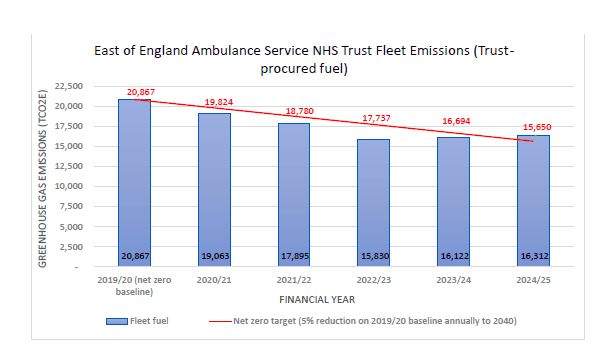
Figure 1: Annual fleet emissions (Trust-procured fuel)
Fleet is our largest source of emissions. Our Trust-procured fuel emissions (Figure 1) from bunkered fuel stores and fuel cards for 2024/25 have increased to 1.2% above 2023/24 levels. Emissions at 16,312 tCO2e were 22% below baseline (target was 25% below baseline or 15,650 tCO2e). Our net zero trajectory was based on a size of fleet which has increased due to demand. The vehicles that have been procured are not electric as there was not an electric option at the time of procurement. The ability to meet the net zero trajectory is based on the percentage of fleet procuring fuel rather than electrifying the fleet. Therefore, the progress the Trust has made with electrifying its fleet has been skewed by the need for more fleet. The composition of our fleet will look different in 2030 according to the NHS Net Zero Travel and Transport Roadmap and an internal plan in place to electrify the fleet.
We are due to replace 525 Double-staffed Ambulances (DSAs) by the end of 2026, so we are expecting a step-change in emissions as the vehicles are replaced. As part of the national ambulance specification, diesel DSAs are fitted with anti-idling technology as standard. The Trust will also begin trials of electric DSAs which are due to be operational from October 2025, as part of the NHS England pilot.
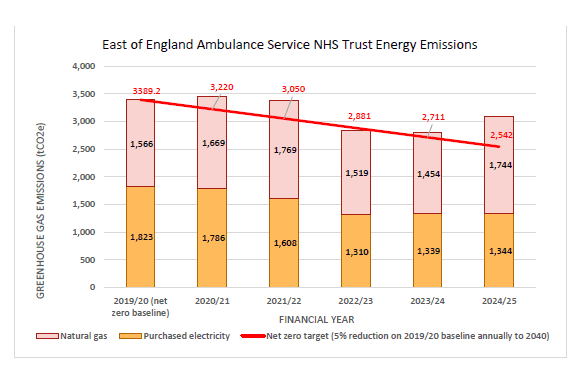
Figure 2: Annual purchased electricity and gas emissions
Overall, 2024/25 energy emissions were 11% above the previous year, with no change in electricity and 20% increase in gas (Figure 2). Emissions at 3,088 tCO2e were 9% below the 2019/20 baseline, the 2024/25 target was 25% reduction or 2,542 tCO2e.
As the Trust electrifies, energy consumption will increase which will initially see our purchased electricity and gas emissions increase. Following national guidance, we have opted into the CCS framework for the procurement of electricity and gas. The guidance is based on electrifying the grid so as the grid becomes more renewable, our emissions will decrease. The Trust is investing in Solar PV and battery storage to be able to reduce energy bills and reduce the amount of electricity we procure from the grid in order to reduce our emissions.
One important thing to note is that energy consumption is an absolute and part of the challenge of monitoring emissions is difficult as all of the Trust’s estate is so varied and different.
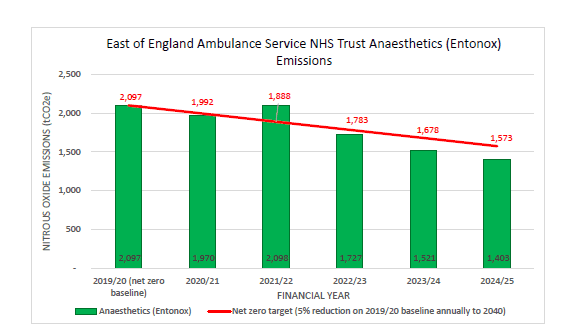
Figure 3: Nitrous oxide emissions from Entonox consumption
Nitrous oxide emissions from Entonox consumption in 2024/25 were 8% below 2023/24 levels (Figure 3). Emissions at 1,403 tCO2e were 33% below our 2019/20 baseline (target is 25% below baseline). The College of Paramedics have reported that an estimated 24% of Entonox from cylinders is wasted and action is needed to reduce this.
Anaesthetic gases, such as mixed nitrous oxide, are being targeted as a priority area for emissions reductions by the NHS as they are extremely potent greenhouse gases (nitrous oxide is 265 times more potent than carbon dioxide at trapping heat in the atmosphere).
Medicines Management have been trialling Penthrox as an alternative analgesic in Norfolk and Waveney from April 2024. Life cycle analysis shows that Penthrox has a significantly lower climate change impact when compared with nitrous oxide (the active ingredient, methoxyflurane, is 4 times more potent than carbon dioxide at trapping heat in the atmosphere). The trial finished in June 2025, and the results are to be reviewed prior to deciding on a potential Trust-wide roll out.
4. Progress to date - Key Areas of focus
The Trust has 10 key areas of focus for our Green Plan 2021-26. The following sub-sections show our progress to date.
4.1 Workforce and leadership
Communications and engagement
We have a growing Green Champions Network of 53 volunteers from across different Trust functions. Initiatives include quarterly update and discussion meetings, MS Teams channel with weekly updates, monthly roundup email newsletter and action log. Green Champions get involved with activities including tree planting, designing awareness raising posters, writing communications for East24 and litter picking.
The network is a group of people who care about the environment and sustainability and want to help the Trust to meet its net zero targets. In the quarterly meetings, Green Champions can deliver a presentation on initiatives at their site which acts as a knowledge sharing forum. This is also a time to bring up any areas of concern or ideas that the staff would like to put forward for projects, many of which have been actioned. An example of this is the promotion of sustainable transport options such as the Trusts cycle salary sacrifice scheme along with how this works as well as the environmental, physical and mental benefits of cycling. This was done during National Bike week in 2024 and 2025 which saw an uptake in the number of staff signing up to the scheme.
A lot of the process of decarbonisation within the Trust involves technical teams, such as experts in energy, estates, fleet management and medicines. As well as this, we need a shift in organisational culture and behaviour change led by staff on the ground who have a passion for the cause. The Green Champions network promotes sustainable change and culture change from the ground up. This is important as everyone is responsible for net zero so the network is vital to support and enable all areas of the Green Plan, especially when funding may be limited. As a Trust, we can increase insulation of buildings and procure energy meters for reliable data, but this would not matter if energy use remains high with a lot of waste from staff leaving equipment like lights and computers turned on. This is where the Green Champions come in to promote sustainable behaviour to change culture across the Trust.
Sustainability was featured in the 27 June 2024 and 31 October 2024 Executive Q&As. We have developed an East24 intranet page focused on sustainability with waste updates, sustainable estates, fleet Trust-procured fuel emissions, Entonox emissions, links to the Greener NHS website and more. Since January 2025, we have published a monthly Sustainability and Estates Newsletter.
Procurement, in partnership with the Social Value Portal, conducted a series of workshops with stakeholders to better understand what social value benefits we wanted suppliers under contract to deliver within EEAST. Aligned to the Social Value Model, these priorities support better education and training of suppliers regarding EEAST Social Value priorities and are available on the procurement pages of the Trust website, ensuring more visibility of our priorities to staff and to the supply market.
Resourcing sustainability
In the Trust, there is currently a Sustainability team made up of three members of staff: Environment and Sustainability Manager, Environment and Sustainability Assistant and Sustainability Engagement Coordinator. Within the Estates department, there is a Facilities Manager who oversees all waste contracts.
The Greener NHS considers it best practice to have a dedicated resource to drive sustainability projects and engagement. In the Estates technical annex, it is expected that Trusts have a 0.5 energy manager and a 0.5 waste manager as a minimum. This is so Trusts can meet their statutory obligations.
A technical team is needed to deliver, monitor, manage and annually report on the Green Plan. This is also the case for the travel plan which must be implemented by 2026, according to the new guidance. There are also a number of reporting duties the sustainability team must deliver on such as the TCFD, Greener NHS quarterly return, annual fleet return and reporting on the standard contract as well as internal reporting for committees and the board. A team needs to be in place to be able to deliver these.
The regional Greener NHS team have advised that it is key for Trusts to bid for funding rounds which wouldn’t happen without the dedicated resource. Although the team has not been successful in many bids so far, we are working with the regional Greener NHS team to plan in advance for these in order to be successful in the future. One bid the team has been successful in was through the NHS Chargepoint Accelerator Scheme for £219,322 to go towards nine sites procurement and installation of EV infrastructure.
Within sustainability, there is an expectation to collaborate in ICB meetings and for the Trust’s sustainability lead to be a part of the regional leads forum for strategic planning and the informing of national teams. EEAST has 6 ICBs, and therefore, needs the resource to engage with all ICBs and collaborate with them on best practice.
An important role within the Sustainability team is to engage staff internally and colleagues and the public externally. How the Trust and the sustainability team are perceived is important to be able to create a culture of change internally and by putting forward case studies and showcasing achievements internally and externally.
Furthermore, the team needs to be in place to oversee lots of different aspects of sustainability. Every staff member has a duty to be sustainable and drive change, but someone needs to be there to oversee and share this. The team also support cross departmental conversations to cover many emission areas such as medicines and fleet. Also, the Trust will need to do an adaptation plan which will be headed by a senior responsible officer who will need help from a technical team.
Everything the Sustainability Team do will impact revenue in the future in a positive way as many sustainability initiatives also bring about financial savings. This may be brought in through funding bids for EV infrastructure and solar PV, income from feed in tariffs or by making financial savings by installing renewable energy sources or holding energy switch-off campaigns. Since the 2019/2020 financial year, sustainability staff have made a minimum saving of £376,000.
Training
The Centre for Sustainable Healthcare provided Net Zero Leadership Training for the Trust Board and senior leaders on 2 April 2025. The Net Zero Board Lead and other non-executive leaders completed Net Zero Board Level Training, provided by Centre for Sustainable Healthcare in June and November 2023.
The Procurement department have completed Social Value Training provided by Government Commercial College. Estates Category Manager attended Sustainable Procurement training provide by Centre for Sustainable Healthcare in May 2023.
Since 26 September 2024 sustainability is included in all staff inductions.
4.2 Travel and Transport
Fuel efficiency of emergency vehicles has increased over time, starting with the introduction of Fiat DSAs in 2018/19 and phased replacement of Mercedes DSAs. The DSA fleet is now made up of Fiat, Mercedes, MAN, Ford and Renault vehicles.
From February 2024, the Fleet department participated in a trial of an NHSE-approved vehicle anti-idling platform called ECO-Run by ACETECH. ECO-Run monitors the batteries for on-board equipment, air-conditioning and heating to switch off the engine when not needed, saving fuel consumption and reducing air pollution. We were the first ambulance service in the UK to take this forward into our operational fleet. All new DSAs are fitted with this technology, which now forms part of the national ambulance specification.
Electric fleet vehicles
We took part in the NHS England ZEEV Pathfinder project, trialling 2 electric Rapid Response Vehicles (RRVs) and 1 electric Mental Health Response Van (MHRV)/Falls Van in collaboration with Bedfordshire Fire and Rescue Service. We experienced reliability problems with the vehicle purchased for the MHRV and fed this back to NHS England as part of the trial. However, staff satisfaction and reliability were high for the RRV vehicle, so we have ordered more of these vehicles as part of the RRV fleet changes. The experience showed that electric vehicles are suitable for MHRVs, so we invested in an entirely electric fleet for this new service.
- The Trust has 12 electric Mercedes eVito Tourer MHRVs (2 vehicles in each ICS).
- Following successful feedback from the ZEEV Pathfinder project, 15 out of the 75 vehicle RRV fleet are electric Skoda Enyaq vehicles.
- The non-emergency vehicle fleet is increasingly made up of mild hybrid and electric vehicles.
Other travel initiatives
Staff are offered the cycle salary sacrifice scheme with standard and electric cycle options as well as accessories such as locks and helmets.
We offer a car salary sacrifice scheme with electric and hybrid options, featuring a maximum threshold of 133g CO2/km.
EEAST is a member of the FirstBus Commuter Travel Club with full discounts on monthly bus tickets in Norfolk, Suffolk and Essex.
The staff benefits section on our intranet (East24) contains details of discounted bus travel, including the Stagecoach 10% discount code for all travel and Arriva discounts.
We have added travel questions to our staff surveys, starting with our quarterly Pulse Survey in August 2024. Section 18 of the Standard Contract states that NHS Trusts need to carry out a travel survey every 2 years. The data collected for this will inform a Trust Travel Plan which, according to the new Green Plan guidance, must be completed by 2026. Travel questions will be in the staff surveys at least once per year. Travel questions were added to the Trust-specific section of the November 2024 National Staff Survey:
- Most EEAST staff commute by car (87%).
- 12.7% of staff commute by sustainable and active methods alongside other forms of transport. This reduces to 5% when we asked staff to provide their main form of transport to work.
- As their main form of transport, 1.8% of staff cycle to work, 1.3% of staff take the bus to work and 1.7% of staff walk to work.
- The factor that most influences staff’s commuting mode is convenience.
4.3 Adaptation
The Trust does not have a Climate Change Adaptation Plan or Lead, but this has been raised to the Board as a risk. A risk has been added on the Strategic Planning section of the Trust Risk Register: “SP0002: Risk that inadequate climate change mitigation, adaptation, and progress towards net zero and sustainability will compromise the services we deliver to the public”. The residual risk score is 16, so the Board have been made aware.
In line with Climate Change Committee recommendations on climate adaptation, significant additional funding is required for EEAST to be able to meet additional future challenges across all areas of the organisation. The Trust does not have an overheating strategy.
Each county has a Trust resilience manager that engages fully with that county's Local Resilience Forum (LRF) and Local Health Resilience Partnership. This work ensures the Trust meets its obligations under the Civil Contingencies Act and includes monitoring of National Risk Assessments and local mitigation, including the UK Government Chronic Risks assessment.
Within each county, LRF working groups will consider Climate Mitigation and Climate Adaptation to varying degrees. Within Cambridgeshire and Peterborough Local Resilience Forum, a Climate Change, Sustainability and Future Risks group has been established to share information relating to Climate Change. In particular, the group aims to promote understanding of climate adaptation issues across civil protection and emergency planning to multi agency partners.
Additional preparedness activity includes regular review of adverse weather action cards in line with the UKHSA Adverse Weather and Health Plan. For 2025, this will also include developing an ‘adverse weather – flood’ action card to assist in preparedness and response to an increasing risk of flooding events. The development of a flood-related adverse weather card arose because of some recent flooding events and water ingress into ambulance stations. Some sites have problems with surface water flooding, particularly Peterborough which has been issued with sandbags and Haverhill which has had new pumps installed.
We do not have a Digital Strategy that covers overheating. However, the Trust takes all reasonable steps to protect its digital infrastructure and systems. At critical sites there is appropriate cooling and ventilation to maintain a temperature of 21°C. At these sites the Trust has installed climate monitors which raise alerts 24x7 based on exceeding thresholds. In addition, over the next 12 months the Trust will move critical digital systems and infrastructure to a Tier 3 external Data Centre.
4.4 Estates and Facilities
The Trust has purchased 50 dual 22kW and 35 dual 7.4kW AC chargers which will be installed throughout the 6 counties following site electrical surveys and discussions with fleet and operations. We have also purchased a back-office charge point management system to support the EV infrastructure transformation. We also have 27 dual 40kW DC electric vehicle chargers and are working with UK Power Networks to get these installed onto sites.
The Trust has solar PV installations on 14 sites and are increasingly installing battery storage to boost their effectiveness as well as store grid electricity during non-peak periods, saving both costs and carbon emissions. In 2025/26 we are conducting structural and feasibility surveys for a further 10 sites for solar PV with battery storage. The new Ipswich Hub will also have a solar PV installation.
Air source heat pumps have been installed at Potter Heigham (coupled with solar PV and battery storage), Stansted and Haverhill to provide heating and hot water, these systems replaced oil-fired boilers. Saxmundham was assessed for air source heat pumps to replace the oil-fired heating system, but the cost of installation was too far above the budget allocated so we installed natural gas and a gas-fired boiler to this site in 2024/25. Only two sites have oil-fired heating now, Barton Mills and King’s Lynn Workshop. Barton Mills is a vehicle workshop and one of our large emitting sites, it is being assessed in 2025/26 for electrically led heating coupled with solar PV and battery storage to increase the viability of this project.
- All window replacements are fitted with A+ UPVC or aluminium rated windows and doors, 35% of stations have been upgraded, to date.
- 80% of stations in all 6 counties have been refurbished in the last 4 years.
- We have a specification and programme to replace all light fittings with LEDs, to date 95% of fittings have been replaced with only response posts remaining.
- A+ rated boiler upgrades, garage heaters, insulation and more efficient storage heaters have been installed in numerous stations.
- We have a roller and overhead sectional door replacement programme for garages (replacing with insulated options), with 70% of buildings complete.
Due to this investment, 6 Facet surveys/Condition reports have been improved from Category Cs & Ds to mainly Bs.
New builds
The Bury St Edmunds Hub was officially opened on 27 September 2024. It is our first site to achieve the independent environmental assessment BREEAM Excellent, as per our strategic target set out in the Green Plan 2021-26. The site has no mains gas supply (using air source heat pumps for heating), solar PV, covered cycling parking, planting uses native species, wellbeing garden and EV charging bays. The Hub has space for 33 ambulances with a fully integrated vehicle repair workshop and vehicle preparation area to support the frontline operational team. Staff wellbeing is at the heart of the design. The building includes a quiet room, a multi-faith room, a nursing room, a gym and outside wellbeing spaces for relaxation and exercise.
The Ipswich Hub is due to be opened in September 2025. The aim is for BREEAM Excellent. The £12.81m hub will house a 24/7 make ready and workshop service, which will keep more ambulances on the road and clean and restock vehicles. It will also have dedicated welfare spaces where staff can relax, including quiet spaces and a wellbeing garden. We have received additional funding approval from the National Energy Efficiency Fund (NEEF) for £138,407 for LED lighting and £108,986 for solar PV panels from GB Energy.
Energy management
We have installed half-hourly automatic meter reading on all electricity and gas meters, increasing billing accuracy and better data visibility to enable targeted energy-efficiency projects.
In 2024/25 we conducted energy audits of 13 sites across the Trust to identify short and long-term savings and investment opportunities. In 2025/26 we have a strategic objective to reduce energy consumption by 5%, so the energy audit programme has been expanded to audit all Trust sites within the financial year.
Since Easter 2024, we have established regular bank holiday switch off campaigns to raise awareness of energy efficiency (see Table 1). Generally, the switch-off campaigns have resulted in a reduction in electricity consumption, with our best results being over Easter 2025. This is significant considering the profile of our staff working arrangements with the majority being non-office based. We are awaiting data from Early May Bank Holiday 2025 onwards.
| Bank Holiday Campaign | Year comparison | Percentage change verses bank holiday period in previous year |
|---|---|---|
| Easter | 2023-2024 | 4.7% |
| 2024-2025 | -29.8% | |
| Late May | 2023-2024 | -6.5% |
| August | 2023-2024 | -3.6% |
| Christmas | 2023-2024 | -0.2% |
| New Year | 2023-2024 | 6.4% |
Table 1: Summary of electricity consumption change during bank holiday switch off campaigns.
Waste management
The Trust has developed bespoke Waste Management Training as part of the introduction of the offensive waste stream as per NHS Clinical Waste Strategy and HTM07-01. This training is mandatory for all Trust staff on a bi-annual basis. London Ambulance Service are looking to adapt our training package to use for their own staff.
The Trust was awarded the Bronze Award for NHS Waste Innovation of the Year in 2024 for a project with Watford and Lister Hospitals to dispose of bagged clinical waste from the ambulances at the Emergency Department at the point of patient handover. This is outlined in HTM 07-01 as best practice, however EEAST are the first Ambulance Trust to formally agree a process with the acute hospitals. Following the success of the trial, this process is now being rolled out across the region, and NHS England are looking at a national roll-out. This project offers significant cost savings for the ambulance sector, with a minimal impact on the acutes, and supports our journey to net zero by reducing waste collections from small, outlying ambulance stations.
The Trust are leading a national implementation group for the ambulance sector alongside NHS England and have provided a variety of tools and guidance on the NHS Futures Hub. To date, we have supported an additional two ambulance services in successfully introducing offensive waste, as well as working with the Head of Waste at NHS England to create an animated training video for ambulance staff across the country.
Several new waste streams are being introduced in line with the Simpler Recycling legislation; including cardboard bins for all stores and Make Ready sites, food waste collections and we are investigating the need/feasibility of glass collections.
We held a litter picking event held on 18 October 2022 at Hospital Lane, Hellesdon, 5 volunteers from Green Champions Network and Finance department attended.
Waste and recycling awareness site visits are offered to sites with low recycling rates:
- After a site visit, Cromer increased its recycling by 30% between March 2024 to January 2025. It was one of our lowest performing sites with a recycling rate of only 9.6% in March 2024, but is now one of our top ten performing sites with a rate of 50% in June 2025.
- After becoming one of the Sustainability Pilot Sites, a site visit was undertaken to Peterborough. Since June 2024, their rate of recycling has increased from 16.4% to 27.1 % in June 2025.
- We have regular communications with the three EOC sites (Bedford, Chelmsford and Hellesdon). In June 2025, two out of three sites are above the Trust average recycling rate (25%), with Hellesdon at 33.3% and Chelmsford at 29.3%. Bedford has recently dropped below the Trust average to 21.7%, but we hope to address this in future EOC Q&A Sessions.
- We are also working with our new cleaning company employees to ensure that waste is segregated correctly.
4.5 Biodiversity, Health and Wellbeing
Green spaces
Wellbeing gardens provide a green space for staff to decompress and take time for themselves in amongst the challenging and traumatic times they may face in their role. These spaces are crucial for staff wellbeing and offer a space to improve biodiversity across the Trust with different species of trees and plants and infrastructure such as bug hotels and bird feeders. The Trust has 13 wellbeing gardens with plans to have more at sites including Southend and Peterborough.
We are piloting an initiative at Longwater to bring in community gardening groups to maintain our wellbeing gardens. Costessey Community Gardening Club are visiting the site once a month during the non-growing season, increasing to two visits a month in the growing season.
The Sustainability Team coordinated the Trust’s first tree planting programme. A total of 420 trees from NHS Forest plus 5 donated trees from a member of staff making a grand total of 425 trees were planted by the end of the 2024/25 planting season, the most of any UK ambulance service! The first 20 trees for an orchard were planted in Hellesdon in November 2024. A hedge of 180 trees was planted in Hellesdon along with five oak trees in January 2025. In March 2025, 20 trees were planted at Potter Heigham, 20 fruit trees for Chelmsford Lawnside and a hedge of 180 trees planted at Cromer.
Health and wellbeing
The Trust continues to build our health and wellbeing provision with an increased ability to concentrate on strategic, transformative wellbeing activities with a stronger emphasis on prevention. Activity includes mental health awareness courses delivered by MIND, Time for Me App, Trauma Risk Management (TRiM) teams and wellbeing champions. In 2023/24, the wellbeing network and monthly newsletter were launched and the Trust agreed to the blue light commitment for mental health at work.
In April 2023, the GoodDOG welfare dog scheme was established. The GoodDOGs are dogs owned by Trust staff, who have been assessed to be a wellbeing dog through a partnership with a charity called Canine Concern. They volunteer their time to visit Trust sites to bring joy, a sense of calm and a break away from challenging days.
Regular events are held to support the East of England Ambulance Service Charity, and many of these promote the health and wellbeing of staff and volunteers. The ‘Outrun an Ambulance’ challenge is a virtual challenge to 'outrun' (or walk, swim, paddle or ride) the mileage covered by one of our ambulances on an average shift responding to emergencies. Individual staff often organise epic feats of endurance and dedication to raise funds for the charity, such as a 255-mile cycle challenge around all the ambulance stations in Norfolk in under 24 hours.
Research and innovation: Measuring air pollution from ambulances (MAPA)
To investigate air quality at one of the Trust’s busiest stations and emergency departments, EEAST's research team collected air quality data outside the A&E at Addenbrookes and inside an ambulance based at Cambridge ambulance station from the 9 December 2024 to 1 March 2025.
The study was split into three sections:
Part one: Static air quality monitors, supplied by air quality monitoring company EMSOL, measured PM10, PM2.5, carbon monoxide and nitrous dioxide every quarter hour for the data collection period. One monitor was at the A&E doors, and one was outside the ambulance bay. The number of ambulances at the hospital was recorded in each 30-minute window. This was carried out to ascertain whether:
a) there is an issue with air quality at emergency departments,
b) air quality is worse in the ambulance bay than outside and
c) the number of vehicles relates to air quality.
Part two: Six volunteer staff at Cambridge ambulance station took sets of air quality monitors on a total of 108 shifts to measure PM1, PM2.5, PM10, volatile organic compounds and carbon monoxide. The monitors logged data every minute, and the CAD data was captured for each shift. This will allow the research team to gain a picture of the air quality in the front and back of ambulances at different points of shift such as travelling to station, travelling to hospital, at a hospital or en route to a job.
Part three: Research assistants went into ambulance bays during the study with a RAD 57 carboxyhaemoglobin saturations metre to measure carbon monoxide saturations in staff. This was done to investigate whether carbon monoxide levels in staff are concerning or raised and if this is associated with carbon monoxide levels in the atmosphere.
The data has been collated and the team is analysing several thousand datapoints before they publish the results in the next few months. This work was funded by the Carbon Monoxide Research Trust.
Thanks also to Anglia Ruskin University, University of Suffolk, EMSOL and the volunteer staff at Cambridge ambulance station who acted as research assistants.
4.6 Supply Chain and Procurement
All Trust tenders include a minimum 10% weighting criteria for social value and net zero with tenders above £5 million including the requirement for suppliers to publish a Carbon Reduction Plan for Scope 1 and Scope 2 emissions together with a subset of Scope 3 emissions as a minimum in line with legal requirements and in support of the Sustainability Strategy.
Trust tenders support our net zero and sustainability aims through:
- Use of the Supplier Sustainability Agreement as a pass or fail element within FTS tenders.
- Use of the Standard SQ which includes as pass or fail elements for Carbon Reduction; Equality, Diversity, and Inclusion; as well as Modern Slavery.
- Use of three clear areas of evaluation that include Quality, Social Value and Sustainability (minimum 10%) as well as commercial weightings.
In late 2024, the Procurement team in partnership with Social Value Portal developed the Social Value Plan, outlining 16 key opportunities to embed social value into delivery and decision making. Following a number of workshops with Trust stakeholders it provides clear Trust priorities for supplier delivery of social value benefits in line with the Social Value Model and Social Value Playbook.
A Social Value and Sustainable Procurement Policy is being developed and will be approved shortly by the Compliance and Risk Group. The PPN002 Social Value Model requirements published in February 2025 will be incorporated into this Policy.
Many Estates contracts are due for renewal in 2025/26 and will be reviewed as per our carbon reduction plan and social value requirements. From the implementation of the new cleaning contract in September 2024, several initiatives have been introduced such as a chemical free, multi-purpose detergent with refillable bottles for use on stations. Currently, lab tests are being conducted to look at the log reductions which can be achieved on reusable cleaning equipment. If successful, we will be able to greatly reduce our consumption of single use products on the station cleaning contract.
Utilities are purchased via Crown Commercial Services and, prior to joining the NHS Central Energy Purchasing Agreement in April 2024, we purchased 100% renewable electricity backed by Renewable Energy Guarantees of Origin (REGOs).
We purchase 100% recycled, FSC and EU Ecolabel accredited paper and double-sided printing is the default option on all our printers.
We have signed the Plastics Pledge, and all staff were issued with reusable water bottles, and the heatwave plan has been adjusted to only supply bottled water during protracted or remote incidents.
A uniform Task and Finish Group was established in September 2024 to determine efficient and sustainable procedures for the issue and disposal of uniform. One of the main aims is to introduce a system for re-using uniform as opposed to the current practice of secure disposal, which will save costs and optimise resources. Suitable premises for uniform storage and distribution are currently being explored.
4.7 Medicines
Nitrous oxide emissions arising from Entonox usage is our third largest direct emission source after fleet fuel and energy (electricity and gas) consumption.
Since April 2024, an alternative analgesic, Penthrox, has been trialled in Norfolk and Waveney. This has a significantly lower climate change impact when compared with mixed nitrous oxide (Entonox). The findings from the trial are being reviewed and reported to Clinical Best Practise Group for a decision on a potential Trust-wide rollout.
4.8 Food and Nutrition
We implement the National standards for healthcare food and drink wherever possible:
- We do not purchase catering-related single use plastics and have no canteen services for staff.
- We have moved to reduced-sugar drinks, introduced fairtrade coffee and look to purchase through our charity low salt and healthier snacks - however we do not currently provide fruit due to limited shelf life.
- Explored milk alternatives to 12ml UHT pots, but do not use sufficient volume to secure commercial alternative. 12ml pots are recyclable (excluding lid).
Since May 2024, 6 welfare wagons were funded by and stocked by the East of England Ambulance Service Charity, this wellbeing resource provides free snacks and drinks for staff. Volunteers drive the wagons to where they are needed, be it outside an Accident and Emergency Department or outside one of our ambulance stations or Emergency Operations Centres (EOCs).
4.9 Digital Transformation
People Services have moved all paper payslips to electronic in 2024 and are in the process of doing the same with HR forms and personnel files.
We have surveyed each site to determine the utilisation of space and have procured an Asset Booking System to enable meetings rooms and hot desks to be booked centrally making the best use of our space. We are also converting underutilised garages at some ambulance stations into offices. The Asset Booker app is now live for Melbourn, Bury St Edmunds Hub and Atlantic Square.
We work with Circular Computing to buy remanufactured laptops rather than new. The company is a BSI Kitemark Certified Remanufacturer and a certified Carbon Neutral organisation. They plant five trees in Africa, India or the USA for every laptop purchased via a partnership with WeForest. All packaging is recyclable with old assets returned for recycling and remanufacturing at the end of their useful life. In 2024/25, the Trust purchased 340 remanufactured laptops through Circular Computing, which saved approximately 107.4 tCO2e.
Returning Trust property is a priority area, with a Task and Finish Group established to alter new starter contracts, place HR3 form reminders on managers checklist, devise a communications plan and organise a series of IT amnesty campaigns, with October 2024 being IT Amnesty Month. In the first amnesty, 82 items were returned with 32 being able to be reused which had a total value of £11,300.
4.10 Sustainable Care Models
As an ambulance service, our largest emission sources are from our fleet fuel consumption and from business travel. Transitioning to electric vehicles will form a significant part of our net zero clinical transformation, but this will not be our only focus.
Cycle Response Unit
Launched in June 2000 by one of our paramedics, the Cycle Response Unit (CRU) was created to tackle the challenges of navigating Norwich’s pedestrianised and congested areas. Initially met with scepticism, the unit proved its worth during a trial period, delivering faster response times and saving lives. Backed by clinical evidence and support from the Norfolk and Norwich Hospital, the CRU became a permanent fixture.
Today, the CRU continues to serve within Norwich’s inner ring road and occasionally its suburbs. It also provides seasonal coverage in Great Yarmouth, Wells-next-the-Sea, and events like the Cromer Carnival. A Cambridge-based unit is being considered.
Cycle paramedics can reach patients in just three minutes—dramatically reducing response times. Each paramedic handles around three calls per shift, totalling approximately 1,000 incidents annually. The bikes, weighing 60 kg, are equipped with essential medical gear. Paramedics must complete a national-standard advanced cycling course and maintain high fitness levels.
Mental Health Response Vans
The Mental Health Response Van (MHRV) was launched in April 2023. The Trust provides the vehicle and emergency clinicians, with mental health professionals from Essex Partnership University NHS Foundation Trust (EPUT) also joining the team.
The scheme is supported by the Mid and South Essex Integrated Care Board and is yet another example of effective joint working across the NHS to improve patient outcomes.
Over the past two years, the vehicle has become a vital part of the local urgent and emergency care system – improving patient outcomes, reducing pressure on emergency departments, and ensuring people in crisis receive the right care, in the right place, at the right time.
Emergency departments are often not the most appropriate setting for individuals experiencing a mental health crisis. The MHRV addresses this by offering on-scene support and alternative care pathways.
Over 82% of patients supported by the service have been helped without having to be taken to A&E. It runs seven days a week between 1pm and 1am. Following trials of an electric MHRV, we now have a fleet of 12 electric MHRVs across the Trust in place for over 1 year now. With two vehicles operating in each of the six Integrated Care Systems that we serve. Since March 2025, we have partnered with Hertfordshire Partnership University NHS Foundation Trust (HPFT), in addition to the existing partnership with EPUT.