Annual Report and Accounts 2025-26
Date published: 21 August 2026
Summary
Our annual report is produced so that we can present information about our services and report on our performance. We do this in line with our commitment to openness and transparency and the published guidance set out by the Department for Health and Social Care (DHSC).
In this report
- Introduction
- Welcome from our chair
- Overview from our chief executive
- About EEAST
- Our strategy
- Our Patient Mission
- Our Patient Mission highlights in 2025-26
- Compliments and complaints
- Performance
- Patient safety
- Scheduled care service – Patient Transport Service (PTS)
- Resilience and specialist operations
- Safeguarding
- Our People Mission
- Our People Mission highlights in 2025-26
- People Strategy
- Recruitment and retention
- Staff survey and staff experience
- Appraisal and leadership development
- Safety at Work
- Health and Wellbeing
- Staff Experience
- Colleague Experience: Freedom to Speak Up
- Our Partnership Mission
- Our Partnership Mission highlights in 2025-26
- Hospital Handovers
- Our volunteers and co-response partnerships
- Our Productivity Mission
- Our Productivity Mission highlights in 2025-26
- Response Times
- Operational Resourcing
- 999 Call Answer
- Hear and Treat
- Operational Productivity
- Commercial partnerships
- Finance
- Digital Development
- Sustainability
- Carbon Footprint
- Strategy
- Conclusion
- Section 7: Accountability report
- Directors report
- Annual Governance Statement
Introduction
- Welcome from our chair
- Overview from our chief executive
- About EEAST
- Our strategy
Welcome from our chair
I am incredibly proud of what this Trust has achieved over the last year. In my 2025 report, I spoke of the work that we were doing to better understand our performance and how we could improve it. Our approach has worked and I am delighted that for the first time since the covid pandemic, EEAST met its category 2 response times targets for the month of March.
This has been the result of a great collective effort. We set our staff ambitious targets and they have responded. All of our key measures that make up our response to patients have improved significantly – we have doubled our hear and treat rates in the last 2 years, our out of service times have fallen and the times that our vehicles spend off the road has fallen by 40%.
However, I also know this has been a very difficult year for our staff. We have asked more from them whilst facing front line resource constraints and being asked to cut headcount in support areas as a part of NHS changes. I’d like to thank them for their dedication and commitment. The board also recognises that we are operating in a very challenged environment. This Winter, hospital handover delays have again been too long. I am only too aware of how demoralising this is for our crews especially when they have delivered what we have asked of them.
And it is for this reason that these are the two major areas of board focus for 2026-27. We are determined to work with our colleagues across the NHS in the East of England to improve our partnership work including reducing handover delays and maximising the impact of our urgent and unscheduled care hubs. In addition, we will have a major focus on continuing to improve the culture at EEAST and improving staff engagement, welfare and experience.
This fits into a refreshed strategy for EEAST to take us to 2030. Our patient model recognises we are operating in a rapidly changing and complicated health and care system. As well as dispatching ambulances to see acutely unwell people in the community and, where necessary, take them to hospital, we see our role as being a system navigator. In line with the aspirations of the NHS 10 year plan we want to make sure people who need urgent care receive it closer to home in the community.
We are working closely with the wider health and care system to make this happen. Our partnership, people and productivity missions support this ambition.
This is my last annual report, as I have decided to step down as chair of EEAST. I have been on the board of the organisation for six years and over that time it has changed and grown dramatically, and I have changed and grown with it. I can barely recognise the organisation as it is now compared to the one I joined in the dark days of the covid pandemic. I have loved working with and meeting many of the dedicated and skilled staff and volunteers – their passion and service are an inspiration. I have every confidence EEAST knows where it is going and knows how to get there.
As a final word, I’d like to thank the staff, patients and colleagues across the East of England. It has been a pleasure to serve as your chair and I am confident the Trust will continue to go from strength to strength.
Mrunal Sisodia, Trust Chair to 31st May 2026
Overview from our chief executive
We have had much to celebrate in the past year with our people, volunteers and communities. The service we provide to our patients has improved significantly, demonstrated by our Ambulance Clinical Quality Indicators (ACQIs) and in our national performance targets. EEAST was the highest performing ambulance trust for the care provided to stroke patients - 13% over the national average score. We were also the highest performing ambulance trust in the treatment of cardiac arrests when measuring return of spontaneous circulation and therefore a successful outcome.
EEAST is also the best performing Trust for post cardiac arrest care. We have launched an Out of Hospital Cardiac Arrest (OHCA) desk within our Emergency Operational Control room – an innovative project that improves out-of-hospital cardiac arrest survival and reduces health inequalities. This project, driven by strong international evidence on the impact on survival rates of community mobilisation and intervention, is making a real difference to our patients and is also being adopted by other ambulance trusts across the country.
As a team we have made huge improvements, with significant year on year improvements in response times for our sickest patients. We responded to C2 patients 6 minutes faster than last year and over a minute faster to our C1 patients.
Our Hear and Treat rates have increased to 18% meaning that more of our patients are receiving the right care at the right time and in the right place. Equally important our operational support teams have halved the Vehicle Off Road percentage, helping ensure that our crews have ambulances to get them to our patients.
Together we have worked on our productivity achieving a 10% improvement which is significantly more than other NHS colleagues. We have recognised the importance of utilising public money efficiently whilst still delivering a better service to patients.
These improvements are significant, but I think we all recognise that these is a lot more work to do at the Trust – not just to improve our service to patients, but to transform our culture and the experience of our staff.
These achievements have only been possible because of the exceptional work of all our teams at EEAST. I am immensely proud of all we have achieved but recognise there is much more to improve, and I look forward to working with our people to achieve even more next year.
Neill Moloney, Chief Executive Officer
About EEAST
The East of England Ambulance Service NHS Trust (EEAST) provides emergency and urgent care services throughout Bedfordshire, Cambridgeshire, Essex, Hertfordshire, Norfolk and Suffolk.
The east of England is made up of both urban and rural areas with a diverse population. As well as a resident population of about 6.3 million people, several thousand more tourists enjoy visiting our area in peak seasons each year. Our area also contains several airports including London Luton and London Stansted as well as major transport routes which increase the number of people in our region daily.
During 2025-26 we not only provided emergency care to the 6.3 million people within our footprint, but also non-emergency patient transport services for patients needing non-emergency transport to and from hospitals, treatment centres and other similar facilities within Hertfordshire, west Essex, Bedfordshire, Luton and north-east Essex.
We work with six Integrated Care Systems (ICS) covering an area of approximately 7,500 square miles.
We employ more than 6,000 colleagues operating from over 120 sites and are supported by more than 1,500 dedicated volunteers working in a variety of roles including: Community first responders; co-responders, volunteer car drivers; BASICS doctors; chaplains and our community engagement group.
EEAST’s Headquarters is based in Melbourn, Cambridgeshire and there are ambulance emergency operations centres (EOC) at each of the three locality offices in Bedford, Chelmsford and Norwich which receive over 1.4 million emergency calls from across the region each year as well as calls for patients booking non-emergency transport.
Our strategy
As a health care provider, we operate in a context of ever-changing needs. We know that by 2040, a third of people in the east of England will be over 60, and many of these people live in rural or coastal areas. With more patients having more complex needs and living in harder to reach locations this will increase demand for our services. This is not just a challenging future we must prepare for - it is a reality that already impacts our service.
So, even with the improvements we’ve made in recent years, we recognise the need to continue to evolve how we deliver our service to respond effectively to the needs of our communities in the east of England.
As highlighted in last year’s report, EEAST sought to address these challenges, through the introduction of a Clinical Strategy 2023-26, this document sat alongside the People and the Sustainability strategies. However, the organisation still lacked a single coherent narrative that would tie the three strands together.
We are pleased to say that the EEAST Strategy 2025-30 was launched in May 2025. The strategic framework developed not only provides a new vision for our future but outlines the missions, values and behaviours required to get us there.
We’re excited about the improvement journey we’re on, and how this strategy sets our path for the next five years. It is important to highlight that this ambition was designed by our people, patients and partners, following EEAST’s most significant engagement programme to date.
The EEAST Strategic Framework
The EEAST Strategy 2025-30 talks to saving lives, investing in people and working with partners. The framework outlined below talks to the intended direction of the organisation, what needs to be done in the next five years in order to reach our destination, and what values and behaviours will support us along the way.
WHY we’re here. Our direction is defined by our purpose and vision.
-
Our purpose We care for our patients, our communities and each other, making every minute count to save lives and improve outcomes for patients.
-
Our vision for our region Everyone in the east of England will have high-quality, urgent and emergency care. Health and care providers across the region will work in partnership with the East of England Ambulance Service to make this happen.
WHAT we will achieve over the next five years. Our four missions.
-
Our patient mission: To provide high quality urgent and emergency care that is fair, responsive and focused on patient need.
-
Our people mission: To provide a supportive, inclusive, and empowering environment for our people. It will support individual and organisational performance.
-
Our partnership mission: To connect patients to the best care, at the right time, first time, every time, through working with our partners.
-
Our productivity mission: To be an innovative, efficient, and sustainable healthcare partner. We will meet the needs of our communities within the resources available to us.
HOW we will treat each other and those we serve. Our values describe the culture we want and the behaviours you should expect from us all.
We are ACCOUNTABLE
- I am honest and do what I say I will do
- I collaborate to get the job done well
- I take responsibility for my own wellbeing and actions.
We are RESPECTFUL
- I am inclusive
- I am empathetic
- I am compassionate
We strive to be EXCELLENT
- I develop the skills I need to do my job well
- I act on feedback
- I keep improving the way we work.
Since May, we have been translating the four missions into the tangible actions that we will take to deliver our strategy. We have recently approved the Patient Plan which sets out how we will deliver our patient and partnership missions and our People and Productivity Plans will be published in early 26/27. These plans set out the programmes of work we will prioritise and undertake to deliver on our missions and deliver a high-quality service that meets the future needs of patients.
Our Patient Mission
To provide high quality urgent and emergency care that is fair, responsive, and focussed on patient need.
- Our Patient Mission highlights in 2025-26
- Compliments and complaints
- Performance
- Patient safety
- Scheduled care service: Patient Transport Service (PTS)
- Resilience and Specialist Operations
- Safeguarding
Our Patient Mission highlights in 2025-26
News: Video support for cardiac arrest calls goes live
We launched a pilot initiative which connects members of the public calling 999 with advanced paramedics via live video support. Using the GoodSAM platform, ambulance control room staff can initiate a video link with bystanders. This enables clinicians to visually assess the situation in real time and provide tailored, expert guidance on providing effective CPR until the ambulance crew arrives.
Our Patient Mission
Our patients remain at the heart of the organisation and centre of our purpose and ambitions. During 2025-26, the Trust continued to deliver high-quality care that improved the outcomes, safety and experience for patients across emergency, urgent and scheduled services, despite sustained system pressures and rising demand. Patient experience remained strong, with compliments significantly outweighing complaints and Friends and Family Test results improving to 93.3%, reflecting continued confidence in the care provided by Trust staff.
Operational performance improved across all emergency response categories, with faster response times, enhanced call handling and increased Hear and Treat activity supporting timely access to the right care. Learning from patient feedback and patient safety events drove measurable improvement, including reduced complaint volumes and a year-on-year reduction in patient safety incidents. The Trust’s approach to non-conveyance and safeguarding received national recognition, alongside robust emergency preparedness and resilience arrangements, this demonstrates the Trust’s continued commitment to delivering safe, compassionate and effective care for patients and communities throughout the east of England.
Compliments and complaints
Patient feedback throughout the year reflects a consistently positive experience of the care and service provided. This is reinforced by the high ratio of compliments to complaints, with compliments outweighing complaints by approximately 6:1. Friends and Family Test results across services (93.3%), also remained strong at 93.3%, representing a notable improvement when compared with 2024-25. Compliments most frequently recognised the professionalism, compassion, kindness and care demonstrated by Trust staff.
During 2025-26, the Trust received a total of 649 complaints. Concerns related to a range of factors including clinical assessment and treatment, staff attitude, delays, communication, and patient transport arrangements. Feedback also highlighted that some patients were not always aware of, or did not fully understand, alternative care pathways available, reinforcing the importance of clear and consistent communication in relation to the clinical model. These themes remained broadly consistent with previous years and highlight areas for ongoing improvement.
Encouragingly, overall complaint volumes reduced compared with the previous year, with significant reductions across several key themes, including delays, staff attitude, clinical treatment and assessment, transport and driving, and communication and call handling. These reductions suggest that learning from patient feedback, alongside targeted improvement activity across the Trust is contributing to a more positive patient experience, with learning from complaints and compliments routinely shared to support service improvement.
The patient quotes below are representative of the feedback received throughout the year and demonstrate how patient and family insight continues to inform learning, service development and ongoing quality improvement.
Hear from our patients - compliments:
-
The efficiency and calm nature of the call handler gave me reassurance throughout. Very empathetic.” (Emergency and Urgent Care)
-
Arrived on time, driver was very professional and polite, also very helpful. Very satisfied.” (Patient Transport Service).
-
The kindness and care I received was second to none. Your staff went above and beyond to ensure my comfort.” (Emergency and Urgent Care).
-
They came very quickly. The two paramedics were very professional, understanding and thorough.” (Emergency and Urgent Care).
-
Lovely people, very caring and made my husband feel safe.” (Patient Transport Service).
-
My son is severely disabled; on both occasions the paramedics treated him with great compassion and professionalism.” (Emergency and Urgent Care)
Hear from our patients - complaints:
-
Not only did I have to wait 2 hours for an ambulance, but I was also then told (after waiting all that time) it was being cancelled.” (Emergency and Urgent Care)
-
No ambulance provided even though I was told I needs to go to hospital with suspected sepsis. Initially told 6 hours wait and then rung back and told to make my own way to hospital.” (Emergency and Urgent Care)
-
Booked transportation twice and twice transport did not turn up for my aunt who gets extremely anxious before these appointments.” (Patient Transport Service)
Performance
In 2025-26, EEAST has made notable improvements in response times, 999 call answer metrics and Hear and Treat (H&T) activity despite continued system pressures, seasonal trends and increased demand. Category 1 performance remained stable but improved throughout the year and along with categories 2, 3 and 4 achieved faster response times than the previous year.
The Trust continues to prioritise operational productivity measures, ensuring they are embedded consistently across core services to drive sustained improvement and strengthen overall system performance, which helps to ensure we are providing the best and most timely care possible for our patients and communities.
Response to 999 calls as an emergency and urgent care service
Our emergency operations centres (EOCs) are the first point of contact for all 999 emergency calls and urgent care requests across the east of England. Operating 24/7, EOCs plays a central role in delivering patient care across the three core functions of call handling, dispatch and clinical assessment.
In 2025-26, our EOCs handled more than 1.48 million emergency contacts. That’s over 2,900 emergency 999 calls every single day - the equivalent of an emergency call every 29 seconds, and a significant increase on the £1.38 million calls received in 2024-25.
Call handling
Our call handlers provide the essential first link in the chain of survival. They carry out an initial triage, capture vital information and record all relevant details within our digital systems to support accurate and timely decision making whilst providing lifesaving instructions. Their ability to quickly identify life threatening conditions ensures that the most critical patients receive help as quickly as possible.
Dispatch
Our dispatch teams co-ordinate emergency responses across defined geographical areas. They deploy a wide range of resources to emergency calls including ambulances, rapid response vehicles, volunteer responders, critical care teams and our helicopter assets while providing continuous safety oversight and support to ambulance staff throughout their shift to ensure fast, safe and effective care.
Clinical Assessment Service (CAS)
Not all 999 calls require an ambulance response. To ensure that emergency resources are available for those who need them most, a dedicated team of clinicians further assess appropriate 999 calls. They can provide expert advice and determine the most appropriate care pathway which may include self-care advice, referral to community or primary care services such as GP or Pharmacist or confirming that an ambulance response is required. This is known as Hear and Treat where the focus is on ensuring patients receive the right care, first time and safeguarding ambulance availability for patients who need urgent and lifesaving care.
Patient safety
Since launching the patient safety incident response framework (PSIRF) in September 2023, the patient safety team has successfully embedded it within the organisation. In 2025-26 the patient safety team review a total of 57 patient safety events, inclusive of delay incidents, a marked improvement from the 80 patient safety events reviewed in 2024-25. The patient safety team continues to review system delay incidents and provide detailed reports to system partners to help ensure a thorough review takes place.
Since the second PSIRF plan was implemented, the patient safety team completed one thematic review Patient Safety Incident Investigation (PSII) from the PSIRF plan. Additionally, a further four PSII reports have been published which were outside of the agreed themes.
The team has embraced the PSIRF methodology by engaging with patients, patient safety partners, staff and relatives that have been involved in, or affected by incidents.
All reports completed have been shared within EEAST as well as with patients and families, external stakeholders and the national ambulance risk and safety forum (NARSF). We have received positive feedback and recognition both locally and nationally for the work we are doing, which is helping to shape healthcare services. The non-conveyance report published in 2024 continues to have a major impact nationally. The report has resulted in enquiries from other services relating to the ‘safe discharge care bundle’ and they intend to implement similar processes in their organisation.
In addition to the national interest, EEAST was shortlisted for patient safety team of the year by the Health Service Journal for their dedicated work to the non-conveyance theme. Most recently, Health Innovation East Midlands have showcased the non-conveyance report and its findings for wider national sharing and have promoted the report on their website for all NHS staff. Internally, the success of the non-conveyance report has been evident in the reporting figures which indicate a reduction of 50% in non-conveyance harm events in the last two years.
The current PSIRF plan (PSIRP), which was previously approved by the executive clinical group, identifies the review of four themes, outlined below, which will be reviewed by the patient safety team.
- Medication errors: Intramuscular (IM) Adrenaline 1:1000, Q2 of 2026
- Discharge of abdominal pain in the prehospital setting: Q3 of 2026
- Resuscitation decisions – decisions not to start resus and decisions to stop once resus has commenced – publication due in Q1 of 2026
- Patient injury whilst in the care of EEAST – complete and published September 2025.
Patient safety incident investigation reports are complex and include data from many reported incidents as well as views and information from staff, patients and relatives. The aim for the patient safety team is to complete one thematic PSII per quarter to ensure timely progression through the identified themes in the plan. If during the year issues or challenges are identified through incident reporting trends the plan may change. The PSIRP is a fluid document which can be amended with additional themes if necessary. Stand-alone PSII’s that trigger the national criteria are completed robustly in line with PSIRF guidance.
The important element at the centre of patient safety reviews is to respond proportionately, to learn from patient safety events and to improve the standards of care, safety and experience of patients.
On completion of the agreed PSIRF plan, a review of incident-reporting data will be undertaken to formalise the next plan. This will address the key topics for review. This process is completed every 12 to 18 months, or on the completion of the PSIRP.
Reporting
Reporting from patient safety events was completed on a monthly or bi-monthly basis, submitted via the Quality Report and to the Patient Safety and Experience Group, the Compliance and Risk Group and the Quality Governance Committee. Patient safety data was also shared nationally via NARSF monthly.
Incident Review Panel
The panel met at least weekly, and up to three times per week, to discuss incidents and assess the level of harm that EEAST may have contributed towards an incident, to identify the patient safety harm incidents and complaints that are key to organisational learning. Harm was assessed using the learning from patient safety events guidance set out by NHS England (NHSE). The panel comprised of a multidisciplinary group of senior clinical colleagues and was attended by subject matter experts who provided a balanced and independent view of specific clinical matters, as required.
Action Setting Group
The action setting group met a maximum of twice per month, to review reports and recommendations from safety reviews and ensure that SMART actions were set to drive organisational improvement and avoid recurrence of incidents in the future. This group also monitored the previously set actions to ensure timely completion.
Learning from Deaths
Structured Judgement Reviews were completed by clinical staff on alternate working duties, supported by the head of patient safety and patient safety improvement specialist. EEAST was mandated to complete 40 structured judgement reviews per quarter. Compliance with this figure was exceeded in each quarter of 2025-26, the total number of SJR’s completed for the 2025-26 financial year is 1075. The completion of structured judgement reviews allowed for the identification of emerging themes and trends which may require further review as well as highlighting areas of excellence.
System delay process trial
In Q3 of 2024, the head of patient safety worked jointly with patient safety colleagues at the Suffolk and North-East Essex Integrated Care Board to trial a new system delay review process. The success of this has led to the intention to expand this across the region throughout 2025 and allows all members of the health economy to review incidents reflective of the PSIRF approach and allow for wider learning.
Due to the recent integrated care board (ICB) restructure, the adoption of the system delay process has been placed on hold. To ensure that we continue to learn from system delay incidents, an interim process has been implemented by EEAST which ensures that all delays are reported to the appropriate acute hospitals for their review. EEAST continue to complete all statutory obligations associated with delay incidents that are deemed to be patient safety events.
Sharing learning
Learning was shared across EEAST through a monthly newsletter “Safety Matters”, a popular publication shared via the patient safety team to all staff in the Trust. This publication regularly exceeds 2,500 views per month. Focused topics have been identified through themes and trends analysis, such as, cardiac, stroke and trauma.
There has been investment and improvement in the utilisation of the JRCALC+ (Joint Royal Colleges Ambulance Liaison Committee) app to provide clinical updates and safety alerts to staff. Additionally patient safety updates are sent to staff by email or placed on the intranet. Safety Matters videos and podcasts are also available on the Trust’s YouTube channel.
Engagement
The patient safety team have regularly engaged with staff across the region. The team have attended many inductions to deliver dedicated patient safety training to staff joining the organisation. During 2025/2026 the patient safety team has trained over 150 managers in the after-action review process to further develop incident review processes, bringing standardisation to reviews and ensuring appropriate feedback is given to staff on completion
Patient safety partners
EEAST had one patient safety partner that attended a variety of meetings as a representative of the community, as well as meeting with safety and experience teams and ICB colleagues. This role was mandated for organisations under PSIRF guidance.
Reporting System
EEAST use the Datix DCIQ system to report incidents. Access to reports on the previous Datix system prior to the DCIQ upgrade remain accessible for reporting purposes. This DCIQ version of the product provides greater opportunities to use the information recorded to identify key themes and trends. The system also records complaints, safeguarding, legal claims and inquests allowing the links to be made across these connected elements of our work.
Scheduled care service – Patient Transport Service (PTS)
Non-emergency patient transport services (NEPTS)
Last year, EEAST provided non-emergency patient transport services across Hertfordshire, west Essex, Bedfordshire, Luton and north-east Essex.
Our NEPTS team are made up of highly trained healthcare professionals, drivers, and support staff, who are committed to delivering exceptional care, provided accessible and comfortable transportation for patients who were unable to travel to medical appointments independently.
We understand that the journey to and from medical appointments can be stressful, especially for those with mobility challenges or health concerns. That is why we have tailored our services to prioritise the patient's comfort and safety. Our vehicles are equipped with medical equipment and staffed by caring professionals who ensure patients receive the care they deserve during their journey.
Delivery
Our patient transport service (PTS) has over 360 team members across our three contracts, with a fleet of over 130 vehicles. During 2025-26 our PTS service delivered 318,577 journeys, including escorts.
CallEEAST, our contact centre manages all patient screening and bookings, via telephone and online. During 2025-26 we received 266,992 telephone bookings and 19,722 online bookings. EEAST will continue to work with system partners to increase online bookings over the coming year to increase efficiencies across PTS. Our control rooms situated in Bedford, Stevenage and Chelmsford managed the coordination and dispatch to patients and queries those patients had via the phone lines.
Patient transport services played a crucial role in supporting system flow with over 14% of all journeys in 2025-26 being discharges creating capacity within the systems and improving patient journeys and experiences.
NEPTS performance
The improved management structure across NEPTS has been embedded throughout 2025-26 with contract extensions being agreed within Hertfordshire and west Essex and Bedfordshire and Luton which were in place from Q3. These contract extensions have been codesigned with system partners to ensure that all patient needs are considered and improved through collaborative working and a shared understanding of their transport requirements.
These contract extensions have brought financial stability and growth which has enabled us to increase our vehicles and workforce numbers, as well as updating the vehicle specification to fit for purpose vehicles which have been designed in collaboration with our staff – the fleet replacement programme will begin in 2026-27.
The north-east Essex contract ceased at the end of 2025-26 and the service was TUPEd (Transfer of Undertakings (Protection of Employment) )to a private provider to deliver in 2026-27. EEAST worked collaboratively with the ICB and wider system partners to ensure a smooth transition for staff with minimal disruption for patients navigating this change.
EEAST is looking forward to embedding the contract extensions and increased patient journey activity across the coming year as we continue to review these changes to ensure that PTS continue to improve efficiencies and deliver high quality care for all patients.
Resilience and specialist operations
Our resilience and specialist operations teams are involved in both responding to and helping EEAST to prepare in the event of any untoward, adverse or serious major incidents, or if terrorist attacks were to happen. During 2025/26, the team engaged in 585 Local Resilience Forum meetings, 498 Safety Advisory Group meetings as well as numerous bespoke meetings with partner agencies, event organisers and businesses to ensure the safety of the east of England community.
Manchester Arena Inquiry
As a Trust, EEAST is looking at 104 of the 149 Manchester Arena Inquiry (MAI) recommendations and reporting nationally to the Association of Ambulance Chief Executives on 77 of these recommendations. These recommendations are linked to the NHS EPRR Core Standards. A gap analysis has been undertaken and an action plan developed where appropriate. To date, 59 of the recommendations have been completed and a further 15 are in progress with completion dates within the next six months. Further national guidance is required to support 22 of the recommendations.
Hazardous Area Response Teams (HART)
Our HART teams respond to patients requiring medical care in any hazardous environment 24/7. The team also supports ambulance crews responding to patients who are not necessarily in a hazardous area, but who are hard-to-reach or where multiple clinicians are required.
The Trust has two HART teams in the east of England, who have supported responses to patients unwell in and around water, at height and within confined spaces; not to mention those who have become injured in the middle of muddy fields.
During the 2025-26 financial year, the EEAST HART assets responded to 2,729 HART calls across the region. This included HART colleagues supporting partner agencies at protests as well as supporting the Police for multiple days with medical mitigation where numerous hazardous substances were found in private dwellings.
Specialist Operations Response Teams
In addition to the 24/7 service provided by our HART teams, the Trust is required to have least 35 Specialist Operations Response Team (SORT) staff on duty between 06:00 and 02:00 the following morning of each day. SORT staff are employed within the Trust, normally on front-line duties, but who have nominated themselves to respond in the event of a major incident, marauding terrorist attack or following the release of a chemical, biological, radiological or nuclear (CBRN) material.
During 2025-26 the Trust achieved this 85% of the time. Across the organisation, the Trust maintains a minimum of 290 staff trained in the key SORT elements.
Exercises
The Trust continues to work collaboratively with partner organisations, led by our resilience managers, to test the preparedness and response to a range of incidents from communications outages to aircraft accidents. Multi agency exercises were undertaken alongside the police, fire, health and other agencies to test preparedness in the event of a marauding terrorist attack occurring.
A total of 20 exercises were conducted predominantly between September and October 2024, supported by over 1,800 emergency service responders as well as our community first responders and local colleges. These exercises supported clinical command and control skills and helped to test how organisations worked collaboratively to respond to these incidents and deliver care to those most in need. This exercise has generated over 60 learning points, those relating to the ambulance service will be reviewed and implemented into business as usual.
Within three days of the last exercise finishing, the Trust responded to a marauding knife attack on a train at Huntingdon railway station, which demonstrates the importance of ensuring these skills are tested and maintained.
Core standards
As a Category One Responder, it is an annual requirement for NHS trusts in England to complete a statutory self-assessment and review compliance against the NHS Emergency Preparedness, Resilience and Response Framework, in line with the Civil Contingencies Act 2004. In 2025-26 EEAST maintained the overall compliance as SUBSTANTIAL and compliance with interoperable capabilities was also rated as SUBSTANTIAL.
However, the Trust was not compliant with one standard arising from the Manchester Arena Inquiry; ‘The Board is satisfied that the organisation has sufficient and appropriate resource to ensure it can fully discharge its Emergency Preparedness, Resilience and Response (EPRR) duties’. Additional funding is required to support the delivery of this requirement.
To ensure continual development and following external audit, the department maintains and manages an action plan to ensure the Trust develops and can deliver a high-level service.
Safeguarding
Safeguarding remains a core priority for the Trust, with robust systems in place to protect children, young people and adults.
During the year, the safeguarding team supported operational delivery, completing over 6,000 Multi-Agency Risk Assessment Conference (MARAC) case scopes, contributing to 53 safeguarding adult reviews, 16 domestic homicide reviews and nine child safeguarding practice reviews, and participating in 116 child death reviews. Training compliance strengthened significantly, with the Trust consistently achieving the 90% target for Levels 1 and 2 safeguarding, with Level 3 compliance approaching the Trust target.
Strong governance and safer recruitment arrangements were maintained, with allegations against persons in positions of trust managed appropriately and no high-level safeguarding risks remaining on the Trust risk register. Continued quality improvement activity, including audits, patient feedback and enhanced partnership working with local authorities, supported learning and assurance, demonstrating the Trust’s ongoing commitment to safeguarding and to placing the needs of its most vulnerable patients at the centre of care delivery.
Our People Mission
To provide a supportive, inclusive, and empowering environment for our people. It will support individual and Trust performance.
- Our People Mission highlights in 2025-26
- People Strategy
- Recruitment and retention
- Staff survey and staff experience
- Appraisal and leadership development
- Safety at Work
- Health and Wellbeing
- Staff Experience
- Colleague Experience: Freedom to Speak Up
Our People Mission highlights in 2025-26
News: Two EEAST staff honoured with King’s Ambulance Service Medal in Birthday Honours
In the King’s Birthday Honours in June, EEAST celebrated the achievements of two outstanding members of staff were awarded the prestigious King’s Ambulance Medal. Jemma Varela, Head of Clinical Operations for Suffolk and north-east Essex, and Lee Umpleby, Senior Paramedic and Clinical Link Manager for Canvey Island First Responders.
News: Ambulance service celebrates double win at national awards ceremony
EEAST won two awards at the Control Room Awards in July and was a finalist in a third category. Keith Legresley, a Critical Care Desk dispatcher received the Lifetime Achievement Award. Keri Drury was awarded the prestigious John Gilhooly Award. Courtney Hoare, a call handler was a proud finalist for Control Room Ambassador of the Year.
News: Ambulance service employee honoured for improving accessibility
EEAST employee Dawn Poulson Whelan received national recognition for her outstanding contribution to improving accessibility for disabled staff and patients across the ambulance sector.
News: EEAST unveils "Remembrance ambulances" to honour sacrifice of Armed Forces
To mark Armistice Day on Tuesday 11 November, we unveiled six specially liveried ambulances featuring commemorative designs that pay tribute to the sacrifices made by our armed forces. In addition to the six commemorative vehicles, poppy decals were applied to the wider fleet to further mark the occasion and show solidarity.
News: Twin brothers recognised for more than a decade of life-saving ambulance volunteer service
Dean and Ryan Appleton, 37-year-old identical twins, were each awarded the British Empire Medal (BEM) in the 2026 New Year Honours, for their outstanding voluntary service as community first responders.
News: Ambulance staff celebrated in portrait series
Three ambulance workers from EEAST were honoured in a personal way, through a tribute by a grateful patient. Paramedic Lewis Tremlin, Apprentice Paramedic Jamie Mellan, and Emergency Medical Technician Paul Rich were presented with portraits by artist Chris Goddard at her home in Thetford.
News: ‘They inspired me’: Apprentice turns family experience into a paramedic career helping others
During National Apprenticeship week in February, we shared the story of Hannah Mickleburgh-Gardham, who at the time was nearing completion of her paramedic degree apprenticeship with the University of Cumbria. Inspired in childhood by ambulance crews caring for her mum and nan.
Our People Mission
Our people remain central to our vision, in 2025-26 we continued to focus on creating a supportive and inclusive organisation where colleagues feel valued, respected and able to perform at their best.
We recognise that the delivery of safe, high-quality patient care depends on having an engaged workforce that feels listened to, supported and empowered.
During the year, our focus shifted from cultural improvement to cultural consolidation. Building on previous work, we concentrated on embedding positive behaviours, strengthening communication and ensuring leadership is visible and accessible. This supported the development of open, psychologically safe environments where colleagues feel confident to learn, raise concerns and contribute to improvement.
Throughout 2025-26, colleagues were working within the context of the ongoing Corporate Efficiency Programme (CEP), which has brought additional challenge and uncertainty for some teams. We recognise the impact that organisational change and resource pressures can have on morale and wellbeing, and we have sought to support our people through clear communication, visible leadership and a continued focus on wellbeing, engagement and support. Listening to feedback has remained central to how we manage and mitigate the impact of these pressures.
Our organisational values - We are Accountable, We are Respectful, and We Strive to be Excellent - continue to guide how we work and interact. During 2025-26, these values were further embedded through leadership behaviours, staff recognition, internal communication and appraisal and development processes, helping to provide consistency and clarity during a period of change.
Equality, diversity and inclusion remain a key priority. At the end of 2025-26, 56.2% of our workforce were female, and 6.6% identified as Black, Asian or from minority ethnic backgrounds. We continue to use workforce data and colleague feedback to inform action and support an inclusive culture where everyone feels valued and able to thrive.
Freedom to Speak Up (FTSU) is integral to this approach. We continue to promote a culture where colleagues feel safe to speak up and confident that their voices are heard, particularly during periods of organisational change. Learning from Freedom to Speak Up, staff networks and workforce data will inform ongoing efforts to address disparities, remove barriers and strengthen inclusion across the Trust.
At the end of the reporting period, EEAST employed 6,664 people across front-line operations, emergency operations centres, patient transport services, air and special operations, operational support and estates, and corporate and support services.
People Strategy
During 2025-26, our People Strategy continued to deliver against its three-year ambition to improve colleague experience, engagement and organisational capability, with a focus on embedding change and strengthening foundations for the future. The strategy aligns with EEAST’s Corporate Strategy 2025–2030 and supports our developing people mission, which will set out a clear and shared ambition for our workforce and is due to be published in 2026.
Strong progress was maintained throughout the year. In 2025-26, 94% of the year three actions were either completed or on track, demonstrating sustained momentum as we approached the final phase of the strategy. Delivery focused on embedding improvements, strengthening consistency across the organisation and ensuring actions translated into improved day-to-day experience for colleagues. Employee engagement and recognition remained a priority. The ‘Heart of EEAST’ peer-to-peer recognition platform is now fully embedded, helping to reinforce our values and promote a culture of appreciation.
Progress was also made in reward and recognition, including improvements to long-service recognition and continued involvement in the national NHS People Promise exemplar programme.
Significant enabling activity was delivered during 2025-26, including the full digitisation of core Human Resources (HR) forms and the establishment of the Coaching Academy to support leadership development across the organisation.
Policy development remained a key focus, with further progress in areas such as flexible working and inclusion-related policies, improving clarity, consistency and accessibility for staff.
Work to strengthen inclusion, wellbeing and engagement continued throughout the year. Workplace adjustments processes were embedded, sexual safety training compliance improved, and targeted action was taken to address workforce risks.
Following the completion of 2025-26, we are progressing the remaining actions of the current People Strategy and have started to shape the next phase of our people agenda. This has included the development of a refreshed people mission, informed by colleague feedback and organisational priorities, which will be published in 2026 and will guide our long-term commitment to making EEAST an exceptional place to work.
Recruitment and retention
During 2025-26, recruitment and retention activity focused on maintaining workforce stability while responding to ongoing service demand and the impact of CEP. Vacancy levels were stable throughout the year, with a vacancy rate of 4.5% at year-end, in line with expectations as workforce plans and efficiency initiatives progressed.
Over the period, we recruited 725 new staff across the organisation, with the majority of appointments supporting frontline service delivery. Recruitment activity was aligned to workforce plans and progressed alongside CEP, helping to maintain workforce stability and ensure services were appropriately resourced while organisational change continued.
Turnover increased to 8.79% during 2025-26, reflecting anticipated movement associated with the advancing Corporate Efficiency Programme. Despite this increase, turnover remained below the Trust’s 2025-26 target and was consistent with levels seen earlier in 2025, indicating continued overall workforce stability in a challenging environment.
Recruitment performance remained strong. Time-to-hire averaged 7.4 weeks across 2025-26, with performance levelling at seven weeks throughout Q4, sustaining the positive trajectory established throughout the year. This reflects continued improvements to recruitment processes and candidate experience.
Retention and engagement activity remained a priority. Planning and design work for the people mission, due for publication in 2026, progressed during the year, ensuring alignment with the Patient Plan and early engagement to confirm the right strategic workstreams. Reward and recognition arrangements were kept under review to ensure consistency and impact.
Employee experience data continued to inform targeted action. Exit and stay interviews were completed for all staff resignations, with ongoing work to improve data quality and insight. Monthly turnover trend analysis, local leaver reviews and regular people reviews remained in place, supported by enhanced informatics capability. Monthly leaver reports were also provided to senior HR colleagues and the Board, ensuring transparency and oversight.
Together, these actions reflect a continued commitment to maintaining workforce stability, strengthening recruitment performance and responding proactively to retention risks as the organisation navigates ongoing change.
Staff survey and staff experience
The NHS National Staff Survey remained a key source of insight into colleague experience during 2025-26. The survey was undertaken in late 2025, during a period of significant organisational change including CEP. EEAST achieved a 61% response rate from substantive staff, the highest in over nine years and above the average for ambulance trusts, reflecting strong engagement despite these pressures.
The 2025 results presented a more challenging picture than in previous years. Of the 100 comparable survey questions, six improved, 69 remained broadly unchanged, and 24 declined significantly compared with 2024. This represents the first noticeable decline in staff experience after several years of improvement and stabilisation, and EEAST moved from first to fourth among ambulance trusts for year-on-year improvement.
These findings were shared transparently across the organisation and have informed Trust-wide and local improvement priorities. Survey insight, including analysis of free-text comments, is being used to shape focused action through enhanced leadership accountability, directorate-level improvement planning and the next phase of the Big Conversation, ensuring staff voice remains central to decision-making.
Alongside the national survey, staff experience continued to be monitored throughout the year through pulse surveys, focus groups, engagement forums and regular workforce reviews. These mechanisms supported timely understanding of emerging issues and enabled targeted response at both local and organisational level.
Staff networks and sector-level change networks continued to play an important role in supporting inclusive engagement and amplifying staff voice during a period of change. Planning work also progressed to strengthen support for specific staff communities, including the development of an Armed Forces Network, reflecting EEAST’s ongoing commitment to being a veterans-aware employer.
Appraisal and leadership development
We remain committed to fostering a culture of continuous development, meaningful feedback, and compassionate, effective leadership.
During 2025-26, our focus has been on embedding and maturing recent improvements to appraisal, feedback, and leadership development processes, ensuring they are applied consistently and deliver measurable benefits for both individuals and the organisation appraisal compliance has continued to improve across the Trust, reflecting stronger local ownership, enhanced managerial engagement, and increasing maturity in performance and development practices.
At the end of March, compliance stood at 87.93%, with several directorates exceeding the 90% threshold. This performance demonstrates the impact of targeted support, clearer accountability, and strengthened governance arrangements.
As completion rates have stabilised, emphasis has shifted from compliance to the quality and consistency of appraisal conversations, in line with themes emerging from the national staff survey. The focus is now on ensuring appraisals are outcomes-focused and meaningfully support professional development, wellbeing, and career progression.
The Staff Circle platform has now been fully embedded, insights generated through this platform are informing refinements to the 2026-27 appraisal cycle. The values self-assessment framework remains an integral part of the appraisal process, enabling reflective, values-based conversations and supporting alignment between individual behaviours, development goals, and EEAST’s core values.
Leadership development is central to our people strategy. Delivery of the leadership development framework progressed throughout 2025-26, with a focus on inclusive leadership, mental health awareness, effective communication, and conflict resolution. In parallel, leadership development metrics have been strengthened to improve visibility, assurance, and alignment with organisational priorities, enabling clearer and more robust reporting to the Executive Team and Board.
We have maintained strong compliance with statutory and mandatory training requirements, supported by targeted campaigns and enhanced monitoring to ensure the delivery of safe, high-quality care.
Targeted development for leaders has continued throughout 2025-26, reinforcing the quality of appraisal conversations and embedding compassionate leadership practices. We believe that working for EEAST is more than a job; it is a career for life. Through sustained investment in leadership capability and people development, we remain committed to supporting all staff to thrive and realise their full potential.
Safety at Work
Our people are fundamental to the delivery of safe, high-quality patient care, and their health, safety, and wellbeing remain a core organisational priority.
During 2025–26, the Trust focused on strengthening the systems, culture, and leadership required to protect staff, promote a safe and respectful working environment, and support physical and psychological wellbeing, recognising that a supported workforce is essential to organisational resilience and performance.
Health and Safety
During 2025-26, the Trust maintained a strong focus on the health, safety, and wellbeing of our people, recognising their critical role in delivering high-quality patient care and sustaining a resilient workforce. Statutory health and safety responsibilities were met through established governance arrangements, including risk assessment, incident reporting, and learning processes to ensure risks were identified, managed, and mitigated appropriately.
Key areas of focus were manual handling, vehicle and driving safety, infection prevention, fire safety, and the reduction of workplace injuries. Staff training and engagement supported the promotion of a positive safety culture, with emphasis placed on learning from incidents and near misses to prevent recurrence.
The Trust continued to operate a zero-tolerance approach to violence and aggression towards staff. Preventative and response arrangements were strengthened during the year, including the introduction of a standard operating procedure, enhanced training, and partnership working with external agencies.
Support mechanisms for staff affected by incidents were actively promoted, reinforcing the Trust’s commitment to safeguarding both physical and psychological wellbeing. Fire safety assurance was maintained through regular audits, risk assessments, and compliance monitoring across Trust premises, supported by ongoing staff training and close collaboration between estates and operational teams.
In 2026-27 we will continue to build on these foundations, strengthening prevention, learning, and staff engagement to further reduce risk and harm, and to ensure a safe, inclusive, and supportive working environment for all.
Sexual safety
Sexual safety was a significant priority for EEAST in 2025-26 as part of the ongoing commitment to creating a respectful, safe and inclusive workplace. We continued to take a zero-tolerance approach to sexual harassment, misconduct and inappropriate behaviour, supported by strengthened governance, clearer reporting routes and a trauma-informed, victim-centred approach.
Since April 2024, 156 sexual safety cases have been reported, with reporting levels more than doubling year-on-year. This increase does not indicate a rise in incidents, but rather reflects growing awareness, increasing confidence in reporting and consistent recording as our culture has matured.
There was a clear shift towards firmer and more consistent action. Formal sanctions increased significantly, including 25 dismissals in 2025-26, compared with four in the previous year. Employee resignations during investigation also rose from five to ten, indicating greater accountability and visible consequences for harmful behaviour. In total, 116 cases were closed by March 2026.
Throughout the year, we continue to strengthen education, capability and oversight. Sexual safety training and leadership development were a focus, all cases were centrally logged to enable trend analysis, and regular case reviews and reporting was maintained through People Committee oversight. External benchmarking through the NHS England Sexual Safety Review confirmed that higher reporting levels at EEAST were reflective of a stronger reporting culture, with good evidence of leadership visibility, policy coverage and governance, while recognising that investigation capacity and consistency will continue to mature.
Sexual safety is recognised as a long-term cultural change programme. Reporting levels during 2025-26 demonstrates increased confidence and visibility rather than an increased risk. We remain committed to sustaining improvement through continued education, leadership accountability and robust organisational oversight.
Health and Wellbeing
Occupational Health
During 2025-26, the Trust strengthened its support offer to staff through the integration of Occupational Health and Wellbeing services into a single Occupational Health & Wellbeing (OHWB) function. This merger, implemented in December 2025, has enhanced the coordination, accessibility, and effectiveness of support, enabling a more holistic and preventative approach to workforce health and wellbeing.
The in-house occupational health service, established in January 2025, has provided timely clinical assessment and advice to managers and staff, supporting safe attendance at work and effective workforce planning. Demand for management referrals remained high throughout the year, with performance largely maintained against agreed timescales. Additional external capacity was introduced to ensure service resilience during periods of increased demand.
The team now delivers an end-to-end support model, incorporating occupational health assessment, reasonable workplace adjustments, wellbeing interventions, and specialist pathways. This has reduced duplication, improved early intervention, and strengthened outcomes for staff with long-term health conditions or disabilities, supporting equality, inclusion, and retention.
Wellbeing
Sustained operational pressures across the NHS have reinforced the importance of a strong and visible wellbeing function. The service has increased its capacity to focus on strategic and preventative wellbeing activity, supporting wellbeing at individual, managerial, and organisational levels.
The Trust has aligned its approach with national frameworks, including the Blue Light commitment to mental health at work, and maintained accreditation as a ‘Menopause Friendly Employer’. Leadership development, manager training, and staff networks continue to support open conversations about mental health and promote psychologically safe working environments.
Achievements
Key achievements in 2025-26 were:
- Integration of Occupational Health and Wellbeing services to improve coordination and staff experience.
- Strengthened strategic capacity for preventative wellbeing and cultural change.
- Continued recognition for the Trust’s Wellbeing Network, communications, and staff engagement.
- Introduction of updated wellbeing resources, including the health and wellbeing passport and directory of support.
- External recognition through national awards for the ‘Time for Me’ wellbeing platform.
THRIVE and TRiM
Trauma support arrangements have developed in 2025-26. Although the Trust has maintained a trained cohort of TRiM practitioners, an external review highlighted limitations within the existing model.
In response, the Trust secured external funding to develop and introduce THRIVE, a new, evidence-based trauma support programme designed specifically for ambulance services. Developed in partnership with The Ambulance Staff Charity (TASC) and informed by staff feedback, THRIVE will provide timely peer support and digital assessment following traumatic incidents, improving accessibility, responsiveness, and consistency of care.
Welfare Wagons
The welfare wagon initiative has proven highly effective in providing visible, practical, on the ground wellbeing support to teams across Trust locations, supported by a growing volunteer base and charitable funding.
Governance arrangements were strengthened through the introduction of a standard operating procedure, ensuring the consistent and safe delivery of the initiative.
Training offers
We continue to support our workforce by equipping staff and leaders with the skills, resources, and confidence required to perform their roles effectively and to promote the health and wellbeing of themselves and their teams.
A range of targeted initiatives have been delivered, including Wellbeing Champions, Mental Health First Aid and Menopause Mentor programmes; Health and Wellbeing Conversations training for managers and leaders aligned to the Trust’s leadership strategy; and suicide prevention awareness and mental fitness training. Collectively, these programmes have strengthened wellbeing capability across the organisation and enhanced managers’ ability to identify, address, and respond to staff wellbeing needs in a timely and supportive manner.
Other areas of focus include:
- Suicide prevention Suicide prevention has always been a key priority and is supported through accessible toolkits, manager guidance, targeted training, and partnership working with specialist charities. Prevention and post-incident support arrangements provide timely, coordinated assistance to staff and managers.
- Time for Me platform The Time for Me digital wellbeing platform has expanded its reach, with increasing staff engagement and usage. The platform provides 24/7 access to wellbeing resources and confidential support, with usage data informing targeted wellbeing activity and assurance reporting.
- Health and wellbeing passport The updated health and wellbeing passport was launched to support reasonable adjustments and personalised wellbeing support. The Passport enables staff and managers to have consistent, informed conversations and reduces the need for repeated disclosure of personal circumstances.
- Directory of support The directory of support was launched as a central, accessible resource providing signposting to Trust-wide and external wellbeing support. This has improved visibility and ease of access to information for staff seeking support for themselves or colleagues.
Summary
The integration of occupational health and wellbeing during 2025–26 represents a significant step forward in the Trust’s approach to supporting its workforce. By bringing clinical, preventative, and wellbeing services together, we have strengthened assurance, improved staff experience, and enhanced the ability to support a healthy, engaged, and resilient workforce. In 2026-27, the Trust will continue to develop this model, with a sustained focus on prevention, early intervention, and continuous improvement
Staff Experience
Apprenticeships and workforce development
Apprenticeships continue to play a central role in supporting workforce development and career progression.
In 2025-26, a total of 502 staff were engaged in apprenticeship programmes, including 418 on clinical pathways and 84 undertaking non-clinical apprenticeships, reflecting our sustained commitment to building skills and widening access to career opportunities.
In January 2025, the Trust was successfully re-approved on the Register of Apprenticeship Training Providers (RoATP) as an employer-provider, enabling greater control and flexibility over the design and delivery of apprenticeship programmes. This milestone was marked by the launch of our first apprenticeship delivered directly by the Trust, with 50 staff commencing as apprentice emergency care assistants (ECAs).
During the year, 162 apprentices successfully completed their programmes, achieving an overall success rate of 92%, consistent with the strong performance reported in the previous year. This significantly exceeds both the national apprenticeship achievement rate of 60.5% and the government target of 67%, and reflects the commitment of apprentices, educators, mentors, and operational teams across the Trust.
Clinical apprenticeship programmes continue to deliver strong outcomes. Within the paramedic degree apprenticeship, 87% of completing apprentices achieved a first-class or upper second-class degree, exceeding the 74% benchmark set by our university partner.
The apprentice emergency medical technician (EMT) programme, now approaching completion with our external training provider, also demonstrated high performance, with 90% of those completing the programme achieving a distinction grade. Overall student satisfaction, as measured through the National Education and Training Survey, improved by 7.6% to 77%.
The Trust has supported partner universities through the placement and supervision of student paramedics, providing over 250,000 hours of mentoring on ambulances and rapid response vehicles. In addition, the second cohort of the MSc Apprenticeship in Advanced Clinical Practice was delivered, alongside the development of prescribing capability for a further 35 staff.
To modernise and strengthen our education infrastructure, the Trust introduced digital education platforms during the year, including a new learner management system, apprenticeship tracking system, practice education system, and e-portfolios.
These developments enhance oversight, improve learner experience, and support robust governance of education and training across EEAST.
Colleague Experience: Freedom to Speak Up
The Trust transitioned to an external Freedom to Speak Up provider in August 2024. The Guardian Service delivers comprehensive support to all staff 24 hours a day, seven days a week. The service operates with strict confidentiality and anonymity, offering staff the option to engage with guardians, however they feel most comfortable, including face-to-face, via Microsoft Teams, or by telephone to discuss any Freedom to Speak Up concerns.
Since the service went live on 6 August 2024, the guardians have managed a total of 356 Freedom to Speak Up cases.
Between February 2025 and January 2026, 245 cases were received and addressed. Cases are recorded by themes, within this period, the highest reported themes were system and process concerns and behaviour and relationship concerns.
Bar chart of the number of occurrences this financial year
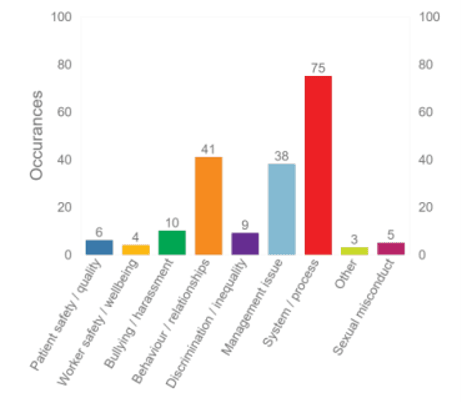
Analysis of reporting preferences indicates that 44.50% of staff requested complete anonymity. 28.27% of staff gave permission for their concern to be escalated to the trust with their name. 19.37% of staff gave permission to escalate their concern without their name, and 7.85% remained fully anonymous to The Guardian Service.
The Trust's two dedicated guardians will often visit various stations and other locations. They maintain regular consultations with the Board to discuss prevalent themes of concerns, exemplary practices, and strategic recommendations. They report to the Board every other month and quarterly to the Raising Concerns Forum.
Our Partnership Mission
To connect patients to the best care, at the right time, first time, every time, through working with our partners.
- Our Partnership Mission highlights in 2025-26
- Hospital Handovers
- Our volunteers and co-response partnerships
Our Partnership Mission highlights in 2025-26
News: Fire and ambulance services' joint working shortlisted for award
A partnership between EEAST and Bedfordshire and Norfolk’s fire and rescue services was shortlisted for ‘Project of the Year’ at the Global Search and Rescue Excellence Awards 2025.
News: New mental health response vehicles transform crisis care across Hertfordshire and west Essex
A new fleet of mental health response vehicles were launched in Hertfordshire and west Essex, in a partnership between EEAST, Hertfordshire Partnership University NHS Foundation Trust, and Essex Partnership University NHS Foundation Trust.
Our Partnership Mission
In 2025–26, we have continued to strengthen our partnership approach across the urgent and emergency care system to improve patient outcomes and reduce avoidable harm. Working closely with NHS England, Integrated Care Boards, acute trusts, and emergency service partners, we have driven forward the implementation of the Handover 45 programme to reduce hospital handover delays and improve ambulance availability for patients in the community.
While system pressures have led to renewed challenges in some areas, collaborative actions including regional escalation frameworks and targeted improvement plans—have contributed to a significant reduction in delay-related harm incidents compared to the previous year.
Alongside this, our extensive network of volunteers and co-response partners, including community first responders, fire and rescue services, and military teams has played a vital role in enhancing response capacity, delivering thousands of hours of care, and reaching patients more quickly in life-threatening situations.
Key achievements this year include the expansion of co-response schemes, the development of structured clinical volunteering pathways, and strengthened partnerships with the Ministry of Defence and specialist emergency responder organisations.
Together, these efforts demonstrate our ongoing commitment to working as a whole system to provide faster, safer, and more effective care for the communities we serve.
Hospital Handovers
Key objectives
Handover 45 Release to Respond was implemented across the region in the winter of 2024-25, with the support of the NHSE regional team, having engaged with the six ICBs in the region.
The primary aim is to reduce avoidable harm in communities as a result of delayed ambulance response times, which are consequential to delayed handovers of emergency patients at acute trusts.
Despite an initial improvement in hospital handover times throughout 2025, since January 2026, at some acute hospitals in the region our crews and patients have experienced unprecedented delays. EEAST has worked hard to mitigate the impact of these delays on patient safety, leading to a significant reduction in delay-related harm incidents in 2025-26 compared with the previous year.
However, we are reliant on our acute trust partners eliminating the unacceptable delays, often many hours in excess of the national standard of 15 mins from Arrival to Handover (A2H) performance, in order to be able to respond to all 999 calls in a timely manner.
Performance summary: Improvement of ambulance handover times
All regional providers have submitted plans to NHS England, and the regional Urgent & Emergency Care (UEC) team is supporting acute trusts that are not meeting these plans. In ICBs with the poorest A2H performance, clinical risk review panels have agreed that the highest system risk is for those patients who wait in the community because of delayed ambulance responses to high category (1 and 2) 999 calls, due to hospital handover delays.
We continued to collaborate with NHS England, ICBs, and acute trusts to identify causes of handover delays and implement solutions. In December 2025, a new regional escalation framework for handover delays was agreed with the NHS England UEC team. We continue to work with ICBs and acute trusts to further improve and to sustain improvements in A2H performance.
Our volunteers and co-response partnerships
Volunteers and co-response
EEAST continues to benefit from a wide range of dedicated volunteers who play an essential role in supporting both our staff and our patients.
Volunteering opportunities include the community engagement group, welfare wagon volunteers, research volunteers, military co-responders, community first responders (CFRs) and emergency responders (ERs). Each group contributes uniquely to patient care, operational resilience and community wellbeing and their collective impact remains essential to the organisation.
EEAST has also expanded the number of active co-responding teams across the region, enhancing capacity and improving response times to life-threatening incidents. In parallel, we further developed and broadened the emergency responder role, creating a structured clinical volunteering pathway within the Trust. This progression route supports personal development and provides new opportunities for volunteers aspiring to enhance clinical skills.
We continue to play a role in shaping volunteering at a national level. As an active member of the Association of Ambulance Chief Executives (AACE) national volunteering group, contributing to sector-wide collaboration, sharing best practice and helping influence the future of ambulance volunteering across the UK.
Community first responders
We are supported by over 800 community first responders trained to attend medical emergencies across the region. These clinically trained volunteers are dispatched to life-threatening incidents to provide early intervention and stabilise patients ahead of ambulance arrival, and can also support lower-acuity calls, with around one third trained in patient lifting.
In 2025-26, CFRs contributed over 225,000 volunteering hours and attended more than 28,000 incidents, demonstrating their significant contribution to patient care and system resilience.
During 2025, with support from charitable investment, the Trust expanded its ‘Roving Car’ scheme, with vehicles strategically positioned across all six counties to further enhance rapid response capability.
Military co-responders
The Trust is supported by over 100 military co-responders who deliver care in a voluntary capacity across the region. Over the past year we’ve expanded our network of military co- responder teams with the addition of a new Army team operating across Cambridgeshire. In 2025-26 teams attended 2,340 incidents and volunteered over 5,500 hours to support EEAST.
In October 2025 a full review of dispatch criteria was undertaken to allow for teams to attend a wider cohort of patients. In turn increasing the types of incidents teams could attend and allow for additional patients to benefit from the care the teams provide.
March 2026 the team also took ownership of new purpose-built emergency response vehicles that will allow for the continued development and expansion of the schemes.
Teams are based at:
- RAF Marham,
- Honington,
- Wyton and,
- Henlow along with St Georges Barracks.
Over the past year, EEAST also entered into a partnership with the Ministry of Defence (MOD) to host a number of MOD paramedics on honorary contracts in a partnership arrangement, which allows military personnel to gain additional clinical exposure.
Fire service co-response
During 2025-26, EEAST continued to strengthen and expand its co-response arrangements with county fire and rescue services across the region.
Fire crews play a critical role in providing early medical intervention, particularly in rural communities, and remain key partners in improving patient outcomes.
Fire and rescue services arrived ahead of EEAST crews at cardiac arrest incidents in approximately 68% of cases, delivering vital life-saving care in the critical early minutes. This collaborative model continues to demonstrate clear patient benefits and enhance overall system resilience.
Looking ahead, we will continue to work closely with fire and rescue partners to further develop the co-response model, supporting our shared ambition to deliver faster, safer, and more effective emergency care across the east of England.
Emergency responder scheme
Working in partnership with the Beds and Herts Emergency Critical Care Scheme (BHECCS), in 2024 we introduced a new volunteering opportunity enabling individuals to join a specialist team of volunteers trained to respond to patients in rapid response vehicles under emergency driving conditions.
These volunteers are equipped with additional clinical skills and are also deployed to trauma-related incidents, including road traffic collisions.
We further broadened our partnership to include the Norfolk Accident Rescue Service (NARS), welcoming a new cohort of 20 volunteers operating across Norfolk. This expansion strengthens our regional capability and supports our ongoing commitment to providing meaningful development opportunities for clinical volunteers across EEAST.
In March 2026, the scheme expanded significantly with the launch of an additional BHECCS response car in Bedfordshire, bringing the total number of emergency responder cars supporting the Trust to four.
The emergency responder team has now delivered 3,600 hours of voluntary service and attended over 1,160 incidents on behalf of EEAST.
Our Productivity Mission
To be an innovative, efficient, and sustainable healthcare partner. We will meet the needs of our communities within the resources available to us.
- Our Productivity Mission highlights in 2025-26
- Response Times
- Operational Resourcing
- 999 Call Answer
- Hear and Treat
- Operational Productivity
- Commercial partnerships
- Finance
- Digital Development
- Sustainability
- Carbon footprint
- Strategy
Our Productivity Mission highlights in 2025-26
News: Lord-Lieutenant of Suffolk officially opens the new Ipswich ambulance hub
We officially opened our new state-of the-art ambulance hub in Ipswich in October. The Lord-Lieutenant of Suffolk, Clare, Countess of Euston, formally opened the facility by cutting the ribbon in front of invited guests, including Ipswich MP, Jack Abbott.
Our Productivity Mission
Throughout 2025-26, we maintained a strong focus on improving productivity to ensure patients receive timely, safe and effective care, even during periods of sustained demand and system pressure.
By maximising the use of available workforce capacity, improving call handling performance, and strengthening clinical decision-making through initiatives such as ‘Hear and Treat’, the Trust has protected response times for the most critically unwell patients and improved access to appropriate care pathways.
Key achievements this year include improved response times across all categories, consistently meeting national 999 call answer targets, increased patient-facing staff hours during peak demand, and a growing proportion of patients safely supported without the need for ambulance dispatch.
Together, these improvements demonstrate how productivity gains have directly enhanced patient experience, clinical outcomes and overall system resilience.
Response Times
NHS ambulance services triage all 999 calls using a nationally defined four-category prioritisation system to ensure the most critically unwell patients are prioritised for timely and effective care.
Category 1 - Immediately life-threatening: For patients requiring an immediate response due to conditions such as cardiac arrest or severe respiratory distress.
Category 2 – Emergency: For serious conditions, including stroke and chest pain, where a rapid clinical assessment and timely transport are essential.
Category 3 – Urgent: For urgent but non-life-threatening needs that may require clinical intervention or referral to alternative care pathways.
Category 4 – Less Urgent: For non-urgent conditions, where patients may be safely assessed, advised or directed to more suitable services without the need for a rapid ambulance response.
Key observations
- Across the year, May 2025, June 2025 and March 2026 delivered the fastest C1 response times, while October 2025, November 2025 and January 2026 recorded the slowest.
- For C2 response times, performance was strongest in May 2025, August 2025 and March 2026 with slower response times again seen in October 2025, November 2025 and January 2026.
- These months of reduced performance align with seasonal pressures, driven by higher demand and wider system challenges.
C1 Response Times
Category C1 maintained a stable performance throughout the year, ranging from a fastest monthly average of 8 minutes 09 seconds to a slowest of 9 minutes 14 seconds. The year-end mean of 00:08:41 reflects an improvement on the previous year’s performance.
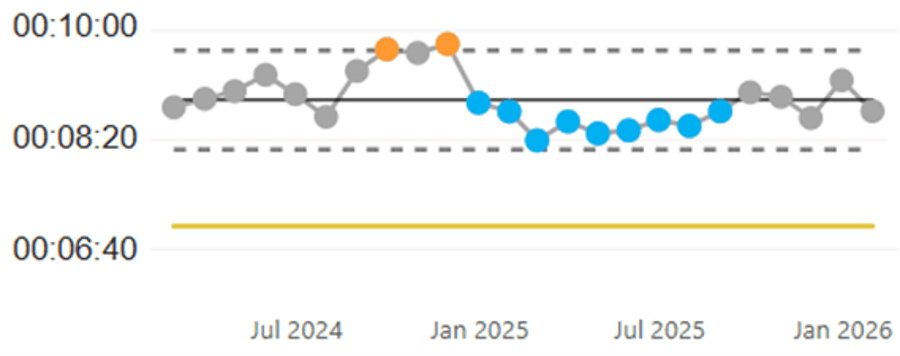
C2 Response Times
Category C2 experienced greater month-to-month variation, reaching a peak of 00:47:04 in January. Despite this fluctuation a year-end mean response time of 00:35:48 was achieved, which is also an improvement on the previous year.
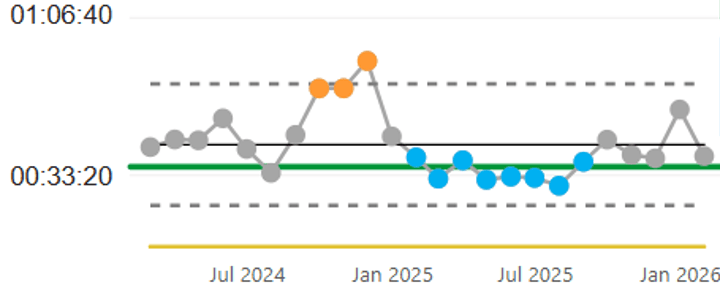
C3 Response Times
Category C3 recorded response times ranging from 01:21:10 to 02:41:42, with a year-end mean of 01:55:52, also representing improvement on the previous year.
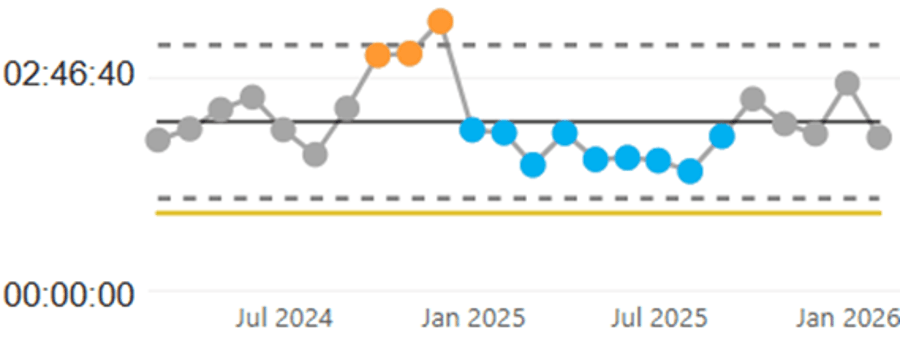
C4 Response Times
Category C4 continued to show the longest response times, ending the year with a mean of 02:40:32. However, this is also an improvement on the previous year’s performance.
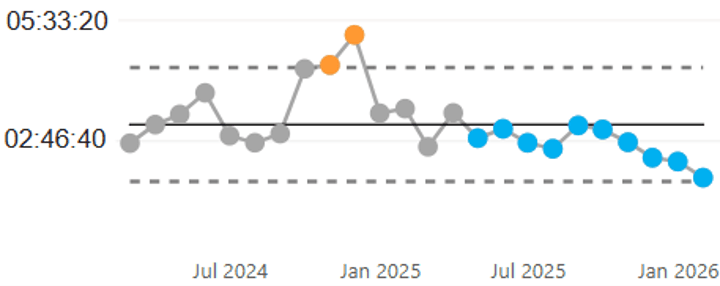
Operational Resourcing
Key observations
- The average monthly target for patient-facing staff hours in 2025-26 was set at 88,872 hours. This target was exceeded in most months throughout the year.
- The highest level of patient-facing staff hours was recorded in the final week of December 2025, reaching 104,030 hours. This reflects increased workforce availability during the winter peak period, when average staffing levels were around 98,000 hours.
- The lowest level of activity occurred in April 2025, with 57,378 patient-facing staff hours recorded. This was slightly below the agreed target for the period.
- Although there were some month-to-month variations, overall performance remained strong, with nine out of the 12 months in 2025-26 exceeding the target.
Weekly patient-facing staff hours were actively planned and managed to ensure sufficient capacity to meet service demand, maintain high standards of patient care, and support consistent service delivery across EEAST.
A focused approach by the resource planning team ensured that patient-facing resourcing remained in line with the NHS Plan target threshold.
This approach contributed positively to workforce and patient safety and enhanced operational stability and resilience across the wider system.
Daily average patient facing staff hours
The graph below shows how patient-facing staff hours were actively managed in line with workforce planning throughout the year, with a phased uplift into the winter months to align capacity with rising operational demand and support effective frontline delivery.
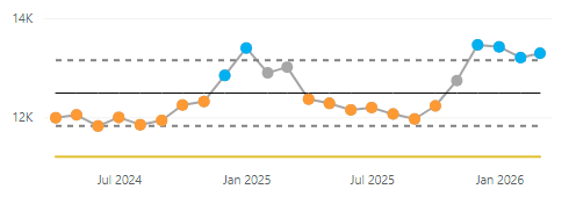
Throughout the year, a continued focus on improving productivity has supported the Trust’s ability to deliver timely, safe and effective patient care. These actions have ensured the best possible use of available resources and capacity strengthening operational resilience and supporting delivery in line with the NHS Plan.
999 Call Answer
Key observations
Mean 999 call answer time (measure of average time to answer)
- Best performance: December, January, February and March (00:00:01)
- Worst performance: June and July (00:00:04)
- Target: 10 seconds
- Performance peaked in December through March with one-second answer times, while June and July showed the slowest at four seconds.
- The target for this metric was achieved.
95th percentile call answer time (measure of longest waiting calls)
- Best performance: December, January, February and March (00:00:00)
- Worst performance: June and July (00:00:27)
- Performance was strongest from December to March with a 0 second answer time, while June and July showed the slowest at 27 seconds.
- The target for this metric was achieved.
| Month | All contacts | 999 Calls | Call answer mean | Call Answer 95th percentile |
|---|---|---|---|---|
| Apr-25 | 117244 | 86190 | 00:00:02 | 00:00:01 |
| May-25 | 121313 | 89433 | 00:00:02 | 00:00:07 |
| Jun-25 | 120871 | 89973 | 00:00:04 | 00:00:27 |
| Jul-25 | 125197 | 93478 | 00:00:04 | 00:00:27 |
| Aug-25 | 119771 | 88921 | 00:00:02 | 00:00:10 |
| Sep-25 | 120708 | 89887 | 00:00:02 | 00:00:03 |
| Oct-25 | 128407 | 95870 | 00:00:02 | 00:00:04 |
| Nov-25 | 127473 | 92747 | 00:00:02 | 00:00:01 |
| Dec-25 | 137060 | 98373 | 00:00:01 | 00:00:00 |
| Jan-26 | 138069 | 100803 | 00:00:01 | 00:00:00 |
| Feb-26 | 113312 | 82196 | 00:00:01 | 00:00:00 |
| Mar-26 | 113655 | 82258 | 00:00:01 | 00:00:00 |
| Total | 1483080 | 1090129 | 00:00:02 | 00:00:01 |
Trends and insights
Demand on the ambulance service continues to increase year-on-year, resulting in a growing volume of 999 calls managed by our teams. We have faced periods of pressure, driven by seasonal trends, winter illnesses, and the impact of weekends and bank holidays when access to wider NHS services is reduced.
Despite these challenges, 999 call answer performance has stabilised, achieving a year-end mean of 00:00:02 and a 95th percentile of 00:00:01 meeting the national target and improving on last year’s position.
A reduction in calls waiting over two minutes was also noted with just 1,859 calls waiting above the threshold representing 0.17% of 999 contacts which is also an improvement on 2024-25.
This reflects the sustained efforts of our teams to deliver month-on-month improvement and demonstrates the positive impact of productivity measures within the EOC, ensuring timely and safe care for our patients and communities.
Hear and Treat
Key observations
Hear and Treat activity increased steadily throughout 2025-26, reflecting continued improvements in clinical assessment and decision-making within emergency operations centres and urgent and community care hubs (UCCH).
Over the year, clinicians managed a total of 159,236 Hear and Treat cases, achieving an overall Hear and Treat rate of 16.22%.
Following relatively stable performance in the first quarter, activity increased from late summer onwards. Monthly Hear and Treat cases rose from 11,053 in April to a peak of 16,425 in December, with the Hear and Treat rate improving from 14.47% in April 2025 to 18.30% in January 2026, before stabilising at 17–18% in the final months of the year.
At system level, Norfolk and Waveney recorded the highest Hear and Treat rate at 18.7%, followed by Bedfordshire and Luton at 17.7%. Cambridgeshire and Peterborough reported the lowest rate at 13.9%, with Hertfordshire and West Essex at 15.4%.
These improvements were delivered through the Trust’s operational productivity workstream, with a focus on enhanced clinical validation and expansion of Hear and Treat activity. This supports the delivery of expert clinical advice, enables patients to access the most appropriate care pathway first time, and reduces unnecessary ambulance deployments, thereby improving patient experience and preserving emergency capacity for those with the greatest clinical need.
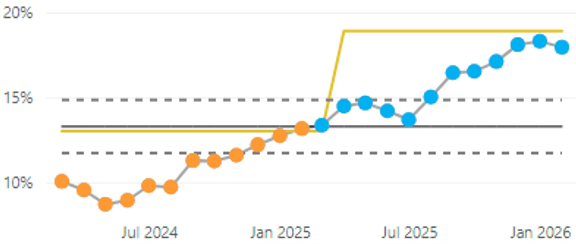
This chart demonstrates the significant improvements in Hear and Treat performance from the lowest period in July 2024, to March 2026 when rates exceeded 17%.
| Month | Hear and Treat cases | Hear and Treat rate |
|---|---|---|
| Apr-25 | 11,053 | 14.47% |
| May-25 | 11,742 | 14.66% |
| Jun-25 | 11,102 | 14.19% |
| Jul-25 | 11,185 | 13.68% |
| Aug-25 | 12,279 | 15.01% |
| Sep-25 | 13,085 | 16.44% |
| Oct-25 | 13,757 | 16.52% |
| Nov-25 | 14,274 | 17.10% |
| Dec-25 | 16,425 | 18.09% |
| Jan-26 | 16,009 | 18.30% |
| Feb-26 | 13,914 | 17.94% |
| Mar-26 | 14,411 | 17.75% |
| Total | 159,236 | 16.22% |
Operational Productivity
EEAST has focused on several operational productivity improvement measures which support delivery of the four Trust missions and ensure timely, safe and effective patient care while making the best possible use of our resources.
These key workstreams highlight where time, capacity and workforce effort are being consumed across the whole patient journey as well as where targeted action can have the greatest impact on supporting frontline availability and service delivery.
A focused approach to this work has helped to protect response times for the most critical patients, support a reduction in operational pressures and strengthen wider system resilience.
The operational productivity measures for 2025-26 are:
- Out of service time
- On scene time (conveyed)
- On scene time (non-conveyed)
- Average hospital handover time
- Handover to clear
- Conveyance rate
- Hear and Treat
- Resource per incident
- Sickness absence
These measures support improvement by focusing attention on the points in the system where time, capacity and clinical decisions have the biggest impact on outcomes. They are designed to turn existing and funded capacity into real, usable response time for patients.
Improving our productivity measures such as reducing out-of-service time and delayed hospital handovers releases hours back into the operational day. This directly improves resource availability and protects response times for the sickest patients. With more vehicles available, patients receive faster response times, and the service is better able to cope with peaks in demand.
Improving conveyance and alternative pathways through Hear and Treat ensures patients receive the right care, first time. Fewer unnecessary conveyances mean less pressure on emergency departments, a swifter resolution for patients, and more emergency capacity for those who need it. This improves patient experience navigating them to the most appropriate pathway for care while supporting overall system flow and service delivery.
Managing resources per incident strengthens operational resilience by ensuring responses are proportionate and clinically appropriate. This reduces duplication, improves consistency, and enables the service to absorb fluctuations in demand more effectively, without compromising patient safety.
Reducing sickness absence supports the Trust’s financial position by making sure staff pay is spent on productive front-line hours. When fewer staff are off sick, there is less reliance on overtime or additional cover, which helps keep pay costs under control. This means the service gets more value from its existing workforce, with capacity focused on delivering care rather than funding backfill. Over time, a healthier workforce supports both financial sustainability and consistent operational performance.
Overall, these productivity measures directly support the Trust’s four missions and ensure EEAST remains responsive, resilient and focused on delivering timely, high-quality care for the communities it serves.
Commercial partnerships
Over the past year, commercial services have continued to strengthen its market position, expanding the portfolio and securing new partnerships across every commercial business unit. The team has sharpened its focus on NHS delivery, deepening collaboration with system partners and ensuring our services directly support operational resilience and patient pathways.
The team continued to operate as a unified department, focusing on revenue generation, service diversification and adding value into the health economy. Collectively the team have delivered just under a million pounds (980k) in social value, tackling local economic inequality and supporting new initiatives.
Ensuring commercial sustainability has enabled surplus revenue to be reinvested to enhance patient care and community health outcomes.
CallEEAST
During 2025-26, CallEEAST maintained strong operational performance, consistently meeting contractual key performance indicators and delivering year-on-year revenue growth. The service expanded its portfolio, securing new partnerships with Harrow Health CIC to support its national ADHD referral contact centre, alongside additional Integrated Care Board (ICB) partners and GP practices.
In response to unprecedented call volumes within Harrow Health CIC’s ADHD service, CallEEAST co-designed and implemented a new call-handling model that significantly improved performance. As a result, call answer times were reduced to record levels and patient experience was markedly enhanced.
CallEEAST further strengthened its primary care offer, operating as a fully integrated virtual receptionist service and onboarding multiple new GP partners. Through direct integration with practice systems, the service provides seamless administrative and appointment-booking support, improving accessibility and ensuring timely, consistent communication for patients, particularly during periods of peak demand.
TrainEEAST
There had been significant transformation within the TrainEEAST team driving financial sustainability and strengthening the training offering. TrainEEAST now deliver a range of new courses and have achieved.
- Centre status with the Resuscitation Council UK (RCUK), including delivery of the first RCUK Advanced Life Support (ALS course) in 2025-26.
- Performance under pressure training and delivery on behalf of Dr Stephen Hurn.
- Partnerships with fire and rescue services across the east of England.
- Strengthened relationships with the police in the delivery of D13 courses.
- Expanded the training footprint across the NHS and social care.
- Achieved Enhanced Learning Credits Administration Service (ELCAS) status and became a training provider for the Ministry of Defence.
TrainEEAST continues to deliver transformation, and this year will drive a niche portfolio to specialise in advanced trauma support, bespoke courses and strengthening the support to emergency services as well as Armed Forces.
National Performance Advisory Group (NPAG)
The National Performance Advisory Group continues to operate in a rapidly changing NHS landscape, supporting organisations nationally through its specialist best value groups, training programmes, and events. Despite wider system reform and uncertainty across the provider and regulatory environment, NPAG sustained strong performance and delivered a positive financial contribution.
Over the past year, NPAG sustained its national footprint, strengthening the membership base and enhancing the training and development offer. Key achievements included:
- Delivery of two national conferences, Theatres and Decontamination and Clinical Engineering.
- A growing programme of facilitated workshops and training, supporting the sharing of best practice across NHS organisations.
Through the networks there was national recognition for the Trusts waste management strategy, demonstrating the value and impact of NPAG-led collaboration. The National Performance Advisory Group now supports approximately 500 members across 18 specialist groups, with over half of all NHS Trusts participating in at least one area of expertise. The group continues to play a pivotal role in shaping innovation, efficiency, and knowledge exchange across the NHS.
Finance
During the financial year 2025-26, EEAST spent £523.8m, an increase of £27.2m over the previous year 2024-25. There was an increase in income received of £25.4m to £523.8m (2024-25 £498.4m), resulting in a near-break-even position with a small surplus of £13k (2024-25 £1.9m surplus). The original financial plan for 2025 26 was to deliver a break-even position.
The majority of the Trust’s income is generated through contractual arrangements with Integrated Care Boards under the NHS Payment Scheme for the commissioned delivery of patient care. The most significant financial change for 2025-26 was EEAST’s £12.8m share of national ambulance activity growth funding.
A strong focus on cost efficiency was maintained throughout the year. Total efficiency savings of £15.0m were delivered against a target of £14.9m, with 91% of these savings achieved on a recurrent basis. For 2026-27, the cost efficiency target is set at £15.0m, alongside an additional £1.1m of corporate cost reductions. Activity is underway to deliver predominantly recurrent efficiencies, with related restructuring costs of £1.6m reflected in the 2025-26 accounts.
The Board will continue to closely monitor the organisation’s financial position and key risks.
EEAST has submitted a draft plan for 2026-27 which aims to deliver a balanced budget.
In 2025-26, EEAST invested £55.0m in capital assets, net of disposals, lease remeasurements and terminations. This comprised -
£11.2m in owned capital assets including:
- £5.8m invested in estates projects, such as solar PV and battery storage, critical roof replacement works and refurbishment of existing sites;
- £1.7m investment in digital infrastructure, including telephony and CAD related works, data migration, and system development;
- £3.8m invested in new vehicles and equipment, including electric ambulances and mass casualty resilience vehicles.
£43.8m in leased assets including:
- £35.1m for fleet leases, primarily supporting the ambulance replacement programme, patient transport services, and driver training and support vehicles;
- £7.6m for estates leases associated with the new Chelmsford emergency operations centre.
The full financial statements for the year ending 31 March 2026 are presented within the Annual Accounts.
Digital Development
Investment and improvement of our digital infrastructure Digital innovation
During 2025–26, Digital Services delivered a programme of key initiatives to strengthen resilience and core digital infrastructure across EEAST, despite operating within a challenging financial context that included a 7% Quality Cost Improvement Programme and a Corporate Efficiency Programme totalling £1.582 million.
Key achievements during the year included the delivery of five major software releases, the upgrade of all Trust devices from Windows 10 to Windows 11, and the introduction of several new digital applications, including a system to manage the Trust’s Information Asset Register.
Further improvements to operational resilience were delivered through the installation of back-up telephony solutions across two Emergency Operations Centres (EOCs), the automation and replacement of paper-based Human Resources forms, and the replacement of scanning infrastructure supporting paper electronic patient care reports (ePCRs).
Other areas of focus included:
- The Trust continued to progress its digital maturity, with the national Digital Maturity Assessment score improving from 1.8 in 2024 to 2.6 in 2025.
- In support of the Digital Green agenda, EEAST was also awarded a sustainability certificate following the procurement of remanufactured, carbon-neutral Dell laptops in place of new devices.
- Robotic Process Automation (RPA) was introduced within emergency operations centres to enable patients with specific conditions to be directed more quickly to the most appropriate care pathway. Delivery exceeded the target to automate a minimum of 25% of activity, and further expansion is planned.
- The Trust has started to explore the use of artificial intelligence to support corporate functions. An ambient voice pilot was established during the year, supported by clear safety guidelines and oversight from the newly formed Artificial Intelligence Group, which also developed and approved the Trust’s Artificial Intelligence policy.
How Digital Innovation is supporting our people and patients
In 2025-26 we upgraded our Apple iPad technology with software that digitally records the treatments provided to a patient on response and shares this data with receiving hospitals, directly enhancing the care provided to patients.
We have also launched an in-house application which tracks clinical professional development, ensuring our staff are equipped with the skills and experience necessary to undertake their roles.
In 2026-27 we will continue to focus on how digital innovation can directly enhance the care of patients with the continued use of Video and clinical records improvements aligned to the Trust’s new Patient Plan.
Cyber security
As the external cyber threat continues to evolve, we have maintained a focus on investing in robust protection, identification and recovery countermeasures, focusing on the recommendations from the Association of Ambulance Chief Executives external assessment of ambulance trusts cyber security capabilities in late 2024. This included the replacement of the Trust’s anti-virus and anti-malware solution and remediated a Cyber Vulnerability TLS.
Data Innovation
We maintained a focus on strengthening the Trust’s data innovation capability and improving efficiency, insight and decision-making across the organisation. A key programme has been the automation of routine reporting, delivering measurable benefits for departments such as people services. By streamlining and standardising reporting processes, automated reporting has reduced the time taken to produce and publish key reports by up to seven working days. This has freed up staff capacity for higher-value analytical work, improved the timeliness and consistency of information, and enabled services to respond. Building on this success, the Trust will further expand automation and self-service analytics to support continuous improvement and data-driven decision-making.
Sustainability
Positive progress was made in 2025-26 to embed environmental sustainability across the Trust and to use our influence with our partners and suppliers. Colleagues are increasingly interested and engaged in working in a more sustainable way to support the address of the environmental crisis, improve operational efficiency and strengthen resilience. Our green champions network had 57 active members and continued to grow monthly, increasing the awareness of sustainability across the Trust through shared learning and collaboration.
Communications and Engagement
Communications and engagement have remained central to increasing staff awareness and participation in sustainability initiatives. Since April 2025, 39 intranet articles have been published on East24, generating over 12,400 views. The sustainability and estates newsletter also continued to promote key initiatives; from January 2026, its transition to a GovDelivery email significantly increased engagement from an average of 280 views per article to a 43% staff readership rate.
Engagement activity was supported through senior-level visibility, including a presentation at the Executive Q&A in March 2026, and ongoing inclusion in staff inductions, ensuring all new starters are introduced to the Trust’s sustainability priorities, including net zero targets and sustainable working practices.
Insights from the October 2025 staff survey (3,970 respondents) highlighted that 88.8% of staff commute by car, with only 3.9% using sustainable travel methods, and 90.2% travelling alone, identifying clear opportunities to promote car-sharing and public transport initiatives.
Energy efficiency campaigns continued, with bank holiday switch-off initiatives delivering reductions in electricity consumption of between 2% and 29.8% compared to the previous year (excluding Christmas).
The Trust has maintained regular sustainability updates via East24 and continues to support workforce development, with staff participating in a 15-month sustainability apprenticeship programme, strengthening internal capability and supporting long-term delivery of the Trust’s environmental objectives.
Critical Estate Improvements
During the current financial year, photovoltaic (PV) systems incorporating battery storage have been installed across seven further Trust sites. These systems reduce our reliance on grid electricity and improve our energy resilience. In 2025-26, 5 of these installations generated an estimated 84,444kWh of electricity and we are validating year end data for the other two installations.
Estates: Key achievements showcase
Quality and assurance
The Trust completed and submitted its Premises Assurance Model (PAM) and Estates Returns Information Collection (ERIC) in 2025, with contributions from all relevant teams, including Finance, Business Continuity, Medical Devices and Sustainability. These submissions provided assurance of compliance and demonstrated strong performance across the estate.
Transforming our estate through strategic investment
A comprehensive capital and refurbishment programme has delivered substantial improvements in safety, sustainability, functionality and staff wellbeing, while supporting compliance and standardisation across the estate and maximising value from existing assets.
Key schemes delivered:
- Addenbrookes’ station – Full refurbishment A major programme of works addressed critical safety and compliance risks, including asbestos removal, installation of energy-efficient systems, fire safety upgrades, and full internal refurbishment. This has resulted in a modern, compliant and energy-efficient working environment.
- Rayleigh station – Space optimisation Underutilised garage space was converted into meeting rooms and office accommodation, improving operational efficiency without increasing the estate footprint.
- Melbourn head office and HART facilities Completion of phase 5 of a multi-year refurbishment programme has delivered fully modernised, standardised facilities, supporting specialist teams and long-term resilience.
- Atlantic Square – Asset repurposing A previously unused property was transformed into a multi-functional operational and training facility, reducing reliance on external venues and delivering ongoing cost savings.
Capital programme delivery
During the year, the Trust completed 59 capital projects with a total value of approximately £6.5 million, spanning sustainability initiatives, station refurbishments, compliance and backlog maintenance, and business resilience works. This programme has strengthened estate condition, improved compliance, and enhanced operational readiness across EEAST.
Estates rationalisation
As part of the Estates Rationalisation programme, two properties were disposed of during the year to reduce non-operational assets and release value for reinvestment:
- The former Bury St Edmunds site was sold for £315,000
- The former Ipswich ambulance station was returned to the acute Trust in December 2025
These disposals were completed in line with governance requirements and have strengthened the Trust’s financial sustainability without impacting operational delivery.
Safety and security enhancements
Additional CCTV systems were installed across the estate and integrated into a central monitoring facility, improving incident response, supporting investigations, and enhancing staff safety and security.
Carbon Footprint
Fleet fuel emissions
In 2025-26, greenhouse gas emissions from Trust-procured fuel consumption were 0.4% below 2024-25. Overall gas emissions reduced by 22% from the 2019-20 baseline, but the Trust did not achieve the target for 2025-26 to reduce emissions by 30% when compared to 2019-20.
Entonox (nitrous oxide) emissions
In 2025-26, greenhouse gas emissions from Entonox consumption were 3% lower than in 2024-25. The Trust achieved 25% below the 2019-20 baseline position but did not achieve the target for 2025-26 to reduce emissions by 30% compared to the 2019-20 baseline.
Energy emissions
In 2025-26, greenhouse gas emissions from purchased electricity and natural gas consumption were an estimated 18% below the 2024-25 position and 25% lower than the 2019-20 baseline but did not achieve the target to reduce emissions by 30% compared to the 2019-20 baseline.
In parallel, a comprehensive energy assessment has been undertaken across the Trust estate. This assessment has identified a number of opportunities where further energy efficiency improvements and associated cost savings can be delivered. These opportunities will be prioritised and progressed in line with available funding, operational requirements, and the Trust’s wider sustainability objectives.
Backlog maintenance
During 2025-26, the Trust successfully delivered a number of critical estates improvements to enhance safety, sustainability and operational resilience. Major roof replacement works were completed at Luton, March and Harlow ambulance stations.
These complex projects required close coordination across multiple departments and have significantly reduced backlog maintenance liabilities, extended the lifespan of estate assets, and safeguarded service continuity.
Electric vehicle infrastructure: Fleet electrification
In 2025-26 electric vehicle (EV) charging points have been installed across 17 Trust sites and one hospital site (Southend), supporting the transition to a low-emission fleet and improved operational sustainability.
A dedicated back-office management system has been implemented to enable the effective monitoring, control, and optimisation of charging for EEAST front-line vehicles, ensuring operational availability and appropriate usage governance.
In addition, the Estates team is working in partnership with NHS England and has engaged with multiple acute hospital sites across the region to establish dedicated EV charging provision for Trust vehicles, supporting wider regional collaboration and infrastructure alignment.
Purchasing
The Trust continues to embed sustainability and social value within its procurement processes. All tenders include a minimum 10% weighting for social value and net zero, with contracts valued above £5 million requiring suppliers to publish a compliant carbon reduction plan in line with legislative requirements and the Trust’s sustainability strategy.
The Trust has also updated its modern slavery statement in line with the Ethical Trading Initiative framework and best practice guidance.
Procurement processes support Net Zero and sustainability objectives through:
- The inclusion of a supplier sustainability agreement as a pass/fail criterion within Find a Tender Service (FTS) procurements.
- Use of the standard selection questionnaire (SQ), incorporating pass/fail criteria for carbon reduction, equality, diversity and inclusion, and modern slavery.
- A balanced evaluation model covering quality, social value (minimum 10 percent) and commercial criteria.
- A social value and sustainable procurement policy has been implemented in accordance with Procurement Policy Note (PPN) 002 requirements.
In estates and facilities, forthcoming contract renewals will be aligned to carbon reduction and social value priorities. Practical measures introduced during 2025-26 include the procurement of 100% recycled, FSC and EU Ecolabel-certified paper, default double-sided printing, adoption of the Plastics Pledge, and the provision of reusable water bottles to all staff, with bottled water restricted to emergency or remote operational scenarios.
Resource optimisation
Across the Trust, teams continue to collaborate to improve sustainability and operational efficiency through targeted initiatives and process improvements.
Within stores, new recycling infrastructure has been introduced, including the rollout of dedicated cardboard recycling bins across all hubs and EOCs. Work is also underway to explore more sustainable approaches to uniform disposal, including a pilot to recycle materials into new garments, with initial trials currently in progress.
Process improvements have supported more efficient ways of working. digital Human Resources forms were successfully implemented in July 2025, replacing paper-based processes, alongside the completion of a large-scale programme to digitise legacy records. In addition, the Trust has significantly expanded the asset booker system, enabling the booking of hot desks and well-being spaces across six sites, and meeting rooms across 12 sites.
This has improved utilisation of available estate and supports more flexible and efficient use of workspace, with further expansion planned.
Waste Management
The Trust’s facilities manager was recognised as ‘NHS Waste Management Champion of the Year’ in late 2025, in acknowledgement of their leadership in improving waste education and resource accessibility across the ambulance sector. Through the establishment of the National Ambulance Waste Group in partnership with NHS England, EEAST has supported the sharing of best practice and enabled other ambulance trusts to enhance waste segregation and management.
The Trust exceeded the national target for offensive waste segregation and achieved a significant reduction in carbon emissions associated with healthcare waste collection and disposal. Emissions decreased by over 50%, from 32.5 tCO2e in 2024-25 to 14.9 tCO2e in 2025-26. The Trust has also commenced trials of reusable sharps and pharmaceutical waste containers, aimed at reducing reliance on single use plastics.
Recycling rates reached a record high during the year, supported by the introduction of Simpler Recycling legislation. The Trust is now consistently recycling more than 30% of its domestic waste.
The sustainability team continues to work collaboratively with the facilities manager; site leads and Veolia contract management to improve waste segregation and recycling performance at targeted locations. Site visits have been undertaken to identify opportunities for improvement and efficiency gains. For example, following a visit to Southend in July 2025—where the recycling rate was 11%—engagement with Make Ready staff, Local Operations Managers and Green Champions has led to substantial progress and by February 2026, the recycling rate at Southend station had increased to 37.4%, exceeding the Trust-wide average of 25.2%.
The Trust continues to collaborate with neighbouring NHS organisations to strengthen waste management practices and align with best practice guidance set out in HTM 07-01.
Wellbeing gardens and biodiversity
We continue to pilot an initiative at Longwater ambulance station to bring in community gardening groups to maintain wellbeing gardens. Costessey Community Gardening Club visit the site at least once a month and we are investigating opportunities for community groups to support other sites.
Costessey and District Community Shed (CDCS) donated a handmade, solid oak bench to the Longwater wellbeing garden. This was their first solid English oak bench as part of ‘Mission: Shoulder to Shoulder’, a nationwide wellbeing initiative delivered in partnership with Diageo’s DRINKiQ.
Wellbeing gardens provide a green space for staff to decompress and take time for themselves in amongst the challenging and traumatic times they may face in their role. These spaces are crucial for staff wellbeing and also offer a space to improve biodiversity with different species of trees, plants, bug hotels and bird feeders thriving. The Trust now has 16 wellbeing gardens with plans to develop more.
The EEAST Charity and the sustainability team collaborated on an application to receive funding for a wellbeing garden at Peterborough. The charity was one of 15 NHS charities across the UK to receive funding from NHS Charities Together, to invest in creating and improving green spaces for the health and wellbeing of NHS staff, patients and communities - the garden will be completed by December 2026.
The sustainability team coordinated the Trust’s second tree planting programme of 420 trees in Dereham, Letchworth, Harwich and Saxmundham from NHS Forest, with a focus on hedging. We will be investigating opportunities to further maximise this and meet the Trust target of 500 trees through schemes such as Trees for Cities and The Woodland Trust.
The targets we use to manage climate-related risks and opportunities and performance against targets
In line with other NHS organisations and our legal commitment outlined in the Health and Care Act 2022, we are committed to reaching net zero greenhouse gas emissions for those emissions we can control by 2040 and for those emissions we can influence by 2045.
We have set an organisational target to reduce absolute emissions we can control by 50% by 2030 (using a 2019/20 baseline). Each month the Trust monitors and has set annual absolute emission targets for the three largest emission sources:
- Fleet emissions (Trust-procured fuel)
- Purchased electricity and natural gas emissions
- Nitrous oxide emissions from Entonox consumption
Task force on climate-related financial disclosures (TCFD)
Governance
Climate related risks and opportunities are embedded within the Trust’s governance framework, ensuring that sustainability considerations inform both strategic decision making and operational delivery.
The Board of Directors has overall responsibility for oversight of climate related risks, including their impact on organisational resilience, financial sustainability, and service delivery. Board assurance is supported through established sub-committee structures, in particular the Finance and Sustainability Committee, which provides oversight of the sustainability strategy, financial planning, and delivery against Net Zero commitments.
The Audit and Risk Committee provide independent assurance on risk management processes, including the identification and management of climate related risks within the corporate risk register. At an operational level, responsibility for climate related risk management is delegated to the Executive Team, supported by the Sustainability team and the Sustainability Working Group. These groups coordinate delivery of the Trust’s Green Plan and ensure alignment between operational priorities, regulatory requirements, and financial planning.
Climate risks are formally recognised within the corporate risk register, including risks relating to fleet decarbonisation, infrastructure readiness, and organisational resilience. These risks are regularly reviewed through governance processes and integrated into wider organisational risk management and assurance frameworks.
Strategy
Climate related risks and opportunities
Climate change represents a significant strategic risk to ambulance service delivery, driven by both physical climate impacts and the transition to a low carbon economy.
Physical risks such as heatwaves, flooding, and severe weather events are expected to increase demand for emergency services and place additional pressure on operational performance. These events are associated with higher call volumes, increased clinical complexity, and disruption to transport infrastructure, impacting response times and workforce wellbeing.
Over the medium to long term, demand is expected to increase due to:
- Greater frequency of extreme weather events
- An ageing population with higher vulnerability
- Increased prevalence of climate related health conditions
Transition risks arise from the requirement to meet NHS Net Zero targets, including:
- Capital investment in zero-emission fleets and charging infrastructure
- Changes to operational models and logistics
- Increasing regulatory and reporting requirement.
Alongside these risks, the Trust has identified opportunities, including:
- Reduced fuel and maintenance costs from fleet electrification
- Improved energy efficiency across estates
- Operational efficiencies enabled by digital optimisation tools.
Climate scenario analysis and resilience
The Trust has considered the resilience of its strategy under a range of climate scenarios, reflecting both high transition/low warming and low transition/high warming futures:
Low warming (1.5°C / Net Zero scenario)
- Transition risks are more prominent
- Significant capital investment required for decarbonisation
- Long-term benefits include cost efficiencies and improved air quality
- Demand impacts are broadly neutral over time.
Higher warming (3°C+ scenario)
- Physical risks dominate
- Significant increases in demand and service pressure
- Greater disruption to infrastructure and workforce
- Sustained increases in operational and financial strain.
The most likely planning scenario is one in which both physical and transition risks occur concurrently, resulting in:
- Sustained growth in service demand
- Increased operational complexity
- Higher capital and revenue expenditure.
This analysis demonstrates that climate change will materially affect service delivery, requiring integration of climate considerations into long term strategic and financial planning.
Financial planning and impact
Climate change is expected to have material financial implications for the Trust.
Key financial risks include:
- Capital expenditure for fleet decarbonisation and estate upgrades
- Increased operational costs from rising demand and staffing pressures
- Investment in resilience measures (e.g. cooling, flood mitigation)
Financial opportunities include:
- Reduced fuel and maintenance costs from electric vehicles
- Lower energy costs through efficiency measures
- Improved productivity through digital and operational innovation
Climate-related impacts are expected to:
- Increase pressure on revenue budgets due to higher demand
- Drive reprioritisation of capital programmes towards sustainability and resilience
- Require integration into medium- and long-term financial planning.
The Trust also actively seeks funding to support delivery, including NHS capital allocations, sustainability funding streams, and external funding opportunities aligned to Net Zero objectives.
Risk management
The Trust has established processes to identify, assess, and manage climate related risks as part of its wider risk management framework.
Climate risks are:
- Identified through strategic planning processes, Green Plan development, and national policy requirements
- Assessed using the Trust’s corporate risk management framework, including evaluation of likelihood, operational impact, and financial exposure
- Managed through mitigation strategies embedded across organisational functions.
These risks are formally recorded within the corporate risk register and are subject to regular review and escalation through governance structures, including executive oversight and Board sub-committees.
Climate risk management is integrated into key operational areas, including:
- Procurement: incorporating carbon reduction criteria and supplier requirements
- Estates: investment in energy efficiency and climate resilience
- Workforce planning: supporting staff wellbeing and capacity under climate pressures
- Fleet and digital strategy: enabling decarbonisation and operational efficiency.
This integrated approach ensures that climate risks are managed alongside other strategic and operational risks, supporting organisational resilience.
Metrics and targets
Targets
In line with the Health and Care Act 2022 and NHS Net Zero strategy, the Trust has adopted the following targets:
- Net zero emissions (direct control): by 2040
- Net zero emissions (including supply chain): by 2045
- Interim target: 50% reduction in emissions by 2030 (against 2019/20 baseline)
The Trust also monitors annual targets across key emission sources:
- Fleet emissions
- Energy consumption (electricity and gas)
- Nitrous oxide (Entonox) emissions
Performance and metrics
Performance against climate related metrics is monitored and reported annually.
Key indicators include:
Fleet emissions:
- 0.4% reduction compared to 2024–25
- 22% reduction from 2019–20 baseline
Energy emissions:
- 18% reduction compared to 2024-25
- 25% reduction from 2019-20 baseline
Entonox emissions:
- 3% reduction compared to 2024-25
- 25% reduction from 2019-20 baseline
Fleet electrification:
- EV charging infrastructure deployed across multiple sites
Renewable energy generation:
- Solar installations generating over 84,000 kWh annually.
The Trust continues to expand its measurement and reporting capability, including improvements to data quality, emissions tracking, and performance monitoring systems.
Summary
Climate change presents a material and increasing risk to the Trust’s operational delivery, financial sustainability, and long-term resilience.
Through established governance, integrated risk management, and alignment with NHS Net Zero targets, the Trust is taking a structured approach to managing these risks and opportunities.
While climate related costs are expected to increase in the near term, particularly through capital investment and rising demand, early and proactive action provides an opportunity to improve efficiency, reduce long term costs, and enhance service resilience
Conclusion
Throughout 2025-26, the East of England Ambulance Service NHS Trust has continued to make meaningful progress against its strategic ambitions, delivering high-quality care to a growing and increasingly complex population whilst operating within a challenging and evolving system.
This year has seen tangible improvements in patient outcomes, operational performance and productivity, alongside continued investment in our people, infrastructure and partnerships despite the challenging context in which we are all operating.
Our patients remain the driving focus for the organisation, all of the improvements we are delivering are with an ambition to ensure that those who need urgent and emergency care in the east of England receive high quality, timely and appropriate care. Essential to achieving this ambition, is ensuring our staff are operating in a safe 60 and supportive environment and we are developing meaningful partnerships to help drive improvements across the services.
The launch of our Corporate Strategy for 2025–30 provided a clear and ambitious roadmap. Built on extensive engagement with our people, patients and partners, it sets out how we will continue to evolve—saving lives, investing in our workforce, working collaboratively and delivering value for the communities we serve.
While challenges remain, the progress made this year provides confidence that we are moving in the right direction. We are proud of what has been achieved and remain committed to building a responsive, resilient and forward-looking ambulance service that consistently delivers high-quality care for everyone across the east of England.
I confirm that this performance report complies with the reporting requirements.
Neill Moloney Chief Executive Officer June 2026
Directors report
The Board
Our Board of Directors met in public on five occasions between 1 April 2025 and 31 March 2026 with all meetings being quorate. No scheduled meetings were stood down during the year. The Board met in private ten times to discuss confidential matters; all decisions made were reported to the in public Board meeting. Extraordinary meetings were held to approve the annual report and accounts, and an Annual General Meeting (AGM) was held in September 2025.
Our Trust Board voting members consist of our chair, five non-executive directors, the chief executive officer (CEO) and four executive director members, as the corporate decision-making body of the Trust. Accountable for all strategic, operational, and financial decision-making, the Board has powers to delegate and decide to exercise any of its appropriate functions through a sub-committee.
Our Board was supported by three non-voting executive directors and three associate non-executive directors during the year.
The Chair is responsible for ensuring the Board of Directors focus on the strategic development of the Trust and that robust governance and accountability arrangements are in place. We are required by the Health and Social Care Act 2008 (Regulated Activities) Regulations 2014 to ensure that our directors are fit and proper for their roles. To fulfil this responsibility, the Trust has undertaken appropriate Fit and Proper Persons checks for all directors during 2025-26.
In the same period there were changes to key executive roles, including the appointment of a substantive chief operating officer in June 2025, the appointment of the director of digital and innovation in August 2025, a new role focussed on enhancing EEAST’s digital capability, and the appointment of a new chief finance officer in July 2025 and non-executive director in September 2025.
One non-executive director and one associate non-executive director stood down in 2025 26.
Board sub-committees
The Board delegated certain powers to our sub-committees, except for executive powers, and each of these sub-committees was chaired by a non-executive director, working in conjunction with a lead executive director, reporting directly into the Board providing assurance over key matters. They also escalated emerging issues for the Board's attention.
The Board has established seven sub-committees which worked together to support cross-reporting and consideration of assurance to support the Board by:
- Providing advice on strategic development and performance within terms of reference
- Gaining assurance and providing oversight on key aspects of strategic goals
- Undertaking specific responsibilities as approved by the Board
Each sub-committee had formal terms of reference, approved by the Board and set out in the Standing Orders, establishing the roles and responsibilities of our sub-committees.
The terms of reference were reviewed as part of a formal annual committee effectiveness review with recommendations for areas for development being approved by the Board. Each sub-committee had a business planner to help direct the focus of assurance.
Audit and Risk Committee
The Audit and Risk Committee provided the Board with a means of independent and objective review of financial and corporate governance, internal control, assurance processes and risk management across the whole of the Trust’s activities both generally and in support of the Annual Governance Statement.
Membership and attendance
- George Lynn (Chair), Non-Executive Director (6 of 6)
- Chris Brook, Non-Executive Director (4 of 6)
- Susan Wilkinson, Non-Executive Director (1 of 1)
- Catherine Glickman, Non-Executive Director (1 of 1)
- Omid Shiraji, Associate Non-Executive Director (1 of 4)
The chief finance officer is a standing attendee at the Audit Committee. All other non-executive directors (excluding the chairman) are invited to attend, as are the external auditors, internal auditors and counter fraud lead. Other executive directors, including the CEO and other senior managers of the Trust are regularly invited to attend meetings of the Audit Committee for specific items.
Nominations, Remuneration and Terms of Service Committee
The Nominations, Remuneration and Terms of Service Committee determined appropriate remuneration and terms of service for the chief executive and other executive directors and regularly reviewed the structure, size and composition (including the skills, knowledge and experience) required of the Board and made recommendations to the Board or NHSE as appropriate, about any changes.
Membership and attendance
- Catherine Glickman (Chair), Non-Executive Director (6 of 6)
- Mrunal Sisodia, Non-Executive Director, Trust Chair (6 of 6)
- Wendy Thomas, Non-Executive Director (2 of 2)
- Julie Thallon, Non-Executive Director (5 of 6)
- George Lynn, Non-Executive Director (3 of 6)
- Chris Brook, Non-Executive Director (0 of 6)
- Susan Wilkinson, Non-Executive Director (4 of 4)
- Omid Shiraji, Associate Non-Executive Director (4 of 6)
Quality Governance Committee
The Quality Governance Committee provided assurance to the Board that there was an effective system of quality governance and internal control across clinical activities to ensure patients are treated with compassion, dignity and respect. Provided assurance that the essential standards of quality and safety are being delivered by the Trust. Also provided assurance that the processes for the governance of quality are embedded throughout the organisation to improve the experience of patients.
Membership and attendance
- Susan Wilkinson, Non-Executive Director (Chair) (3 of 3)
- Catherine Glickman, Non-Executive Director (4 of 5)
- Wendy Thomas, Non-Executive Director (2 of 2)
- Julie Thallon, Non-Executive Director (3 of 5)
- Victoria Corbishley, Associate Non-Executive Director (3 of 5)
- Omid Shiraji, Associate Non-Executive Director (3 of 3)
- Simon Chase, Chief Allied Health Professional / Director of Quality (4 of 5)
- Simon Walsh, Medical Director (4 of 5)
The chairman, chief executive and all other non-executive directors are invited to attend, and other executive directors, senior managers, and health professional staff attend for specific items.
Finance and Sustainability Committee
The Finance and Sustainability Committee provided assurance to the Board that financial performance was delivered in accordance with the agreed strategy, plans and trajectories. Providing assurance on the delivery and performance of the sustainability strategy also overview and scrutiny in any areas of finance and sustainability referred to it by the Board.
Membership and attendance
- Chris Brook (Chair), Non-Executive Director (6 of 6)
- Julie Thallon, Non-Executive Director (5 of 6)
- Omid Shiraji, Associate Non-Executive Director (5 of 6)
- George Lynn, Non-Executive Director (1 of 3)
- Steven Course, Chief Finance Officer (5 of 5)
- Kevin Smith, Director of Finance (1 of 1)
- Sian Clark, Director of Digital innovation (3 of 4)
Other members of staff are invited to attend, as required.
Performance Committee
The Performance Committee provided assurance to the Board that operational performance was delivered in accordance with the agreed strategy, plans and trajectories. It provided overview and scrutiny in any areas of operational performance referred to it by the Board.
Membership and attendance
- Julie Thallon (Chair), Non-Executive Director (5 of 6)
- Wendy Thomas, Non-Executive Director (2 of 2)
- George Lynn, Non-Executive Director (2 of 3)
- Chris Brook, Non-Executive Director (0 of 6)
- Susan Wilkinson, Non-Executive Director (4 of 4)
- Darren Meads, Chief Operating Officer (4 of 6)
The chairman, chief executive officer and non-executive directors are invited to attend. Other Trust directors and managers and health professional staff attend for specific items.
People Committee
The People Committee provided assurance to the Board on the quality and impact of the people strategy and the effectiveness of people management in the Trust. This included but was not limited to recruitment and retention, training, appraisals, employee health and wellbeing, learning and development, employee engagement, reward and recognition, organisational development, leadership, workforce development, workforce spend and workforce planning and employee culture, diversity and inclusion.
Membership and attendance
- Catherine Glickman (Chair – from 03.07.2025), Non-Executive Director (4 of 5)
- Wendy Thomas (Chair – to 03.07.2025), Non-Executive Director (2 of 2)
- Susan Wilkinson, Non-Executive Director (2 of 2)
- George Lynn, Non-Executive Director (3 of 4)
- Marika Stephenson, Chief People Officer (4 of 5)
- Dr Hein Scheffer, Director of Strategy, Culture and Education (3 of 5)
Other members of staff are invited to attend, as required.
Strategy and Change Group
Formerly the Board Planning and Integration Group, the Strategy and Change Group plays a key role in shaping strategy, translating it into deliverable change, and assuring on the benefits of this change, and includes full Board membership.
Membership and attendance
- Mrunal Sisodia, Trust Chair (2 of 2)
- Catherine Glickman, Non-Executive Director (1 of 2)
- Chris Brook, Non-Executive Director (0 of 2)
- Darren Meads, Chief Operating Officer (0 of 2)
- George Lynn, Non-Executive Director (0 of 2)
- Hein Scheffer, Director of Strategy, Transformation and Governance (2 of 2)
- Julie Thallon, Non-Executive Director (1 of 2)
- Marika Stephenson, Chief People Officer (1 of 2)
- Omid Shiraji, Associate Non-Executive Director (2 of 2)
- Sian Clark, Director of Digital Innovation (2 of 2)
- Simon Chase, Chief Paramedic and Director of Quality (1 of 2)
- Simon Walsh, Medical Director (1 of 2)
- Steven Course, Chief Finance Officer (2 of 2)
- Susan Wilkinson, Non-Executive Director (2 of 2)
- Neill Moloney, Chief Executive (2 of 2)
The Board as Charity Trustee
The East of England Ambulance Service NHS Trust Charitable Funds Charity (The Charity) is registered with the Charities Commission for England and Wales (Registered charity number 1047987) and operates to raise funds to support the staff, volunteers, and local communities of the east of England, strengthening the provision of outstanding care to patients.
The Corporate Trustee is the sole Trustee, and it acts through the Board of Directors. Individual directors act as ‘agents’ of the Trustee and are not individual trustees. The Corporate Trustee is legally responsible for all the Charity’s activities.
Charitable Funds Committee
The Charitable Funds Committee was responsible for managing and monitoring the charitable funds held by the Trust on behalf of the Corporate Trustee.
Membership and attendance
- Chris Brook (Chair), Non-Executive Director (4 of 4)
- George Lynn, Non-Executive Director (3 of 4)
- Steven Course, Chief Finance Officer (3 of 3)
- Kevin Smith, Director of Finance (1 of 1)
Other members of staff are invited to attend, as required.
Board Voting Directors
- Mrunal Sisodia. Trust Chair
- Julie Thallon. Senior Independent Director, Vice Chair, Chair of the Performance Committee
- George Lynn. Non-Executive Director, Chair of the Audit Committee
- Susan Wilkinson. Non-Executive Director, Chair of the Quality Committee (from 1 September 2025)
- Catherine Glickman. Non-Executive Director. Chair of the People Committee, Chair of the Remuneration and Nomination Committee.
- Chris Brook. Non-Executive Director. Chair of the Charitable Funds Committee, Chair of the Finance and Sustainability Committee.
- Wendy Thomas. Non-Executive Director (to 3 July 2025). Chair of the People Committee
- Neill Moloney, Chief Executive Officer
- Kevin Smith, Director of Finance (to 11 July 2025)
- Steven Course, Chief Finance Officer (from 11 July 2025)
- Marika Stephenson, Chief People Officer and Deputy Chief Executive
- Darren Meads, Chief Operating Officer
- Simon Chase, Chief Paramedic and Director of Quality.
Non-voting Directors
- Simon Walsh, Medical Director
- Dr Hein Scheffer, Director of Strategy, Transformation and Governance
- Sian Clark, Director of Digital Innovation (from 7 August 2025)
- Kiran Mahil, Associate Non-Executive Director (to 20 August 2025)
- Victoria Corbishley, Associate Non-Executive Director
- Omid Shiraji, Associate Non- Executive Director
Declaration of Interest
The Trust is committed to transparency as such all members of the Board are required disclose any existing or potential interest that may be conflicted with their roles. As part of that commitment the Trust has published on its website an up-to date register of interest, including gifts and hospitality for decision making staff within the past twelve months, as required by the ‘Managing Conflicts of Interest in the NHS’ guidance.
Annual Governance Statement
Scope of responsibility
As Accountable Officer, I have responsibility for maintaining a sound system of internal control that supports the achievement of the NHS trust’s policies, aims and objectives, whilst safeguarding the public funds and departmental assets for which I am personally responsible, in accordance with the responsibilities assigned to me. I am also responsible for ensuring that the NHS Trust is administered prudently and economically and that resources are applied efficiently and effectively. I also acknowledge my responsibilities as set out in the NHS Trust Accountable Officer Memorandum.
The purpose of the system of internal control
The system of internal control is designed to manage risk to a reasonable level rather than to eliminate all risk of failure to achieve policies, aims and objectives; it can therefore only provide reasonable and not absolute assurance of effectiveness. The system of internal control is based on an ongoing process designed to identify and prioritise the risks to the achievement of the policies, aims and objectives of East of England Ambulance Service NHS Trust, to evaluate the likelihood of those risks being realised and the impact should they be realised, and to manage them efficiently, effectively and economically. The system of internal control has been in place in East of England Ambulance Service NHS Trust for the year ended 31 March 2026 and up to the date of approval of the annual report and accounts.
Capacity to handle risk
Risk management is integral to the Trust’s governance and decision-making arrangements and supports business planning and the delivery of strategic objectives.
The Trust Board retains overall accountability for risk management and for ensuring adherence to the principles of good governance, including approval of the Trust’s risk management framework and risk appetite, and routine review of principal risks through the Board Assurance Framework.
The chief executive is the Trust’s Accountable Officer for risk, supported by the director of strategy, transformation and governance who leads the corporate arrangements for risk, compliance and assurance.
The Compliance and Risk Group provides assurance to the Audit and Risk Committee and supports a proactive, risk-aware culture through horizon scanning, constructive challenge and oversight of the identification, review and escalation of material risks within agreed tolerances.
All staff are responsible for managing risk within their areas of responsibility and are trained and equipped in accordance with their authority and duties, supported by the Risk Management Policy and complementary guidance (including risk assessment, scoring, controls and escalation). Risk management training is embedded within corporate induction and mandatory annual refresher e-learning, with additional targeted support for management teams and risk owners to promote consistent application of the framework and effective use of the Trust’s Insight risk system.
Learning and good practice are identified and promoted through governance forums and assurance activity, informed by internal audit and external sources (including NHSE and relevant regulatory recommendations), and embedded through feedback to risk owners and ongoing refinement of guidance, training and reporting.
The risk and control framework
The Trust’s risk management strategy is based on a consistent, organisation-wide approach to identifying, evaluating, transferring and controlling risk. Risks (and changes in risk) are identified through routine operational and clinical governance, incident/ complaints/ claims learning, audit and assurance activity, business continuity arrangements, information governance and cyber monitoring, and horizon scanning for external change; they are recorded on the appropriate risk register with clear ownership.
Risks are evaluated using an agreed scoring methodology (likelihood and consequence) to determine inherent, current/ residual and target risk scores, which in turn informs prioritisation and escalation to corporate and board level oversight where required.
Risks are controlled through documented preventative and detective controls (e.g., policies, training, clinical pathways and operational processes, equipment and digital controls) and time-bound mitigation actions whose effectiveness is reviewed through risk score movement, delivery of actions and assurance/ impact measures. Where appropriate, risk is transferred or shared through mechanisms such as NHS Resolution/ insurance arrangements and contractual or partnership agreements, while retaining governance oversight of residual exposure and dependencies.
The Trust’s governance structure is underpinned by increased scrutiny and focus on risk oversight. The Audit and Risk Committee have the primary responsibility in providing assurance to the Board regarding effectiveness of the Trust’s system of integrated governance, risk management and internal control. Each of the Trust’s four committees (Finance and Sustainability, Quality Governance, People, Performance) and the new Compliance and Risk Group have responsibility for the oversight of specific risks associated to their respective remit.
Risk Appetite
The Board recognises that risk is inherent in the provision of healthcare and has established a defined approach to risk appetite to ensure clarity on the level and types of risk the Trust is willing to accept in pursuit of its strategic objectives, whilst meeting statutory duties and regulatory expectations.
The Trust’s risk appetite is set and owned by the Trust Board and is agreed through risk appetite and tolerance statements which are reviewed periodically and informed by the Trust’s current risk profile (including the Board Assurance Framework and strategic and corporate risk registers), historic performance and learning from incidents, and internal and external assurance (including audit activity), together with the Trust’s capacity and capability to manage and mitigate risk. The agreed appetite and tolerances provide a framework for decision-making and prioritisation, informing escalation thresholds and the action required to reduce, mitigate, transfer/share or, where appropriate, explicitly accept risk at the appropriate level.
The Trust wide risk appetite statement is supported by individual directorates appetite statements outlining accepted tolerance thresholds levels and underpinning governance. This approach facilitates safe service planning, provide assurance to regulators and maximise opportunities through a balanced risk taking versus reward.
Quality Governance Arrangements
The Trust’s quality governance arrangements are designed to ensure that the quality and safety of care are routinely monitored, reviewed and improved across all services, and that the Board receives appropriate assurance in relation to compliance with regulatory requirements. Quality oversight is delivered through the Trust’s committee and sub-group structure, with the Quality Governance Committee providing Board-level scrutiny and assurance, supported by a range of formal subgroups (including safeguarding, medicines management, health and safety and infection prevention and control) that monitor performance, risks, incidents and improvement actions within their remits. These arrangements are underpinned by a comprehensive suite of policies, procedures and clinical/operational standards, together with defined escalation routes into corporate risk registers and the Board Assurance Framework where material risks or adverse trends are identified.
The Trust obtains assurance on the quality of performance information through defined information standards and controls, including routine data quality checks and validation processes prior to publication and use, clear ownership and sign-off of reports, and triangulation of performance intelligence across sources (for example activity, quality, workforce and finance) through the Integrated Performance Report and committee reporting. Performance is reviewed through established reporting cycles, with variation and adverse trends challenged and, where appropriate, translated into risk entries, improvement actions and follow-up assurance to confirm effectiveness. Assurance is further supported through the clinical audit programme and patient experience activity, with findings, learning and agreed actions reviewed through the quality governance structure and reported through the Quality Governance Committee.
Routine assurance on compliance with CQC registration requirements is obtained through the Trust’s quality governance framework, including scrutiny by the Quality Governance Committee of compliance risks, key quality indicators, incident and claim’s themes, audit findings and delivery of improvement plans. Progress against CQC-related improvement actions is monitored through the Rapid Quality Review Meeting, with issues escalated through the Quality Governance Committee and, where required, via the Audit and Risk Committee to provide Board visibility of delivery, emerging risks and the effectiveness of actions taken.
Data Security
The Trust manages information governance and cyber/data security risks through a combination of policy, training, technical and physical controls, and routine monitoring and assurance. Data security responsibilities are reinforced through corporate induction and mandatory training, supported by additional awareness activity. Control measures include, but are not limited to, physical security arrangements, encryption, access controls, audit trail monitoring and local compliance checks.
Information governance and cyber risks are recorded and managed through the Trust’s risk management framework, with oversight and assurance provided through the Information Governance Group and reported to the Finance and Sustainability Committee and the Senior Information Risk Owner (SIRO). Material information governance and cyber risks are escalated through the corporate risk registers and, where required, to the Board Assurance Framework. Assurance includes monitoring of information governance incidents (including any personal data-related serious incidents where applicable), relevant audit activity, and the Trust’s annual Data Security and Protection Toolkit (DSPT) assessment and outcomes.
Major Risks
The Trust’s principal (major) risks to the delivery of its strategic objectives, including significant clinical and operational risks, are captured through the Board Assurance Framework (BAF). The BAF provides the Board with a structured view of each principal risk, the key controls in place, the sources of assurance, and any gaps in assurance and mitigating actions required.
Principal risks are reviewed routinely through Board and committee reporting, with scrutiny undertaken within the relevant Board committees and any material assurance concerns escalated via the Audit and Risk Committee to the Trust Board. The BAF is reviewed at least annually to ensure continued alignment to the Trust’s strategic objectives and risk appetite and is updated in-year to reflect changes in the internal and external risk environment.
During the year, the Trust reviewed and strengthened its principal risks to reflect the prevailing operational, quality, workforce, financial and transformation challenges and the mitigations in place. The in-year principal risks recorded on the BAF were:
- SR1: Demand and capacity: If capacity does not match demand, response times will not improve
- SR2: Quality governance: If clinical and operational models do not meet required standards, avoidable harm or regulatory concerns may arise
- SR3: Estates: If estates infrastructure is not adequately maintained, facilities may not support safe, high-quality care
- SR4: Finance (use of resources): If financial sustainability is not achieved, the Trust may be unable to deliver safe and effective services
- SR5: Cyber security: If a cyber incident occurs, digital systems may be compromised, leading to patient, operational or reputational impact
- SR6: System partnership working: If EEAST does not work effectively with system partners, patient flow and pathways may be suboptimal
- SR7: Workforce sustainability: If workforce plans do not support effective recruitment, the Trust may experience skills shortages and reduced resilience.
- SR8: Staff retention: If the Trust does not manage retention effectively, skills shortages and morale impacts may affect service quality
- SR9: Organisational development: Without effective OD support, cultural development and change management may not achieve expected improvements
- SR10: Digital: If digital systems are not modernised or integrated, they may not support efficient, high-quality care or future needs.
In addition to the in-year principal risks, the Trust considers future and emerging risks through horizon scanning, system planning and assurance activity (including learning from incidents, complaints and claims, internal audit and external regulatory intelligence), and reflects these within the BAF and corporate risk registers where appropriate. Mitigating actions are monitored through governance and performance reporting arrangements, and effectiveness is assessed through a combination of delivery against agreed action plans, movement in residual risk scores, and improvement in relevant outcome and assurance measures (including quality, access and performance indicators and audit findings).
Future risks include:
- Industrial Action risk. National pay challenge and the restart of Project 5 may increase the likelihood of industrial action and disruption to change delivery.
- Employment Rights Act implementation. Major legislative reform will require significant policy, training and process changes, creating compliance risk at a time of constrained capacity.
- Job evaluation and banding risk. New job evaluation requirements and current union challenge on ECA and EMT banding may create workload, engagement and financial exposure.
- Retention assumptions in workforce planning. If attrition assumptions are not sufficiently robust, recruitment may fail to keep pace with workforce losses, affecting staffing resilience and service capacity.
Well-Led Framework
The Trust Board keeps its own effectiveness under review and undertakes a programme of development to ensure it has the appropriate balance of skills, experience and capacity to provide effective leadership and oversight. The Board also maintains oversight of compliance with the Fit and Proper Persons requirements, with the Trust Chair holding the Fit and Proper Persons Test Register and annual checks completed for those in scope.
During the year, the Trust undertook self-assessment against the CQC well-led quality statements and NHS England well-led expectations to inform its understanding of governance, leadership and culture risks and the associated improvement priorities. The Trust reviewed its governance structure to ensure it remained fit for purpose, with clear reporting and escalation routes that support scrutiny, triangulation of performance and risk, and assurance to the Board and its committees. Freedom to Speak Up arrangements are supported by an external provider (Guardian Service Ltd); quarterly and annual reports are received by the Board to provide oversight of themes, concerns raised and actions taken.
Significant in-Year matters
The Trust was subject to an unannounced Care Quality Commission (CQC) inspection in November 2024, and, at the time of writing, the Trust has not yet received the final report.
In January 2025, the Trust received regulatory enforcement action, including a Section 29A Warning Notice and a Section 64 notice (Regulation 17) under the Health and Social Care Act 2008. The key areas identified for improvement included compliance with mandatory training, access and response performance (including call handling and Category 2 response times), workforce capacity, investigation and learning from controlled medicines incidents, and organisational culture and leadership across emergency operations centres and urgent and emergency care services.
During the year, the Trust also received a notification of contravention from the Health and Safety Executive (HSE) in relation to the management of work-related stress, including the identification of risks, the adequacy of controls, management support arrangements, staff awareness of relevant policies and procedures, and the monitoring and review of stress risk control measures. The Trust implemented actions to address the matters raised and, at the time of writing, the HSE has confirmed that the Trust has complied with the requirements of the notice.
The Trust has established improvement plans in response to these regulatory matters, with delivery monitored through established governance and assurance arrangements. Progress and effectiveness are reviewed through the Rapid Quality Review Meeting and the Quality Governance Committee, with escalation to the Audit and Risk Committee and the Trust Board where required. Assurance is obtained through routine quality and performance reporting, internal and external assurance activity, and the tracking of action plans to evidence sustained improvement and effective control of the associated risks.
Principal risks to compliance with NHS Provider Licence Section 4
The Trust Board recognises the importance of the principles, systems and standards of good corporate governance and is committed to ensuring these remain effective and are subject to regular review. The principal risks to the Trust’s compliance with NHS Provider Licence Section 4 (governance) relate to the effectiveness of governance and oversight arrangements, clarity of accountabilities and delegation, and the availability of timely and accurate information to support robust decision making and assurance. The Trust mitigates these risks through the following key controls and assurance mechanisms:
- Effectiveness of governance structures and committees: maintained through Board-approved committee structures and Terms of Reference, annual workplans, cross-membership arrangements, and routine review of effectiveness (including periodic external review). arrangements, and routine review of effectiveness (including periodic external review).
- Clarity of responsibilities, reporting lines and accountabilities: supported through defined schemes of delegation, clear executive director accountabilities for internal control within their portfolios, and routine committee assurance reporting to the Board; the company secretary provides independent advice on governance and regulatory compliance.
- Timely, accurate and sufficiently triangulated information to assess risk and compliance: secured through the Integrated Performance Report, committee assurance reports, key metrics/KPIs and exception reporting, together with validation and data quality controls described within the Trust’s performance information arrangements.
- Rigour of Board oversight, scrutiny and escalation: delivered through scheduled Board and committee cycles, explicit escalation triggers, and review of strategic and corporate risks within committees with material concerns escalated via the Audit and Risk Committee to the Trust Board.
- Adequacy of assurance over internal control and delivery of actions: supported through the Board Assurance Framework, internal and external audit programmes, counter fraud assurance, and tracking of agreed actions arising from assurance and regulatory activity to evidence completion and effectiveness.
The Trust is led by a unitary Board which provides strategic direction and oversight within a framework of internal control, with appropriate challenge of performance and risks.
The Board monitors the effectiveness of internal control systems and processes through clear accountability and reporting arrangements. Executive Directors are accountable for the design and operation of controls within their portfolios, including the identification and management of weaknesses and the provision of evidence to support compliance with statutory duties and regulatory requirements.
Working on delegated matters on behalf of the Trust Board, there are six Board Committees:
- Audit and Risk Committee
- Nominations, Remuneration and Terms of Service Committee
- Performance Committee
- Finance and Sustainability Committee
- Quality Governance Committee
- People Committee
A robust reporting and escalation approach is applied to ensure the Board, as a collective, maintains oversight and responsibility for all matters delegated. The Board receives assurance from Committees in several ways, including:
- An annual plan for each committee’s work, reporting to the Board on progress.
- Committee assurance reports presented to each formal Board meeting.
- Committee chairs drawing to the attention of the Board any issues that require disclosure to the full Board or require executive action.
- Committee annual reports to the Board setting out how each committee has discharged its responsibilities in accordance with its Terms of Reference.
- The Trust’s annual report includes a section describing the work of each committee in discharging its responsibilities.
- Committee review of the strategic and corporate risks pertinent to its Terms of Reference, as well as oversight of the overall risk profile.
- Committee escalation triggers for escalating items from committee to Board.
- The Board chair receives a copy of all committee meeting papers.
- The company secretary provides independent advice to committee chairs and members on compliance with the law and regulatory matters.
- Monitoring the work of internal audit, external audit and other assurance functions, such as the Counter Fraud service.
- KPIs and metrics are incorporated into the Integrated Performance Report and committee assurance reports for triangulation.
The Trust undertakes annual Board and committees’ effectiveness assessments, with external reviews every three years.
The Head of Internal Audit opinion and Annual Internal Audit programme
During the year, the Trust’s internal audit service completed internal audit reviews in accordance with the approved audit plan, issuing opinions across the reviews undertaken. The Audit and Risk Committee considered the outputs from internal audit work and the agreed management actions arising, as part of its oversight of the effectiveness of the Trust’s governance, risk management and internal control arrangements. Internal audit delivery for the year comprised 7 reviews completed against an approved plan of 8 reviews (87.5%), with audit opinions issued across the reviews undertaken (Substantial: 0; Reasonable: 5; Partial: 2; No assurance: 0).
The Head of Internal Audit provided an annual opinion that, for the areas reviewed during the year, the Trust has an adequate and effective framework for risk management, governance and internal control in place. The opinion is based on the work undertaken during the year and therefore does not provide assurance over all elements of the Trust’s arrangements, nor does it constitute an opinion on financial viability, which is obtained from other sources of assurance.
Embedding of risk management
The Trust recognises that effective risk management is integral to good governance and management practice and is most effective when embedded within organisational culture, day-to-day operations and decision-making.
The Board sets expectations for a consistent approach to the identification, assessment, escalation and management of risk, supported by the Trust’s Risk Management Policy (reviewed annually) and the use of corporate and directorate risk registers aligned to strategic objectives and the Board Assurance Framework.
Risk management is embedded across core organisational activity, including:
- Strategic and transformation programmes, with risks identified, managed and escalated through programme governance.
- Dynamic use of corporate and directorate risk registers aligned to the Trust strategy, supported by clear risk ownership and defined escalation routes.
- Cost improvement and transformation activity, supported by quality impact assessments and mitigating actions where risks to quality and safety are identified.
- An open incident reporting culture, including reporting of incidents and near misses, with learning and actions tracked through clinical and operational governance arrangements.
- Core governance groups and Board committees reviewing risks relevant to their Terms of Reference, with oversight of the overall risk profile through the Compliance and Risk Group and Audit and Risk Committee.
- Use of the Trust’s Insight risk system to support consistent recording, review, reporting and escalation of risks.
- Equality analysis integrated into strategy, policy and procedural development, supported by staff guidance, to ensure due regard to the protected characteristics and human rights considerations.
Workforce strategies and staffing systems
The Trust’s people strategy (People Mission) and supporting workforce plan set out the short, medium and long-term actions required to secure a workforce that is safe, sustainable and effective, aligned to delivery of the Trust strategy and operational priorities. The Trust Board and People Committee receive routine assurance on workforce performance and delivery of the workforce plan through scheduled reporting and escalation arrangements, supported by action tracking where improvement is required.
Assurance on staffing processes is obtained through the operation of established staffing systems and controls, including workforce planning and establishment management, recruitment and retention activity, mandatory training compliance monitoring, management of sickness absence, and appropriate use of temporary staffing. For front-line and emergency operations centre (EOC) services, assurance is supported through operational staffing and deployment arrangements (including roster and resource planning, capacity and demand modelling, and monitoring of EOC staffing and resilience), together with oversight of clinical skill mix and competence requirements.
Workforce information is triangulated with quality and performance intelligence (including access and response performance, incident and patient safety themes and staff experience) to support early identification of workforce-related risks and to inform mitigation through the corporate and directorate risk registers and the Board Assurance Framework where required.
- Board and People Committee oversight of delivery against the People Mission / workforce plan, including short-term stabilisation actions, medium-term recruitment and retention plans and longer-term capability and succession planning.
- Routine workforce reporting and KPIs (e.g., establishment, vacancies, turnover, sickness absence, temporary staffing and mandatory training compliance), with exception reporting and escalation where thresholds are breached.
- Operational assurance on safe staffing and service resilience for ambulance operations and EOCs, including monitoring of resource availability, roster fill and supervisory escalation arrangements where staffing levels or skill mix fall below agreed thresholds.
- Linkage of workforce and staffing risks to the Trust’s incident reporting, claims and complaints learning and improvement plans, to ensure workforce-related actions are prioritised and their impact assessed.
- Workforce assurance through engagement and partnership working, including staff engagement activity, trade union engagement and staff networks, to inform cultural improvement and organisational development priorities.
- Portfolio/programme governance and accountability forums supporting delivery of transformation activity and associated workforce impacts.
The Trust has regard to NHS England’s Developing Workforce Safeguards recommendations. Compliance with these recommendations is evidenced through the workforce strategies, staffing systems and assurance arrangements described above, including routine oversight by the People Committee and the Trust Board, triangulation of workforce and staffing intelligence with quality and performance information, and escalation of material workforce risks through the corporate and directorate risk registers and, where required, the Board Assurance Framework.
The Trust will continue to review and refine its arrangements in line with evolving national guidance and expectations.
Compliance with CQC registration requirements
The Trust remains not fully compliant with the registration requirements of the Care Quality Commission. The Trust was rated overall as requires improvement in July 2022 inspection. Two warning notices associated with the s29a warning notice were closed in 2024/25. There remain three open actions from the original s29a warning notice.
The Trust have provided all evidence in relation to the remaining warning notices and await their decision on lifting. The CQC issued a further warning notice in Jan 2025 and a section 64 warning notice for failing to meet requirements relating to staff training, staffing levels, in adequate investigation of controlled drug incidents, call wait times, Category 2 response times and the culture of the service and acting on information from staff to develop and improve the service.
The Trust also received a notification of contravention from the Health Safety Executive, concerns cited included identification of risks and in adequate controls to prevent work related stress, weak systems in place to enable managers to support staff, lack of awareness on policies and procedures, weaknesses in systems for monitoring and reviewing work-related stress measures.
The Trust can report that the HSE are satisfied that all areas of the notice haven fully complied with.
The Trust continues implementing improvement plans which are monitored via the rapid quality review meeting and all areas apart from culture of the service have returned to normal surveillance due to the recognised improvements made.
Summary
The Trust is not fully compliant with the registration requirements of the Care Quality Commission. The Trust has published on its website an up-to-date register of interests, including gifts and hospitality, for decision-making staff (as defined by the Trust with reference to the guidance) within the past twelve months, as required by the ‘Managing Conflicts of Interest in the NHS’ guidance.
As an employer with staff entitled to membership of the NHS Pension Scheme, control measures are in place to ensure all employer obligations contained within the scheme regulations are complied with. This includes ensuring that deductions from salary, employer’s contributions and payments into the scheme are in accordance with the Scheme rules, and that member pension scheme records are accurately updated in accordance with the timescales detailed in the regulations.
Control measures are in place to ensure that all the organisation’s obligations under equality, diversity and human rights legislation are complied with.
The Trust has undertaken risk assessments on the effects of climate change and severe weather and has developed a Green Plan following the guidance of the Greener NHS programme. The Trust ensures that its obligations under the Climate Change Act and the adaptation reporting requirements are complied with.
Review of economy, efficiency and effectiveness of the use of resources
The Trust’s approach to productivity and efficiency is underpinned by a strong value-for-money culture embedded across the organisation. This is supported through financial training and awareness, multi-professional working, an open and transparent approach to organisational challenges, effective partnership working, and the application of research, learning, and best practice.
A comprehensive framework of processes operates to ensure that resources are used economically, efficiently, and effectively. These include clear management and supervision arrangements for staff, devolved budget management, and robust 78 financial and performance reporting. Financial and operational performance is reviewed regularly at budget manager and service director level, with consolidated oversight at Trust level through formal reporting to the Finance and Sustainability Committee.
The Finance and Sustainability Committee plays a central role on behalf of the Board in scrutinising financial performance, cost efficiency delivery, and productivity plans. The committee is supported by dedicated sub-groups that provide detailed assurance on the development, delivery, and sustainability of the Trust’s efficiency and productivity programmes. Delivery is tracked through defined plans, milestones and benefits realisation reporting, supported by regular monitoring of expected and achieved savings, productivity measures and associated risks, with exceptions and slippage escalated for action. Delivery reviews are informed by quality impact assessments to ensure that financial decisions do not adversely affect patient care or safety.
The Board receives regular assurance through committee reporting, internal controls, and the escalation of key risks and issues. Internal audit provides independent assurance on the adequacy and effectiveness of the Trust’s governance, risk management, and internal control arrangements, including those relating to financial management and value for money.
In addition, the Trust’s external auditors are required, as part of the annual audit process, to consider whether the Trust has made proper arrangements to secure economy, efficiency, and effectiveness in its use of resources. They report by exception where, in their opinion, sufficient arrangements have not been made.
Together, these governance, management, and assurance arrangements provide the Board with confidence that public funds are being managed responsibly and in line with statutory and accountability requirements.
Information Governance
During 2025–2026, the Trust reported 31 data security incidents to the Information Commissioner’s Office (ICO) via the Data Security and Protection Incident Reporting Tool.
These incidents included information governance matters such as confidentiality breaches and/or data loss events meeting the threshold for reporting via the Tool (and to DHSC where applicable). At the time of writing, the ICO has taken no further regulatory action in relation to these cases and no incidents resulted in formal enforcement action.
Any recommendations or informal feedback provided by the ICO are monitored through the Trust’s Information Governance Group, with oversight and assurance reported through the Audit and Risk Committee as part of the Trust’s wider governance, risk management and internal control arrangements.
A summary of the reported incidents is provided below.
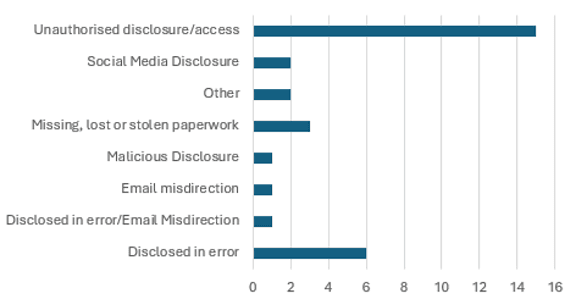
Data quality and governance
The Trust has processes and controls in place to assure the Trust Board on the accuracy, completeness and balance of performance information and reporting, including key ambulance operational datasets. Assurance is provided through the Integrated Performance Report, completion of the Data Security and Protection Toolkit (DSPT), and oversight through the Information Governance Group, Data Quality and Security Group and Board Committees, with assurance reported via the Audit and Risk Committee.
The Trust’s principal operational datasets include call answering and call handling measures, ambulance response performance (including Category 2) and hospital handover delays, derived from core operational systems (CAD, telephony and EPR). Data quality assurance controls include:
- Documented metric definitions and reporting logic, including change control for system configuration, interfaces and reporting rules.
- Routine reconciliations and validation checks across source systems and reports, including timestamp completeness checks for response and handover measures.
- Exception reporting and operational review/sign-off of performance reports, with escalation of issues for investigation and correction.
Key risks to the quality and accuracy of these datasets include data completeness and timeliness within source systems, timestamp capture and synchronisation issues, interface or mapping failures between CAD/telephony/EPR solutions, and manual workarounds where integration is incomplete.
These risks are mitigated through standard operating procedures, routine data quality checks and reconciliations, defined escalation routes for investigation and correction, and ongoing work to strengthen system integration and automate data flows.
In line with the Health Act 2009 and the National Health Service (Quality Accounts) Regulations 2010 (as amended), the Trust prepares a Quality Account each year. The Quality Account assesses performance for the year and sets priorities for the year ahead; progress is monitored through trust-wide governance groups and reported to the Quality Governance Committee, which provides assurance to the Trust Board.
The Quality Account is approved by the Trust Board prior to publication.
Review of effectiveness
As Accountable Officer, I have responsibility for reviewing the effectiveness of the system of internal control. My review of the effectiveness of the system of internal control is informed by the work of the internal auditors, clinical audit and the executive managers and clinical leads within the NHS Trust who have responsibility for the development and maintenance of the internal control framework.
I have drawn on the information provided in this annual report and other performance information available to me. My review is also informed by comments made by the external auditors in their management letter and other reports. I have been advised on the implications of the result of my review of the effectiveness of the system of internal control by the board, the Audit and Risk Committee and Quality Committee and a plan to address weaknesses and ensure continuous improvement of the system is in place.
Conclusion
I can confirm that there are no significant internal control issues identified that do not have a clear plan in place for effective mitigation. Where control issues have been identified, for example in relation to staff recruitment and retention, a process has been developed which ensures appropriate support and scrutiny in relation to the areas required, with robust reporting in place. Improvement is being seen across all areas of concern.
There is an acknowledgement that the Trust continues its improvement journey, with strengthened systems and controls being implemented to mitigate the internal control challenges that the Trust is actively managing. I am confident that appropriate mitigation plans are in place with clear oversight and scrutiny through the regulators and that we therefore have a generally sound system of internal control that supports the achievement of our policies, aims and objectives. We continue to identify opportunities to strengthen the internal control environment into 2026-27.
Neill Moloney, Chief Executive Officer - June 2026