Annual Quality Account 2025-2026
Date published: 16 June 2026
Summary
Welcome to the East of England Ambulance Service NHS Trust (EEAST) Quality Account for 2025/26. This document has been approved by the Trust Board and is an accurate account of the level of quality of service provided to patients. In developing this Quality Account, we have set out a summary of achievements for 2025/26 and goals for 2026/27 as mandated within the regulatory guidance.
In this report
- Part One
- Foreword and statement on quality from the Board
- Welcome to the East of England Service NHS Trust (EEAST) quality account
- Introducing EEAST's quality account
- What is a Quality Account and what does it mean to EEAST and the people we serve?
- Our current quality position
- Care Quality Commission (CQC)
- Department of Health core quality indicators
- NHS Number and General Medical Practice code validity
- NHS clinical coding error rate
- Data quality
- Data security protection toolkit
- Statement of Accountability
- Part Two
- Quality improvement initiatives
- Priority One - Patient safety
- Priority Two - Clinical effectiveness
- Priority Three - Patient experience
- Part Three
- Progress on the quality account priorities 2025/26
- Performance of the Trust against quality metrics
- Achievements against local priorities set for 2025/26
- Clinical Audit
- Participation in research
- Patient safety incidents
- Patient safety events
- When things go wrong
- Duty of Candour
- National Patient Safety Alerts
- Patient experience and feedback
- Patient and Public Involvement
- Statement from our Community Engagement Group
- Raising concerns and Freedom to Speak Up
- Working with our local communities
- Achievements in 2025/26
- Commissioning for Quality and Innovation (CQuIN)
- Quality success throughout the year
- Quality Governance Committee Assurance
- Statements from the Commissioners, HealthWatch and Overview and Scrutiny Committees
- Glossary
Part One
- Foreword and statement on quality from the Board
- Welcome to the East of England Service NHS Trust (EEAST) quality account
- Introducing the East of England Service NHS Trust (EEAST) quality account and Improvements
- What is a quality account and what does it mean to EEAST and the public we serve?
- Our current quality position
- Care Quality Commission
- Department of Health quality indicators
- NHS number and General Medical Practice Code validity
- Clinical coding error rate
- Data Quality
- Data Security Protection Toolkit
- Statement of accountability: Chief Executive Officer, Neill Moloney
Foreword and statement on quality from the Board
It has been another busy year for EEAST, taking more calls and seeing more patients. In 2025/26, our emergency operation centres handled 1,490,823 emergency contacts. That’s over 2,900 emergency 999 calls every single day, the equivalent of a 999 call every 29 seconds. Despite the level of demand, we have achieved an improved call-pick up at a year end average of two seconds.
We have made other significant improvements, including in our response times for our sickest patients. Our Hear and Treat rates have increased from 16.22% in the first half of the year to 18% in the later months, meaning that more of our patients are receiving the right care at the right time and in the right place. Our operational support teams have halved the proportion of Vehicles Off Road, helping ensure that our crews have ambulances available to support them to respond to our patients.
In line with this improved performance, we have seen a decline in the number of patient concerns and incidents related to delayed responses. The PSIRF process has now been embedded at EEAST, which has supported to make improvements in service through this learning approach. EEAST has also maintained strong performance across ambulance clinical quality indicators and continues to perform above the national ambulance average for a number of key outcomes, including cardiac arrest survival, heart attack and stroke care.
The time taken for our patients to reach a specialist Primary Percutaneous Coronary Intervention (PPCI) Centre is outside of the national average, however, the use of the care bundle data for our stroke patients demonstrates all patients received excellent care, with EEAST consistently achieving the highest compliance for the STEMI (heart attack) care bundle.
All these achievements have only been possible through the hard work and commitment of our teams and volunteers. Our teams living and working through our core values – accountable, respect and excellence.
Our quality improvement priorities for the coming year look to build on what we have achieved in 2025/26 including; ensuring our people have the right skills to identify and share learning from incidents and complaints, further improve our out of hospital cardiac arrest 30-day survival rates and further upskilling our clinicians to provide ultrasound screening and electronic prescribing.
These priorities in conjunction with our commitment in working hard with our system partners, including hospitals in achieving Handover 45, to reduce delays in responding to our patients, are key enablers in ensuring our patients get the right treatment at the right time.
Neill Moloney,
Chief Executive Officer
Welcome to the East of England Service NHS Trust (EEAST) quality account
Welcome to the East of England Ambulance Service NHS Trust Quality Account for 2025/26. This document has been approved by the Trust Board and is an accurate account of the level of quality of service provided to patients. In developing this Quality Account, we have set out a summary of achievements for 2025/26 and goals for 2026/27 as mandated within the regulatory guidance.
Improving quality is an overarching priority of the Trust and this report lays out plans for developing future services to improve the quality and safety of patient care and patient outcomes.
In order to help do this, the Quality Account is based on data from a range of sources.
Further information about us and our achievements can be found in our Annual Report.
Assurance for quality and safety is given to the Trust Board by the Quality Governance Committee which is in turn informed by our Compliance and Risk Group. Underpinning the Compliance and Risk Group are a number of groups which cover the multiple aspects of our service including; risk management, patient safety, medicines management, safeguarding, infection prevention and control, medical devices and patient experience.
Information on all groups can be found in the Quality Governance Committee Assurance section of this report.
Contributions to this document
All Integrated Care Boards (ICB) including Ipswich and East Suffolk ICB (the lead commissioner), HealthWatch groups, members of our Community Engagement Group and the region’s health overview and scrutiny committees (HOSCs) have been invited to provide a commentary on the provision of our quality and care to include within this document. Those received can be found in the Statements from the Commissioners, HealthWatch and Overview and Scrutiny Committees section of this report below.
Where can you get hold of this document?
This Quality Account is available on our website or write to: East of England Ambulance Service NHS Trust Headquarters, Whiting Way, Melbourn, Cambridgeshire, SG8 6EN.
If you require this document in another format or language, please contact our Patient Advice Liaison Service (PALS) on 0800 028 3382 or by emailing feedback@eastamb.nhs.uk
Other sources of information
We publish a number of other documents which you may find useful, these include; Trust Annual Report, Safeguarding Annual Report and the Infection Prevention and Control Annual Report. These, and other information about us, can also be found on our website.
Introducing EEAST's quality account
Our Trust provides urgent and emergency care services throughout Bedfordshire, Cambridgeshire, Essex, Hertfordshire, Norfolk and Suffolk.
During 2025/26 we also provided non-emergency patient transport services for patients needing non-emergency transport to and from hospital, treatment centres and other similar facilities within parts of Essex, Bedfordshire and Hertfordshire.
We work with six Integrated Care Systems (ICS) covering an area of approximately 7,500 square miles with a resident population of around 6.6 million people.
We employ more than 6,000 staff operating from over 100 sites and are supported by more than 1,000 dedicated volunteers operating in a variety of roles including: Community first responders; volunteer car drivers; British Association for Immediate Care (BASICS) doctors (network of volunteer emergency doctors who provide immediate access to specialist medical care); chaplains and our community engagement group.
The Trust Headquarters is in Melbourn, Cambridgeshire and there are ambulance emergency operations centres (EOC) at each of the three locality offices in Bedford, Chelmsford and Norwich which receive almost 1.5 million emergency calls from across the region each year as well as calls for patients booking non-emergency transport.
The east of England is made up of both urban and rural areas with a diverse population. As well as a resident population of about 6.3 million people, several thousand more tourists enjoy visiting our area in peak seasons each year. Our area also contains several airports including London-Luton and London-Stansted as well as major transport routes which increase the number of people in our region on a daily basis.
We have four areas of service provision:
Response to 999 calls as an emergency and urgent care service
In 2025/26, our EOC handled 1,490,823 emergency contacts. That’s over 2,900 emergency 999 calls every single day - the equivalent of a 999 call every 29 seconds.
Call handlers record information about the nature of the patient’s illness or injury using sophisticated software to make sure they get the right kind of medical help. This is known as triaging and allows us to ensure that the most seriously ill patients can be prioritised and get the fastest and most appropriate response.
Scheduled Care Service – Patient Transport Service
Working in collaboration with hospitals and treatment centres, we operate a quality Non-Emergency Patient Transport Service (NEPTS), transporting and caring for a variety of patients, including elderly and vulnerable people and those with mental ill health, to and from outpatient clinics, day-care centres and other treatment facilities.
During 2025/26 we undertook 290,797 patient journeys and 27,780 escort journeys – a total of 318,577 NEPTS journeys.
Special and partnership operations
The Trust operates two hazardous area response teams (HART) and has a resilience and emergency planning department who work closely with critical care charities and community volunteers to respond to a variety of emergency situations.
Commercial services
The East of England Ambulance Service NHS Trust (EEAST) delivers a range of NHS-owned, socially driven services that support quality, resilience and improvement across the health and care system.
CallEEAST is EEAST’s 24/7 outsourced contact centre service, based in Norfolk. It provides high-quality non-clinical call handling, GP and out-of-hours support, virtual reception, dispatch, administrative services and patient signposting. Supporting over 90 organisations and managing more than 850,000 calls annually, CallEEAST improves access, customer experience and system capacity while delivering meaningful social value.
TrainEEAST provides clinician-led education and training to NHS, emergency service and commercial organisations. Training over 5,000 people each year, the service delivers courses ranging from basic life support and first aid to advanced trauma and specialist clinical training, helping to improve patient outcomes and safety. TrainEEAST also supplies defibrillators and medical equipment, supporting readiness and resilience across partner organisations.
The National Performance Advisory Group (NPAG) is a self-financing division of EEAST providing management support, benchmarking and professional development. Through its Best Value Groups, tailored workshops, national conferences and UK-wide professional network, NPAG enables leaders to share best practice, benchmark performance and drive continuous improvement in quality, efficiency and value for money.
Together, these services demonstrate EEAST’s commitment to high-quality care, system resilience, workforce development and continuous improvement across the NHS and wider public sector.
What is a Quality Account and what does it mean to EEAST and the people we serve?
A Quality Account is a mandatory report about the quality of services an NHS healthcare trust provides and is required to be completed in line with the Health and Social Care Act 2012.
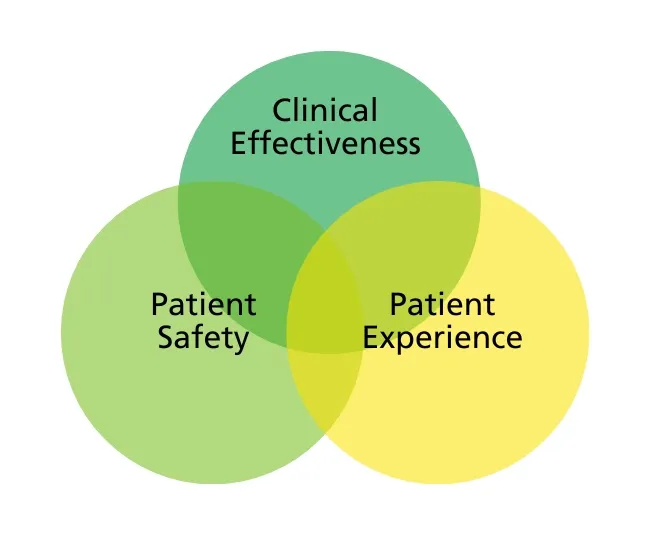
Quality reports and accounts are set against the framework of three overlapping key themes, patient safety, clinical effectiveness and patient experience, which can be used to define quality of care.
The content is defined by NHS England and includes outcome results against specific indicators under five headings:
- Preventing people from dying prematurely.
- Enhancing quality of life for people with long term conditions.
- Helping people to recover from episodes of ill health or following injury.
- Ensuring that people have a positive experience of care.
- Treating and caring for people in a safe environment and protecting them from avoidable harm.
In addition to information provided within this report, our newly published Corporate Strategy 2025/30 details what we are aiming to achieve over the next five years and how we are going to do this.
Our current quality position
Over the past year, I have continued to be proud of the progress our Trust has made in improving the quality and safety of the care we provide to our patients, despite sustained and increasing demand on ambulance services nationally.
This statement provides an overview of the Trust’s current quality position for 2025/26, aligned to the three statutory domains of quality defined by NHS England: patient safety, clinical effectiveness and patient experience. It also reflects an honest and balanced assessment of our clinical performance, recognising both the progress achieved and the areas where further improvement is required.
Patient Safety
During 2025/26, the Trust has continued to prioritise patient safety as a core organisational objective. Despite sustained demand and system pressure, EEAST has maintained strong performance across ambulance clinical quality indicators and continues to perform above the national ambulance average for a number of key outcomes, including cardiac arrest survival, heart attack and stroke care. These outcomes provide assurance that patients requiring time-critical emergency care are prioritised to receive safe and effective treatment.
The Trust has further strengthened its patient safety governance arrangements through the continued embedding of the Patient Safety Incident Response Framework (PSIRF), expansion of After-Action Review training and sustained delivery of Learning from Deaths reviews. These developments help us support a culture of learning and improvement and ensure that patient safety incidents are reviewed timely, proportionately, with appropriate learning shared across the organisation.
Following Care Quality Commission (CQC) engagement during the year, including the focused inspection in November 2024, the Trust has delivered improvement in a number of safety-critical areas which relate to a Warning notice received in January 2025. These include statutory and mandatory training compliance, medicines management oversight and Emergency Operations Centre supervision. The Trust can provide assurance that the majority of actions arising from both the 2022 inspection and more recent regulatory warning activity have been completed, with established governance in place to sustain improvement.
The Trust recognises that patient safety continues to be impacted by system-wide factors, most notably delays associated with ambulance response times and hospital handover. Performance for Category 2 patients remains below national standards and although an improvement of over 7 minutes was achieved in 2025/26 compared to 2024/25, this continues to present a potential risk of harm. Reducing avoidable harm related to delays remains a key priority and is being addressed through system partnership working, operational improvement and continued clinical oversight.
Clinical Effectiveness
Throughout 2025/26, EEAST has continued to deliver clinically effective, evidence-based care across the full range of ambulance services. The Trust has sustained high compliance with national clinical care bundles, including the STEMI (heart attack) and stroke pathways, and continues to achieve strong outcomes for patients experiencing out-of-hospital cardiac arrest. These results provide assurance that clinical care is aligned with national standards and delivering best practice.
Clinical effectiveness has been further supported through the expansion of advanced practice roles, improved access to senior clinical decision-making and the continued development of the Clinical Assessment Service.
Alternative care pathways and Unscheduled Care Coordination Hubs have enabled more patients to be supported safely within community settings, reducing avoidable conveyance and improving overall system flow.
The Trust has also made progress in the use of digital technology to support clinical effectiveness, including the wider deployment of automated ECG (heart tracing) interpretation, increased use of video-enabled assessment in strokes and high levels of digital patient record utilisation. These developments have improved diagnostic confidence, documentation quality and clinical consistency.
While overall response performance has improved compared with the previous year, the Trust acknowledges that national response standards continue to be missed, particularly for Category 2 calls. Achieving sustained improvement in response times, while maintaining clinical quality and patient safety, remains a priority focus for 2026/27.
Patient Experience
Patient experience remains a relative strength for the Trust. During 2025/26, overall patient satisfaction has increased across urgent and emergency care services and remained consistently high within patient transport services. Compliments continue to significantly outnumber complaints, and overall complaint volumes have reduced compared with the previous year, providing assurance regarding the compassion, professionalism and respect demonstrated by staff.
The Trust has continued to strengthen how patient feedback is gathered, analysed and used to inform service improvement. This includes enhanced demographic analysis of patient surveys, continued engagement with children and young people, and the co-production of a Patient Voice Framework to support more consistent use of lived experience within governance and decision-making.
The Trust recognises that patient understanding of the modern ambulance service and its clinical model remains variable. Feedback indicates that expectations relating to ambulance response and alternative care pathways are not always well understood. Improving public awareness of how care decisions are made, and what patients can expect when contacting 999, will remain a focus for the coming year and will form part of the new patient plan (clinical strategic intention).
The Trust also acknowledges the intrinsic link between staff experience and patient experience. While progress has been made through initiatives to improve staff engagement, leadership visibility and Freedom to Speak Up arrangements, further work is required to ensure staff feel consistently listened to, valued and supported and is a focus for the next 12 months.
In summary, during 2025/26 the Trust has made sustained progress across all three domains of quality, demonstrating improvement in safety governance, strong clinical outcomes and positive patient experience. The Trust has responded appropriately to regulatory feedback and can provide assurance that the majority of identified actions have been delivered.
However, the Trust is clear that challenges remain. Improving Category 2 response times, reducing system delays, and embedding a consistently positive organisational culture are key priorities for the coming year and will lead to better patient experience and outcomes. The Trust Board and executive leadership team remain committed to transparent reporting, continuous learning and sustained improvement, working in partnership with staff, patients, commissioners and regulators to deliver safe, effective and compassionate care for the communities we serve.
Simon Chase,
Chief Paramedic (Allied Health Professional) & Director of Quality
Care Quality Commission (CQC)
The Care Quality Commission (CQC), England’s independent regulator of health and social care, is responsible for ensuring that providers meet fundamental standards of quality and safety. It also sets out what constitutes good and outstanding care. Through a programme of inspections, ratings and published reports, the CQC encourages continuous improvement across health and social care services.
The CQC assesses organisations against five Key Questions within the CQC Single Assessment Framework to determine whether services are: Safe, Effective, Caring, Responsive to people’s needs and well-led.
| Overall trust quality rating | Requires improvement |
|---|---|
| Are services safe? | Requires improvement |
| Are services effective? | Requires improvement |
| Are services caring? | Good |
| Are services responsive? | Requires improvement |
| Are services well-led? | Requires improvement |
CQC Inspection Findings and Regulatory Notices
Following a CQC inspection of Urgent and Emergency Care (UEC) services and Emergency Operations Centres (EOC) undertaken in November 2024, the Trust received a Section 29A Warning Notice on 23 January 2025. This notice related to the following areas of concern:
- Completion of mandatory training
- Waiting times for calls
- Insufficient staffing levels within EOC provision
- Organisational culture
- Investigation and learning from medicines incidents
- Inadequate action taken in response to staff feedback and staff perceptions of the service
In addition, on 27 January 2025, the Trust received a Section 64 letter from the CQC outlining further findings from the same assessment. This included breaches of:
- Regulation 17 – Good Governance
- Regulation 12 – Safe Care and Treatment
These breaches were specifically related to Category 2 response times. Further detail is provided on pages 26-30, including the actions taken by the Trust and the improvements delivered, however new figures show that in March 2026 EEAST achieved the fastest average response times for Category 2 emergencies in almost five years.
Rapid Quality Review (RQR) Process
In line with national NHS guidance, the Trust entered the Rapid Quality Review (RQR) process. The RQR meetings included representatives from:
- East of England Ambulance Service NHS Trust (EEAST)
- Suffolk and North East Essex Integrated Care Board (ICB), as the Trust’s lead commissioner
- NHS England
- The Care Quality Commission
- Representatives from all other ICBs across the region.
A suite of agreed performance and quality metrics was developed and monitored on a monthly basis. As a result of the sustained improvements demonstrated, the Trust entered the Exit Criteria phase of the RQR process in June 2025.
Continued Improvement and Current Position
Since exiting the RQR process, the Trust has continued to demonstrate sustained high performance across the majority of monitored metrics and, as a result, the Trust moved to routine surveillance in March 2026.
The principal area requiring further improvement relates to organisational culture, particularly within the Emergency Operations Centres, and the effectiveness of how the Trust listens to staff, responds to feedback, and translates learning into meaningful and visible actions for improvement.
The sections that follow set out:
- The actions that have been taken and those planned
- The progress made to date
- The improvements achieved during the year
- The ongoing focus on strengthening organisational culture and staff engagement.
Statutory/Mandatory training
At the end of March 2026, the Trust reported an overall level of 93.36% compliance with the Core Skills Training Framework (CSTF) topics demonstrating a sustained level of above 90% throughout the year. This will continue to be monitored internally during 2026/27 to ensure compliance does not reduce below the 85% level expected by the CQC.
| Apr-25 | May-25 | Jun-25 | Jul-25 | Aug-25 | Sep-25 | Oct-25 | Nov-25 | Dec-25 | Jan-26 | Feb-26 | Mar-26 |
|---|---|---|---|---|---|---|---|---|---|---|---|
| 93.19% | 92.99% | 93.17% | 93.30% | 93.33% | 93.81% | 94.26% | 94.51% | 94.81% | 94.38% | 93.88% | 93.36% |
Staffing within our Emergency Operations Centre
As part of our response to the Section 29A Warning Notice, the Trust set an aim of achieving at least 85% whole time equivalent (wte) staff of the number set for the three main roles within our EOCs, call handlers, dispatchers and clinicians working with the Clinical Assessment Service (CAS).Staff numbers to attain at least 85% of target (WTE).
The table below shows our staffing levels as of 14 March 2026 for call handlers, dispatchers and clinical assessment service staff against the 85% target.
| Staff group – workforce effective (employed and agency) | Target | 24 March 2025 |
|---|---|---|
| Call handlers | 85% | 106% |
| Dispatchers | 85% | 98% |
| Clinicians - Clincial Assessment Service | 85% | 89% |
Due to the nature of the role, recruitment for these positions is an ongoing process to take into account any changes. The Trust has also begun to over-recruit to posts within the Chelmsford and Norwich EOCs ahead of the planned closure of the Bedford EOC.
Call pick-up times
For these key performance indicators, the Trust, like all other ambulance services, reports against two measures for answering 999 calls within 5 seconds; the mean and the 95th centile. Demand on the ambulance service continues to increase year on year, resulting in a growing volume of 999 calls managed by our teams. Throughout the year we have faced periods of pressure, driven by seasonal trends, winter illnesses, and the impact of weekends and bank holidays when access to wider NHS services is reduced.
Despite these challenges, our 999-call answer performance has stabilised, achieving a year-end mean of 00:00:02 and a 95th percentile of 00:00:01 meeting the national target and improving on last year’s position. (Please note that as these are rounded to whole seconds which can distort the data). A reduction in calls waiting over two minutes was also noted with just 1,859 calls waiting above the threshold representing 0.17% of 999 contacts which is also an improvement on last year.
This reflects the sustained efforts of our teams to deliver month-on-month improvement, the impact of targeted productivity initiatives and a strengthened focus on local leadership and operational governance, ensuring timely and safe care for our patients and communities.
Medicines management
Following concerns raised by the Care Quality Commission (CQC) in relation to the management of medicines investigations, the Trust implemented a series of targeted actions to strengthen oversight and assurance. These included the introduction of a weekly review of all reported medicines incidents, jointly undertaken by the Trust Pharmacist and the Deputy Clinical Director, to ensure that no investigation was closed without lessons learned being clearly identified and recorded.
During the reporting year, a total of 950 medicines-related incidents were reported. Of these, 171 related to controlled drugs and 779 related to other medicines and medical gases, including oxygen and Entonox.
Reviews identified five cases in which lessons learned had not been formally documented. Each of these incidents was subsequently followed up by the medicines management team, with additional guidance and support provided to operational managers to ensure completeness of learning and compliance with required standards.
The principal themes arising from medicines investigations during the year included accounting errors within medicines registers, vial breakages, and medical gases not being stored in accordance with Trust policy. Reassuringly, no incidents were identified that resulted in patient harm.
Planned next steps include the procurement of an electronic medicines management system to replace the current manual processes. This system is expected to strengthen governance and traceability across all stages of the medicines lifecycle, from procurement through to storage and administration, thereby improving efficiency, accuracy, and patient safety.
Medicines incidents will continue to be monitored in the Trust with oversight undertaken by the Medicines Management Group who report to our Compliance and Risk Group.
Culture
A number of actions have already been taken since the inspection in November 2024;
- Implementation of Understanding Sexual Misconduct in the Workplace training. A target of at least 75% was set for the end of August 2025. A level of 84% was reached by this date and at the end of March 2025 was at 92.9%.
- As part of the Trust’s commitment to sexual safety in the workplace, the chief executive officer wrote to all Trust colleagues in April 2025, reinforcing a zero-tolerance stance on inappropriate behaviour and encouraging staff.
Following this communication, there was an increase in reported cases during 2025/26, with 82 reports compared to 53 in the previous year. This increase is viewed positively and reflects growing confidence among staff to speak up and raise concerns, supporting a more open, transparent, and safe working environment.
-
A key message from colleagues gained from the ‘Big Conversation’ initiative within the previous year, was a desire to see and speak with leaders more often, face to face. In response, as part of the Big Conversation, a Time to Listen programme was launched in August, with executive directors and senior leaders spending time each month at ambulance stations, call centres, workshops, and administrative bases across the Trust. The aim is to listen directly to colleagues about what is working well, the challenges they face, and their ideas for making EEAST an even better place to work. This initiative is about more than listening – it is a commitment to action. Insights gathered are brought together to identify key themes and shape practical solutions that support meaningful and lasting improvement.
-
Embedding the new Trust values across the organisation.
Whilst some improvements have been seen, we acknowledge that there is still further work to be done and outcomes from the ‘Time to Listen’ events are continuing to help shape future actions. The Trust has also engaged an external provider to undertake a review of the culture within the organisation which commenced in April.
Staff engagement
The final concern raised by the CQC within the Section 29A warning notice, was that we were not acting adequately on information about staff opinion of the service to develop and take actions for improvement.
As for the culture plan, the ‘Big Conversation’ has helped with this piece of work and monitoring of defined key performance indicators has been undertaken through our accountability forums. In line with the S.29A, all directorates have been set a clear expectation to work with their teams to pull together meaningful plans from the NHS Staff Survey and for these to contain clear objectives and actions with a submission deadline date of 01 May 2026.
From a previous inspection in 2020, the Trust was also given notice under Section 31 of the Health and Social Care Act with seven conditions relating to; safeguarding, staff allegations, recruitment checks, Disclosure and Barring Service (DBS), contracted private ambulance service provision, sexual harassment and processes to manage concerns, grievances and disciplinaries. To date four of these conditions have been lifted; Safeguarding, staff allegations, recruitment checks, Disclosure and Barring Service (DBS) checks.
At the time of this report, we are awaiting the outcome of the remaining three; contracted private ambulance service provision, sexual harassment and processes to manage concerns, grievances and disciplinaries.
CQC Focused Inspection (November 2024) – current position
In January 2026, the Trust received its draft CQC report from the November 2024 inspection, and following submissions made in line with factual accuracy process is awaiting the final version.
Next steps - Work will continue embedding the actions already implemented and closure of those still ongoing as well as continuing to sustain the improvements seen in response to the Section 29A Warning Notice and Regulation 64 letter. Our internal CQC team also undertakes visits to ambulance stations and emergency operations centres to ‘quality check’ standards and to gain staff feedback.
We are anticipating recommendations being included within the November 2024 CQC inspection report which will inevitably result in a new improvement plan.
Department of Health core quality indicators
All NHS organisations are required to report against a set of Core Quality Indicators (CQIs) relevant to their type of organisation. For ambulance trusts, both performance and clinical indicators are set as well as indicators relating to patient safety and experience.
Where information is publicly available, organisations are also required to demonstrate their performance against other ambulance services within the year.
| Ambulance response times (categories 1-4) | |||
|---|---|---|---|
| C1 | Immediately life-threatening injuries and illnesses | 7 minutes mean response time | 15 minutes 90th centile response time |
| C1T | Immediately life-threatening injuries and illnesses where the patient is transported to hospital | 7 minutes mean response time | 15 minutes 90th centile response time |
| C2 | Emergency | 18 minutes mean response time | 40 minutes 90th centile response time |
| C3 | Urgent calls and in some instances where patients may be treated in situ (e.g., their own home) or referred to a different pathway of care | 120 minutes 90th centile response time | 120 minutes 90th centile response time |
| C4 | Less urgent. In some instances, patients may be given advice over the phone or referred to another service such as a GP or pharmacist | 180 minutes 90th centile response time |
.
| AMBULANCE CLINICAL OUTCOMES: ACUTE ST-ELEVATION MYOCARDIAL INFARCTION (STEMI). Patients who undergo a pre-hospital assessment for STEMI (heart attack), diagnosed at the earliest opportunity and given specifically tailored care. |
|---|
| The percentage of patients with a pre-existing diagnosis of suspected ST elevation myocardial infarction who received an appropriate care bundle from the Trust during the reporting period. |
| An appropriate care bundle is a package of clinical interventions such as oxygen therapy and the giving of relevant drugs that are known to benefit patients’ clinical outcomes. |
| Previously ambulance trusts were also required to report on the stroke diagnostic bundle, however this was removed from the national programme in 2023. |
NHS Number and General Medical Practice code validity
Ambulance trusts are excluded from this requirement therefore no records were submitted during 2025/26 to the Secondary Uses Service for inclusion in the Hospital Episode Statistics.
NHS clinical coding error rate
As an ambulance service, EEAST was not subject to the Payment by Results clinical coding audit during 2025/26 by the Audit Commission.
Data quality
The digital services organisation within the Trust provides technology to support the operational activities and corporate service areas, digital transformation technology programmes, information repositories and data services. NHS England benchmarked all English trusts in the year (the Digital Maturity Assessment) and EEAST were in the top quartile in the ambulance services category and at the national average for all trusts.
The Trust Electronic Record Platform has now achieved the benchmark of over 96% digital utilisation for all patient interactions which the Trust will target to get to 100% in the years to come, the Trust mobile clinicians also have access to the National Care Records Service to enable access to longitudinal records.
The core clinical platforms maintained very high availability in 2025/26, with no major disruption. The organisation’s digital services through the year maintained the continued service to the wider Trust staff with a continued reduction in time to resolution despite a significant increase in the demand for new services. During the year, further new technology has been deployed in support of national guidelines to further protect the organisation against the continual cyber challenges, this work never ends, and we will continue this into the coming years.
The digital services team continued to deliver a move from physical environments to virtualised external data centres and cloud-based technology in line with NHS best practice. With the launch of the Trusts new strategy the digital services team will now adjust the digital roadmap to support the core Trust Missons; Patients, People, Partnership and Productivity.
As a Trust we receive over two and quarter million emails per month and send an average of three hundred and sixty thousand emails every month internally and externally. The Trust has over seven thousand end user devices all with connection to the internet. Through the year, whilst we saw daily unauthorised attempts to access our systems including multiple brute force attacks, the integrity of all our digital systems and assets were protected and maintained.
The Trust has several processes in place to ensure that data included within the Quality Account is accurate and provides a balanced view. These include:
Clinical data and outcomes
- checked and verified by the clinical audit manager prior to submission to the national audit programmes,
- monthly checks of the department of health statistical reports to ensure latest comparative data is included,
- digital data quality checks are automated with tooling with exceptions identified for the resolving process,
- assurance through internal governance processes to board level via the integrated board report.
Data Security Protection Toolkit
- Assurance provided through Information Governance Group to Trust Board via the Audit Committee.
- Regular internal and external scrutiny of processes and information through a number of groups and committees.
Data security protection toolkit
During 2025–26 the Data Security and Protection Toolkit (DSPT) transitioned to a new assurance framework aligned with the National Cyber Security Centre’s Cyber Assessment Framework (CAF). This represents a significant shift from the previous Data Security Standards, strengthening the focus on cyber resilience, risk management and the secure handling of information across the NHS.
As a large NHS organisation, EEAST has been onboarded to the new CAF-aligned DSPT model. In addition to providing formal assurance, the DSPT continues to be the mandated national mechanism for reporting data security incidents and data breaches to NHS England.
The CAF-aligned DSPT is structured around five objectives:
- Managing risk
- Protecting against cyber attack and data breaches
- Detecting cyber security events
- Minimising the impact of incidents
- Using and sharing information appropriately.
Across these objectives, the Trust is required to assess its performance against 47 outcomes, each supported by detailed criteria and graded as not achieved, partially achieved or achieved. NHS England has defined the expected level of achievement for each outcome in order for an organisation to be assessed as meeting standards.
EEAST submitted its baseline CAF-aligned DSPT assessment by the national deadline of 31 December 2025, with a final submission due by 30 June 2026. At the time of reporting:
- 43 of the 47 outcomes meet the nationally defined expected level.
- Four outcomes are not yet at the required level, two of which align with NHS England’s own benchmark assessment of not achieved.
Work is ongoing to strengthen the evidence and controls underpinning these outcomes. The Information Governance and Digital teams work closely together through regular joint assurance sessions, focusing on closing remaining gaps and ensuring clear, comprehensive narratives supported by appropriate technical, policy and operational evidence.
Progress is monitored through established governance arrangements, with oversight provided by the Information Governance Group and formal assurance reported to the Audit Committee and the Trust Board.
During 2024–25, the Trust submitted its DSPT with an NHS England-approved improvement plan and was assessed as Approaching Standards. The introduction of the CAF-aligned DSPT during 2025–26 provides a more robust and forward-looking framework and supports the Trust’s ongoing commitment to protecting patient data, maintaining cyber resilience and sustaining public confidence.
Statement of Accountability
As accountable officer and chief executive of the Trust, I have responsibility for maintaining the performance and standards achieved within our services, and to support an environment of continuous quality improvement.
This Quality Account has been produced by the East of England Ambulance Service NHS Trust, in line with the requirements of the Health and Social Care Act 2012. The Quality Account contains details mandated by the regulations alongside the measures that the Trust, in association with our NHS and public partners, has decided will best demonstrate the work that has been done to maintain and improve the standard and quality of care we provide to our communities.
This account sets out the work has been undertaken this year to improve the quality of care to patients and outlines where we want to improve to ensure all patients have a positive experience and the standard of care that we want.
As accountable officer, it is also my responsibility to ensure both the quality and accuracy of the data within this Quality Account and to confirm that it presents a balanced picture of the Trust’s performance. Therefore, to the best of my knowledge the information contained within this Quality Account for the East of England Ambulance Service NHS Trust is a true and accurate record.
Neill Moloney, Chief Executive Officer
Part Two
- Quality improvement initiatives
- Priority one: Patient safety
- Priority two: Clinical effectiveness
- Priority three - Patient experience
Quality improvement initiatives
The Quality Account for 2026/27 will continue to focus on the core priorities which match the mandatory indicators for ambulance trusts set by the Department of Health and Social Care (DHSC) as outlined in Part 1 as well as local priorities to improve the quality of care delivered by our staff.
The National Quality Board (NQB) has currently paused its review of the required content for quality accounts, so this report has been compiled in line with current published guidance.
The following tables provide information on the chosen priorities under the three headings of;
- patient safety
- clinical effectiveness, and
- patient experience.
As well as the reason for choosing them and what we hope to achieve over the next 12 months.
Priority One - Patient safety
| Priority | Why we have chosen this priority | What we are trying to improve | What success will look like |
|---|---|---|---|
| Deliver training to 85% of relevant managers on the review and feedback of incident reports through training in 'After Action Review (AAR)' processes and emphasising the importance of feedback on the incident reported. | Quality 'After Action Reviews' are pivotal to ensure that maximum learning outcomes are identified. Managers should be supported in providing quality feedback and learning from incidents. | At this time, not all lead reviewers across the organisation are trained in the 'After Action Review' processes which are a core part of the Patient Safety Incident Response Framework. | We will see an improvement in identified learning themes, quality AARs being undertaken and allow for early identification of emerging themes and maximisation of trust wide learning. We will see standardised feedback across the organisation. |
| Continue to utilise multiple platforms to share learning from incidents, complaints and claims. | Sharing of learning identified as part of a review process is pivotal to drive a positive safety culture and improve safety for staff and patients. | Making learning from incidents accessible to all staff via multiple platforms rather than reliance on safety alerts and monthly newsletters. Utilise Trust devices and Applications to share identified learning and test knowledge of learning that has been shared by utilising Class publishing and JRCALC Apps. | Multiple ways for teams to share learning easily across the organisation Reduction of themed incidents reoccurring. |
| Proactively work with our system partners to reduce delays incidents across the organisation. | Incidents relating to ambulance response delays can cause significant harm to patients. Working with our system partners to ensure we reduce delays incidents will positively affect staff and patients across the region. | Achieving a reduction in delay incidents will reduce harm to patients | We will ensure the Trust’s delays action plan aligns with the Trust’s strategic goals set out in the Operational Performance Improvement Plan (OPIP). A reduction in both frequency of delay incidents occurring as well as a reduction in harm to our patients. |
| Review and update of the Trust’s Patient Safety incident Response plan (PSIRP). | Themes and trends identified under PSIRF are pivotal to ensure that the organisation’s PSIRP is up to date and relevant to the organisation. | Ensuring that the correct patient safety themes are reviewed by the patient safety team with a proportionate learning response i.e. AAR or PSII review Timely reviews of patient safety events in line with the PSIRP. | Publication of the Trust’s new PSIRP in Q2/Q3 of 2026 with refreshed themes. Detailed reports (PSIIs) from the patient safety team which will make recommendations to the organisation as to how we can improve safety and reduce the risk of themes within the PSIRP. |
How we will monitor progress: Quality Governance Committee via the Patient Safety and Engagement Group.
Responsible Lead: Dr Simon Walsh, Medical Director
Date of completion: 31 March 2027
Priority Two - Clinical effectiveness
| Priority | Why we have chosen this priority | What we are trying to improve | What success will look like |
|---|---|---|---|
| Secure approval from the Care Quality Commission (CQC) to add the regulated activity of Diagnostic and Screening Procedures to EEAST’s registration. This aspect of care to be undertaken by Advanced Practice and Critical Care Paramedics. | Ultrasound-guided procedures represent a significant patient-centred benefit in the pre-hospital setting, enhancing diagnostic accuracy, reducing risk, and supporting timely, appropriate care. This will allow growth in Urgent Care and Critical Care capability and appropriate management of both low-acuity patients closer to home, and high-acuity patients in a timely manner, in line with Trust and NHSE strategy. The organisation is committed to supporting Advanced Practice and Critical Care Paramedics through a structured, robust development pathway that ensures clinical competence, professional growth and workforce sustainability. | Licensing EEAST to deliver diagnostic and screening interventions will improve the timeliness and accuracy of pre-hospital assessment and treatment. Enhanced diagnostics will strengthen patient safety, reduce unnecessary conveyance, and support more patient-centred decision making. Empowering Advanced and Critical Care Paramedics will ensure consistent access to senior clinical leadership during complex and critical incidents, improving outcomes and experience. | Additional regulated activity approved by 30 September 2026. |
| Improve survival from Out-of-Hospital Cardiac Arrest by strengthening early, pre-arrival interventions, increasing effective bystander action, using data to target improvement, supporting clinical decision-making, and reducing inequality in resuscitation outcomes across the East of England. | The project focuses on interventions and actions prior to the arrival of EEAST, reflecting strong international evidence that early community mobilisation and bystander intervention have a significant impact on survival from OHCA. While there is potential to trial new advanced life support treatments, these sit outside the trust’s direct remit and control. | The way we resource cardiac arrest calls to ensure we provide the most timely and efficient response to our viable cardiac arrests but also provide an appropriate response to those patients who have died and for whom resuscitation is not indicated. Increase in Return of Spontaneous Circulation (ROSC) and survival. | Correct resourcing to attend cardiac arrest calls Post incident support process for bystanders who have commenced CPR prior to ambulance arrival. Increase in rates of ROSC and survival. |
| Implementation of electronic prescribing for our Advanced Paramedic Practitioners and Advanced Nurse Practitioners. | The introduction of electronic prescribing enhances the continuity of care for patients by ensuring that all prescribing activity is accurately documented and immediately visible to other healthcare professionals involved in the patient’s care. | Reduction in the risk of duplication, medication errors, and unnecessary follow-up appointments. Benefit for patients from more timely access to medicines, often avoiding the need for additional GP appointments or hospital visits, and receiving care closer to home. | A reduction in on-scene times for these cases. No increase in medication administration errors. Consideration of including a specific patient survey to obtain levels of satisfaction with this aspect of care. |
How we will monitor progress: Quality Governance Committee via the Clinical Best Practice Group.
Responsible Lead: Simon Chase, Chief Paramedic and Director of Quality.
Date of completion: 31 March 2027
Priority Three - Patient experience
| Priority | Why we have chosen this priority | What we are trying to improve | What success will look like |
|---|---|---|---|
| To implement and embed the co-produced Patient Voice Framework across the organisation. | A Patient Voice Framework has recently been co-produced to strengthen how patient experience is heard, considered and acted upon across the organisation. Although the patient voice is valued, it is not consistently incorporated into decision-making, quality processes or governance structures. Implementing a standardised, organisation-wide framework will help to embed patient experience into the design, delivery and monitoring of services. | To improve how patient experience is consistently gathered, considered and used across the organisation by embedding the Patient Voice Framework into everyday practice, governance processes and service development. | Success will be demonstrated when the Patient Voice Framework is embedded across the organisation, with Board, committee and governance reports routinely evidencing how patient experience insight has been considered and used to inform decision making, influence service design and support quality improvement. |
| Expanding the demographic analysis within the patient survey programme, alongside targeted engagement with seldom-heard communities, will support the Trust’s inequalities plan. Strengthening both our data and involvement activity will help us to identify where specific patient groups experience different outcomes or barriers, ensuring their voices inform service improvement. | We recognise that patients have different needs and access a variety of our services including being treated at home. We recognise that patients’ experience of our service may differ based on a variety of factors, including geographical location, age, gender, ethnicity and other demographic characteristics. To deliver equitable care, we need a clearer understanding of how different groups experience our services and to identify any barriers or inequitable outcomes as a result. Expanding our demographic analysis, alongside targeted engagement with seldom-heard communities, will enable us to identify these variations and make informed improvements to the services we provide. | To improve how we gather and analyse feedback, and how we engage and involve specific patient groups and seldom heard communities, so that their experiences effectively inform service improvement. | Success will be demonstrated through reporting to PSEG, governance channels and committees that includes patient and public insight broken down by demographic groups, providing a clearer picture of patient experience across different communities. The recently developed Patient Voice Framework will be trialled through the inequalities workplan, supporting the identification of targeted actions to improve the experience of specific patient groups. |
| To ensure education relating to the Patient Plan/clinical model is consistently incorporated into patient engagement activity, to strengthen patient understanding of our services. | Following the EEAST Strategy development work, patient feedback and engagement continues to show that many patients and members of the public do not feel they know enough about our services. Feedback, including complaints and survey responses, also indicates that patients do not have a clear understanding of the range of services provided, nor the potential outcomes when contacting the service. Improving education about the Patient Plan and clinical model within engagement activities will help address these gaps and support more informed patient understanding. | Improving patient and public awareness of our services will help ensure that patients can provide informed, meaningful feedback, and have greater confidence in contributing to service development. This includes increasing understanding that calling 999 will not always result in an ambulance response, but instead follows a ‘right care, right time, right person’ approach aligned with the Trust’s clinical model. | Success will be demonstrated through a range of evidence, including patient and public engagement activity and reporting that reflects more informed and confident patient feedback about the services the Trust provides. Additional feedback channels – including surveys, complaints themes will also indicate improved awareness and understanding of the range of services the Trust offers. |
How we will monitor progress: Quality Governance Committee via Patient Safety and Experience and Community Engagement groups
Responsible Lead: Simon Chase, Chief Paramedic and Director of Quality.
Date of completion: 31 March 2027
Part Three
- Progress on the quality account priorities 2025/26
- Performance of the Trust against quality metrics
- Clinical audit
- Participation in research
- Patient safety incidents
- Serious incidents
- When things go wrong
- Duty of Candour
- National Patient Safety Alerts
- Patient experience and feedback
- Patient and public involvement
- Statement from our Community Engagement Group
- Raising concerns and Freedom to Speak Up
- Working with our local communities
- Commissioning for Quality and Innovation (CQuIN)
- Quality successes throughout the year
- Quality Governance Committee Assurance
- Statements from stakeholders
- Glossary
Progress on the quality account priorities 2025/26
The following section provides feedback and evidence on the progress of last year’s work on our key quality priorities and our performance.
The content is defined by NHS England and includes outcome results against specific indicators within five areas:
- Preventing people from dying prematurely
- Enhancing quality of life for people with long-term conditions
- Helping people to recover from episodes of ill-health or following injury
- Ensuring that people have a positive experience of care
- Treating and caring for people in a safe environment and protecting them from avoidable harm.
Except for the time standards to our calls, no thresholds are set by the Department of Health for the Ambulance Clinical Quality Indicators.
Performance of the Trust against quality metrics
Response Times
Ambulance services are monitored against response times for a Category 1 – 4 system (determined by clinical condition/emergency), with varying response times for each category. The table below summarises the Trust’s performance against the national response time standards for 2025/26 and the improvement seen for each category when compared to the previous year.
| Category | Definition | National standard | Average EEAST Performance 2024/25 and 2025/26 | Improvement |
|---|---|---|---|---|
| C1 | Immediately life-threatening injuries and illnesses. | 7 minutes mean response time | 00:09:08 and 00:08:41 | 00:00:27 |
| 15 minutes 90th centile response time | 00:17:12 and 00:16:16 | 00:00:56 | ||
| C2 | Emergency. | 18 minutes mean response time | 00:42:49 and 00:35:48 | 00:07:01 |
| 40 minutes 90th centile response time | 01:32:50 and 01:15:08 | 00:17:42 | ||
| C3 | Urgent calls and in some instances where patients may be treated in-situ (e.g., their own home) or referred to a different pathway of care. | 120 minutes (2 hours) 90th centile response time | 02:21:56 and 01:55:52 | 00:26:04 |
| C4 | Less urgent. In some instances, patients may be given advice over the phone or referred to another service such as a GP or pharmacist. | 180 minutes (3 hours) 90th centile response time | 03:54:56 and 02:40:32 | 01:14:24 |
- Category C1 maintained a stable performance throughout the year, ranging from a fastest monthly average of 8 minutes 09 seconds to a slowest of 9 minutes 14 seconds. The year-end mean of 00:08:41 reflects an improvement on the previous year’s performance.
- Category C2 experienced greater month-to-month variation, reaching a peak of 00:47:04 in January. Despite this fluctuation a year-end mean response time of 00:35:48 was achieved which is also an improvement on the previous year.
- Category C3 recorded response times ranging from 01:21:10 to 02:41:42, with a year-end mean of 01:55:52, also representing improvement on the previous year.
- Category C4 continued to show the longest response times, ending the year with a mean of 02:40:32. However, this is also an improvement on the previous year’s performance.
Category 1 performance July 2024 - January 2026
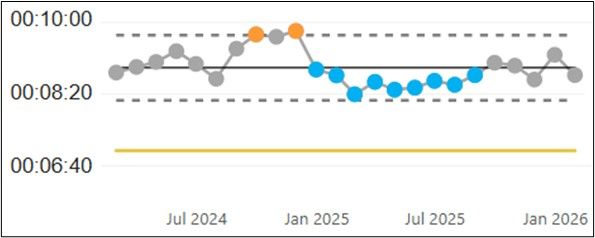
Graph summary: Data points in grey, orange, and blue fluctuate around a central target line at approximately 8 minutes 20 seconds. Two points in late 2024 exceed the upper dashed limit near 10 minutes, while several points in early 2025 drop below the lower dashed limit. Performance stabilises near the target line through mid to late 2025.
Category 2 performance July 2024 - January 2026
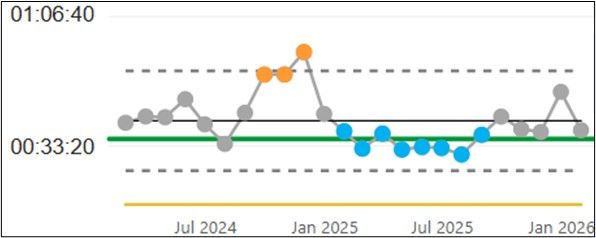
Graph summary: Line chart showing time performance from July 2024 to January 2026 with a central green target line at approximately 33 minutes 20 seconds and dashed upper and lower limits. Grey data points fluctuate around the target in 2024. Three orange points in late 2024 and early 2025 rise above the upper limit, peaking at around 1 hour 6 minutes. In early to mid 2025, several blue points fall below the lower limit before gradually returning toward the target by late 2025.
Category 3 performance July 2024 - January 2026
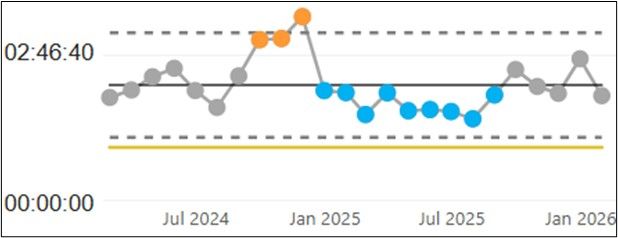
Graph summary: Line chart showing time performance from July 2024 to January 2026 with a central target line and dashed upper and lower limits. Most 2024 values (grey) sit near the target. Three late 2024 to early 2025 points (orange) rise above the upper limit, peaking at about 2 hours 46 minutes. Several early to mid 2025 points (blue) fall below the lower limit before returning closer to the target by late 2025.
Category 4 performance July 2024 - January 2026
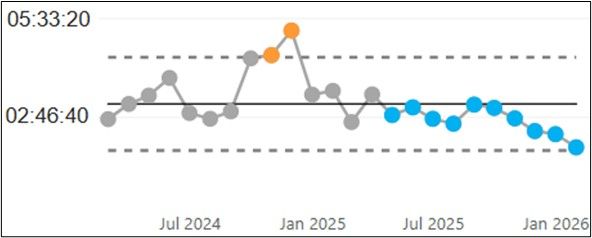
Graph summary: Line chart showing time performance from July 2024 to January 2026 with a central target line and dashed upper and lower limits. Values in 2024 (grey) fluctuate around the target. Two late 2024 points and one early 2025 point (orange) exceed the upper limit, peaking at about 5 hours 33 minutes. From early 2025 onward, several values (blue) fall below the target and trend downward toward the lower limit by early 2026.
Across the year May 2025, June 2025 and March 2026 delivered the fastest C1 response times, while October, November and January recorded the slowest. For C2 response times performance was strongest in May 2025, August 2025 and March 2026 with slower response times again seen in October, November and January. These months of reduced performance align with seasonal pressures, driven by higher demand and wider system challenges.
Although improvements were seen within the year, the Trust recognises that it needs to do more to respond to patients more quickly. Reducing avoidable harm related to delays remains a key priority and is being addressed through system partnership working, operational improvement and continued clinical oversight.
Published further information for all ambulance services can be found here: www.england.nhs.uk/statistics and more detailed information relating to EEAST can be found within our Annual Report.
Hear and Treat
Not all 999 calls require an ambulance response. To ensure that emergency resources are available for those who need them most a dedicated team of Clinicians further assess appropriate 999 calls. They can provide expert advice and determine the most appropriate care pathway which may include self-care advice, referral to community or primary care services such as GP or Pharmacist or confirming that an ambulance response is required. This is known as Hear and Treat (H&T) where the focus is on ensuring patients receive the right care first time and safeguarding ambulance availability for patients who need urgent and lifesaving care.
Hear and Treat (H&T) activity demonstrated a steady increase throughout the year. Our EOC and UCCH clinicians handled 159,236 H&T cases, achieving an overall H&T rate of 16.22%.
After relatively stable performance in the first quarter of the year, we saw a clear upward trajectory from late summer onwards as shown in the chart below. Monthly H&T cases rose from 11,053 in April to a peak of 16,425 in December. This increased activity saw improvements in the H&T rate, which climbed from 14.47% in April to 18.30% in January, before stabilising at around 17-18% through the final months of the year.
Norfolk and Waveney achieved the highest H&T rate at 18.7% with Bedfordshire and Luton at 17.7%. Cambridgeshire and Peterborough had the lowest at 13.9% with Hertfordshire and West Essex at 15.4%.
The improvements noted were delivered through the Operational Productivity workstream, with a focus on supporting increased activity through enhanced clinical validation and H&T. These improvements strengthen our commitment to providing expert advice and determining the most appropriate care pathway, ensuring patients receive the right care first time while reducing unnecessary ambulance deployments.
Hear and Treat Activity
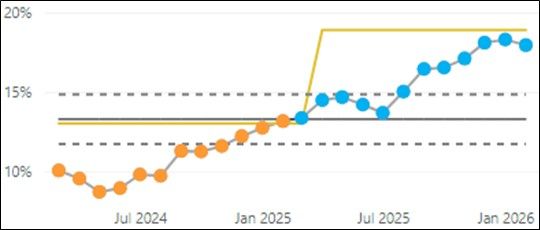
Graph summary: Line chart showing percentage performance from July 2024 to January 2026 with a central target line around 13% and dashed upper and lower limits. Values in 2024 (orange) start near 10%, dip slightly, then rise toward the target by early 2025. From early 2025, values (blue) increase above the target and trend upward, reaching around 18–19% by early 2026, with a higher target threshold line also stepping up to approximately 20%.
Operational Productivity
Across the year EEAST has focused on several operational productivity improvement measures which support delivery of the four Trust missions and ensure timely, safe and effective patient care while making the best possible use of our operational resources. These key workstreams highlight where time, capacity and workforce effort are being consumed across the whole patient journey as well as where targeted action can have the greatest impact on supporting frontline availability and service delivery.
A focused approach to this work has helped to protect response times for the most critical patients and supports a reduction in the operational pressures and strengthens wider system resilience.
The Operational Productivity measures for 2025/26 are:
- Out of service time
- On scene time (conveyed)
- On scene time (non-conveyed)
- Average hospital handover time
- Handover to clear
- Conveyance rate
- Hear & Treat
- Resource per incident
- Sickness absence
These measures support improvement by focusing attention on the points in the system where time, capacity and clinical decisions have the biggest impact on outcomes. They are designed to turn existing and funded capacity into real, usable response time for patients.
Improving our productivity measures such as reducing out-of-service time and delayed hospital handovers releases hours back into the operational day. This directly improves resource availability and protects response times for the sickest patients. When vehicles return to availability, patients receive faster response times, and the service is better able to cope with peaks in demand.
Improving conveyance and alternative pathways through hear-and-treat ensures patients receive the right care, first time. Fewer unnecessary conveyances mean less pressure on emergency departments, quicker resolution for patients, and more emergency capacity for those who need it. This improves patient experience navigating them to the most appropriate pathway for care while supporting overall system flow and service delivery.
Managing resources per incident strengthens operational resilience ensuring responses are proportionate and clinically appropriate. This reduces duplication, improves consistency and allows demand to be absorbed more effectively without compromising safety.
Reducing sickness absence supports the Trust’s financial position by making sure staff pay is spent on productive frontline hours. When fewer staff are off sick, there is less reliance on overtime or additional cover, which helps keep pay costs under control. This means the service gets more value from its existing workforce, with capacity focused on delivering care rather than funding backfill. Over time, a healthier workforce supports both financial sustainability and consistent operational performance. Overall, these productivity measures directly support the Trust’s four missions and ensuring EEAST remains responsive, resilient and focused on delivering timely, high quality care for the communities it serves.
Heart attack care
Coronary heart disease (CHD) is the most common form of heart disease and the leading cause of heart attacks and premature death in the UK. Around 100,000 hospital admissions each year are due to heart attacks. Early pre hospital identification of ST elevation myocardial infarction (STEMI), supported by timely assessment and delivery of an evidence based care bundle, significantly improves patient outcomes. This approach reduces mortality, supports faster recovery, and aligns with NHS priorities to prevent avoidable deaths and improve recovery following acute illness.
STEMI care bundle
The mandatory ambulance services quality indicator for STEMI relates to the delivery of an appropriate care bundle, including the recording of two pain scores, administration of aspirin, and provision of pain relief. Patient care records are audited against these criteria and classified as compliant or non-compliant. Performance is reported quarterly.
The table below presents the Trust’s compliance compared with the national average and the best and worst performance achieved by ambulance services in England. Data published to date (April–October 2025) demonstrate that the Trust’s performance is consistently above the national average for each quarter, as illustrated in the accompanying graph.
National data (April - October 2025)
| Heart attack care | National average | Upper | Lower | EEAST |
|---|---|---|---|---|
| STEMI Care Bundle | 82.6% | 95.9% | 73.5% | 95.9% |
EEAST was the highest performing ambulance trust for this time period, averaging 13.3% above the national average.
ACQI STEMI Care Bundle performance from January 2025 to January 2026
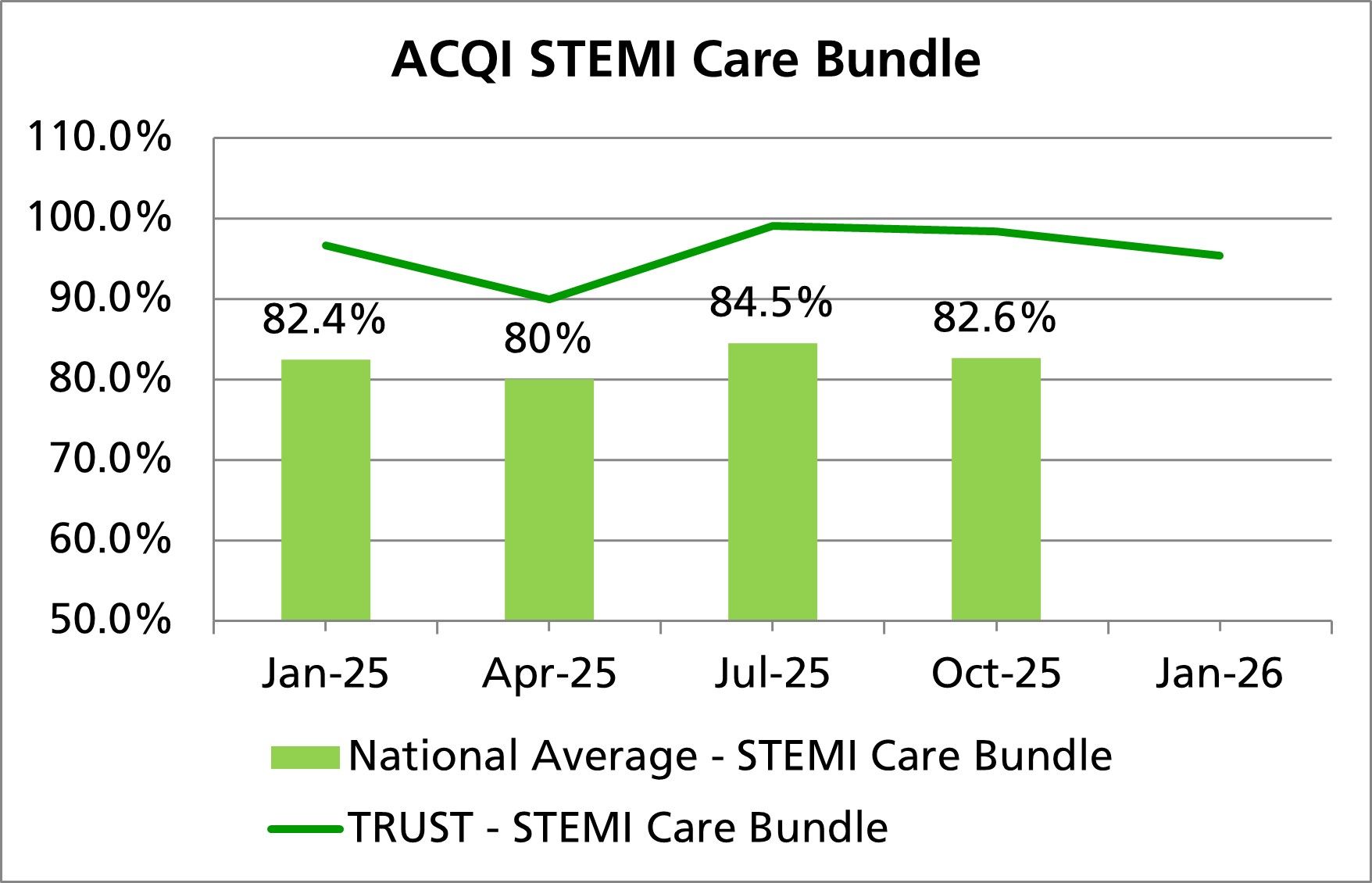
Graph summary: National average (bars) is 82.4% in January 2025, drops to 80% in April, rises to 84.5% in July, and is 82.6% in October. Trust performance (line) is higher throughout, dipping around April before peaking near 99% in July and then slightly declining to the mid 90s by January 2026.
Patients conveyed to a Primary Percutaneous Coronary Intervention (PPCI) Centre
Although transport time to a specialist Primary Percutaneous Coronary Intervention (PPCI) centre is not a formal Quality Account metric, performance is monitored and reported monthly to NHS England and commissioners. The Ambulance Clinical Quality Indicator (ACQI) comprises two joint time-based indicators for ambulance trusts and PPCI centres, measured in hours and minutes.
The table below presents the Trust’s performance compared with the national average and the upper and lower performance levels achieved by ambulance services in England for published data (April–October 2025). It should be noted that the lower value represents the best performance outcome for these measures.
Latest data available April – October 2025 hh:mm
| Heart attack care | National average | Upper | Lower | EEAST Performance |
|---|---|---|---|---|
| Mean average time from call to catheter insertion for angiography | 02:26 | 02:33 | 02:13 | 02:33 |
| 90th centile time from call to catheter insertion for angiography | 03:16 | 03:29 | 02:54 | 03:21 |
As shown in the table above, EEAST performed outside of the national average for both of these measures, but, as demonstrated in the previous section, all patients received excellent care, with EEAST consistently achieving high compliance for the STEMI care bundle and being the highest performing trust within the year.
Next steps: As well as continually being monitored through the national ACQI programme, one of the Trust’s ongoing priorities is to reduce our response times to Category 2 calls which include STEMI patients.
Stroke care - timeliness
Patients who receive care in a dedicated stroke unit with organised stroke services are more likely to survive, experience fewer complications, and return home sooner with greater levels of independence than those treated on a general medical ward. Timely access to specialist stroke care is therefore a key component of the Trust’s commitment to delivering safe, effective and high-quality care.
Although the time taken to convey a suspected stroke patient to hospital is not a mandated quality metric within the NHS England Quality Account framework, the Trust monitors and reports this measure on a month-by-month basis to NHS England and its commissioners as part of its wider clinical quality assurance arrangements. This provides additional assurance regarding system performance and supports continuous improvement in urgent and emergency care pathways. Performance for this Ambulance Clinical Quality Indicator (ACQI) is assessed monthly against three nationally recognised measures: mean average, median, and 90th centile times from receipt of the emergency call to arrival at hospital. Monitoring these indicators enables the Trust to identify variation in performance, understand the experience of patients with the longest waits, and take targeted action where required.
The table below presents the Trust’s performance in comparison with the national average, together with the upper and lower performance levels achieved by ambulance services across England, using data published between April and October 2025. The lower level represents the best-performing trust nationally for this outcome.
In interpreting this data, it is important to recognise known limitations. Not all strokes are identified at the point of the initial emergency call, as this depends on the information available to the call handler at that time. In addition, some patients may deteriorate either before the ambulance crew arrives or after they are on scene, which may affect conveyance times. These factors are routinely considered as part of internal performance review and quality assurance processes.
National data – April to October 2025 hh:mm
| Stroke care | National average | Upper | Lower | EEAST |
|---|---|---|---|---|
| Mean average time from call to hospital arrival | 01:30 | 01:43 | 01:18 | 01:30 |
| Median time from call to hospital arrival | 01:19 | 01:31 | 01:10 | 01:20 |
| 90th centile time from call to hospital arrival | 02:16 | 02:38 | 01:58 | 02:19 |
On average EEAST performed just outside the national average for two of the three indicators for this period.
Next steps: This will continue to be monitored through the national ACQI programme. One of the Trust’s continuing priorities is to reduce our response times to Category 2 calls which includes stroke patients.
Cardiac arrest care
Cardiac arrest occurs when the heart suddenly stops pumping blood around the body. A person experiencing a cardiac arrest will abruptly lose consciousness and may stop breathing or breathe abnormally. Without immediate treatment, cardiac arrest is fatal within minutes. Early intervention through high-quality cardiopulmonary resuscitation (CPR) and prompt defibrillation can, however, significantly improve the chances of survival and recovery.
Approximately two-thirds of out-of-hospital cardiac arrests occur in the home. In contrast, nearly half of cardiac arrests occurring in public places are witnessed by bystanders, highlighting the critical importance of public awareness and rapid response. For every minute that passes without defibrillation following cardiac arrest, the likelihood of survival decreases by approximately 10%.
Although the indicators are not designated quality metrics within the Quality Account, performance against these measures is routinely monitored and reported to NHS England and local commissioners monthly, except for the Post-Return of Spontaneous Circulation (ROSC) care bundle, which is reported on a quarterly basis.
The Post-ROSC care bundle comprises of six elements that must be recorded and administered to all patients who achieve ROSC on scene and are subsequently conveyed to hospital. These include:
- 12-lead electrocardiogram (ECG)
- Measurement of blood glucose
- Monitoring of end-tidal carbon dioxide (EtCO2)
- Administration of appropriate oxygen therapy
- Measurement and management of systolic blood pressure
- Administration of intravenous saline fluids
The table below presents our performance against the national average, together with the highest and lowest levels achieved by ambulance services in England, based on published data covering the period from April to October 2025.
National data – April – October 2025
| Cardiac arrest care | National average | Upper | Lower | EEAST |
|---|---|---|---|---|
| Return of Spontaneous Circulation (pulse) at hospital – All patients | 28.4% | 31.6% | 18.9% | 31.6% |
| Return of Spontaneous Circulation (pulse) at hospital – Utstein patients | 50.9% | 63.6% | 44.2% | 52.8% |
| Survival to Discharge – All patients | 10.2% | 12.2% | 6.8% | 11.3% |
| Survival to discharge – Utstein patients | 30.5% | 38.0% | 25.0% | 31.9% |
| Post-ROSC care bundle | 80.7% | 95.8% | 53.9% | 95.8% |
EEAST performed higher than the national average and was the highest performing trust for achieving ROSC (all patients group) and Post-ROSC care bundle. It was also the third highest for the remaining indicators for these patients It should be noted that not all ambulance trusts submitted full data, so these outcomes. It was also the third highest for the remaining indicators for these patients It should be noted that not all ambulance trusts submitted full data, so these outcomes.
Next steps: This will continue to be monitored through the national ACQI programme. Successful outcomes from cardiac arrests are, in part, due to actions taken by acute organisations following arrival at hospital as well as early access to treatment and intervention.
Achievements against local priorities set for 2025/26
Priority One: Patient Safety
Learning from Deaths (LfD) process
During the year, the Trust aimed to further embed the Learning from Deaths (LfD) process by strengthening data collection and the use of Structured Judgement Reviews (SJRs). This was intended to ensure that themes of both excellence and improvement could be clearly identified, shared and acted upon, leading to improvements in care quality, patient safety and organisational learning.
A key objective was to automate and standardise LfD reporting by integrating mortality reviews into a dedicated Datix mortality module, alongside the creation of clear feedback pathways to staff.
Delivery has been sustained through the commitment of the Patient Safety Team and clinical staff undertaking work on alternate duties. Significant progress has been made during the year, including:
- Full integration of the Learning from Deaths process within the Trust’s Datix incident reporting system, using a dedicated mortality module
- Improved consistency in Structured Judgement Reviews, including review methodology, scoring and reporting
- Compliance exceeding national requirements, with the mandated minimum of 40 SJRs per quarter achieved and surpassed
- A total of 1,075 Structured Judgement Reviews completed in 2025/26
- Regular quarterly reporting of themes, trends and learning from LfD reviews to the Patient Safety and Experience Group
These improvements have strengthened governance oversight, enhanced learning, and improved the Trust’s ability to identify areas of good practice and opportunities for improvement.
Next Steps: During the coming year, the Trust will focus on:
- further embedding the Datix mortality module to improve data quality, timeliness and analytical capability
- strengthening feedback loops to staff, ensuring learning and examples of excellence are routinely shared across the organisation
- improving triangulation between LfD findings, incidents, complaints and claims to maximise organisational learning
- exploring opportunities to formalise support and sustainability of the LfD process, including workforce and resourcing considerations
- using identified themes to inform targeted quality improvement work and patient safety priorities.
The Trust remains committed to ensuring that learning from deaths is meaningful, transparent and leads to demonstrable improvements in patient care and safety.
Sharing Learning from Incidents, Complaints and Claims
During the year, the Trust aimed to enhance the way learning is shared from incidents, complaints and claims to support a positive patient safety culture and improve safety for both staff and patients. A key objective was to make learning more accessible and visible to all staff through multiple platforms, reducing reliance on traditional safety alerts and monthly newsletters.
This included making better use of Trust-wide digital applications, enabling teams to share learning more easily across the organisation, strengthening system learning through Integrated Care System (ICS) patient safety forums, and reducing the recurrence of themed incidents.
- Significant progress has been made in improving how learning is shared and accessed:
- Class Publishing Apps were introduced and have enhanced internal learning dissemination by providing accessible, interactive content such as clinical updates, quizzes and articles.
- The Safety Matters newsletter continues to be issued monthly and includes articles, videos and podcasts. The move to GovDelivery in November 2025 has improved scheduling, monitoring and engagement, with sustained higher read rates compared to the previous platform.
- Since January 2026, themed Safety Matters editions have been introduced, including; trauma, stroke video triage and cardiac care.
- Use of ParaPass has steadily increased since May 2025, with weekly articles and podcasts delivered via push notifications to clinician iPads.
- Between 1 May 2025 and 28 February 2026, EEAST content on ParaPass was viewed 5,690 times.
- Urgent Care Insights produced by the Norfolk Urgent Care Team are now shared on ParaPass.
- An “ECG of the Month” feature will be launched from April 2026, supported by Class Publishing promotion.
- Compliment e-cards were successfully trialled across Bedfordshire and Hertfordshire in March 2026, with 155 cards sent. Following positive feedback, Trust-wide rollout is planned for May 2026. This platform will also be used later in 2026 to highlight patient safety and Learning from Deaths excellence.
Next Steps: During the coming year, the Trust will:
- continue to expand and embed digital platforms to ensure learning is easy to access, visible and engaging
- further integrate learning from incidents, complaints, claims and system partners to support whole-system improvement
- increase the use of themed and specialty-focused learning to address recurring risks and reduce themed incidents
- use compliment and feedback platforms to strengthen the recognition and sharing of excellence
- evaluate the impact of learning dissemination through engagement metrics and themed incident trends
- plans are underway to release a further patient voice compliment video, reflecting positive feedback received over the Christmas period. This will be shared in a summer edition of Safety Matters and presented at a public Board meeting.
After-Action Review Process
During the year, the Trust aimed to strengthen the quality of learning from incidents by delivering After Action Review (AAR) training to relevant managers. High-quality AARs are central to the Patient Safety Incident Response Framework (PSIRF) and are essential for identifying meaningful learning, providing timely and consistent feedback to staff, and supporting a positive safety culture.
The Trust sought to ensure managers were supported and equipped to undertake high-quality reviews, as not all lead reviewers had previously received formal AAR training. The expected benefits included improved learning themes, earlier identification of emerging risks and more standardised feedback across the organisation.
During the year the Patient Safety Team has led on the delivery of AAR training across the Trust, embedding a consistent and structured approach to review and feedback. During 2025/26:
- AAR training was delivered to all Patient Safety, Patient Experience, Legal and Safeguarding teams
- Operational managers in Cambridgeshire and Peterborough (C&P), Suffolk and North East Essex (SNEE), Hertfordshire and West Essex (HWE), and Mid and South Essex (MSE) completed training
- AAR principles were also embedded into the Managers’ Kickstart Programme for Local Operations Managers (LOMs) and Locality Clinical Managers (LCMs)
- A total of 149 managers were trained in AAR processes.
This has improved consistency in incident review quality, strengthened feedback to staff who raise incidents, and enhanced the Trust’s ability to identify learning and themes at an earlier stage.
Next Steps: In the coming year, the Trust will:
- complete AAR training rollout for Norfolk and Waveney (N&W), Bedfordshire, Luton and Milton Keynes (BLMK), and the Emergency Operations Centre (EOC)
- continue to embed AAR principles within management development programmes
- monitor the quality of AARs and feedback to ensure learning is meaningful, consistent and shared
- use improved AAR outputs to support trust-wide learning and system improvement.
Priority Two: Clinical effectiveness
Using Artificial Intelligence (AI) to improve ‘job cycle’ time (pilot)
This quality priority was prompted by the NHS Long Term Plan ambition to move from analogue to digital ways of working, alongside the Trust’s commitment to improving response times for Category 2 (C2) patients.
The aim was to introduce live-time digital capture of patient assessments, both during face-to-face care and through telephone triage via Hear and Treat. It was anticipated that this would reduce time spent on scene, improve overall job cycle times and, in turn, support a more timely response to C2 calls. Additional anticipated benefits included more standardised patient care record documentation and more accurate capture of clinical assessments.
During 2025/26, this priority was not fully achieved within the clinical domain. While preparatory work progressed, the intended clinical benefits were not realised within the year and the changes required to embed live-time digital documentation into frontline clinical practice were greater than originally anticipated.
Next Steps: The Trust’s Patient Plan, set within the wider organisational Strategy, outlines a clear ambition to utilise artificial intelligence (AI) within clinical systems over the next five years. This includes supporting clinical decision-making and improved identification of patient acuity.
Development will span the full patient pathway, from Emergency Operations Centre clinical processes through to clinicians delivering care at the patient’s side. This work will focus on improving patient experience, supporting timely and effective clinical decision-making, and ensuring the continued delivery of safe and high-quality care.
Pain management
Effective pain management is a key component of high quality pre hospital care and a priority for the Trust. EEAST uses evidence based clinical guidelines and nationally recognised best practice to ensure patients receive timely, appropriate, and safe analgesia across a wide range of clinical presentations.
Pain management is an important part of care and referred to as "the fifth vital sign". Managing pain can reduce stress, blood pressure, and heart rate, and positively affect healing.
In addition to the inclusion of the documentation of pain scoring within the patient care record monthly audit, the Trust included an audit of the Management of Pain (in Adults) within its 2025/26 clinical audit plan.
High levels of compliance were achieved for the majority of indicators as indicated in the table below, however, only 76% of patients had a pain score documented following any treatment or pain relief, which then impacted on the overall compliance in being able to determine that pain levels had decreased.
| Indicator | Compliance |
|---|---|
| Administration of pain relief documented | 100% |
| Initial pain score documented | 94.0% |
| Second pain score documented | 96.0% |
| Change to pain levels documented | 76.0% |
| Type of analgesia documented | 71.7% |
| Correct dosage administered | 100% |
| Batch number and expiry date documented | 100% |
Next steps: Management of pain will continue to be monitored within the clinical audit plan for the coming year.
Embedding of Clinical Supervision
Clinical supervision was introduced during 2024/25, and embedding this consistently across the Trust was essential to ensure that staff delivering urgent and emergency care have the knowledge, skills and professional support required to perform their roles effectively.
The introduction of clinical supervision was intended to increase opportunities for staff to achieve their full potential, while supporting the organisation’s ability to deliver high-quality, individualised patient care. A key objective for 2025/26 was for 95% of clinicians to receive a supervised shift within the year.
Clinical supervision is now being delivered across the organisation, and although reporting of completed sessions/shifts has been irregular, feedback from the 2025 NHS Staff Survey demonstrates a positive impact, with an increase in the relevant metric relating to staff receiving feedback through clinical supervision opportunities within clinical practice (from 43% in 2024 to 47% in 2025). This provides assurance that clinical supervision is becoming established as a meaningful and valued component of professional practice across the Trust.
Next steps: Work is underway at a regional level to strengthen data collection arrangements, enabling clearer identification of staff who have received clinical supervision and those who still require it, ensuring equitable access and sustained delivery. The Trust is also currently scoping further development of the clinical supervisors to enhance their skills in supporting the full range of our people.
Inclusion of Glasgow software on all Corpuls monitors
Acting on the findings from EEAST’s thematic review of cardiac patients, and in line with the NHS priority to make greater use of technology in clinical care, the Trust introduced automated ECG interpretation to support clinicians in the early identification of ST-elevation myocardial infarction (STEMI).
The aim of this initiative was to enhance clinical decision-making by providing automated ECG analysis to support timely recognition of STEMI, ensuring patients are conveyed directly to a Primary Percutaneous Coronary Intervention (PPCI) centre at the earliest opportunity.
This functionality is now fully embedded across the organisation and is utilised on all Corpuls devices to support ECG interpretation in clinical practice. In addition to improving clinical confidence and consistency in decision making, the software has reduced the time taken to reach a conveyance decision. This has contributed to improved on scene efficiency for cardiac patients and should support a reduction in call to balloon times, helping to ensure patients receive rapid access to lifesaving interventions and improving overall patient outcomes.
Next steps: As the full implementation of the software was not completed until November 2025, and there is a 5-month lag in national outcome data, it has not been possible to demonstrate any impact on call to balloon times, this will continue to be monitored within the monthly ACQI programme during the coming year.
Priority Three: Patient Experience
Patient survey programme
Our aim in 2025/26 was to expand the analysis and reporting from the patient survey programme to include reporting of experiences by different demographic groups.
We chose this priority as we recognise that patients have different needs and access a variety of our services including being treated at home. We also recognise that patients experience of our service may differ based on a variety of factors including geographical location, age, gender and ethnic background. By expanding the programme, it is hoped that it will enable us to understand their experiences and make changes to improve our future provision of care.
Patient Experience, Equality and the Patient Voice
The Trust undertakes a comprehensive annual patient survey programme, with most surveys incorporating Equality and Diversity questions to capture demographic information. While not all respondents provide demographic data, the information received is analysed alongside patient satisfaction to identify variation in experience across different patient groups. Findings are reported annually through a survey dashboard, which covers key areas including dignity and respect, trust, involvement in care, staff attitude, pain management, and explanations of treatment and care. This intelligence supports CQC evidence requirements and is shared internally through governance structures and externally via reports and the Trust’s public website.
Current work includes patient surveys focused on admission avoidance and treatment at home, with plans underway to develop an Unscheduled Care Hub survey in partnership with Business and Partnership Teams and Integrated Care Boards. In parallel, following a Patient Voice Board development session facilitated by the Patient’s Association, the Trust established a Patient Voice Task and Finish Group to strengthen how patient feedback is embedded and to co produce a Patient Voice Framework. This work aligns closely with the Trust’s health inequalities priorities and reinforces its commitment to inclusive, patient centred care.
The Patient Voice Framework has now been successfully co-produced and is grounded in the Trust’s vision to deliver high quality urgent and emergency care for everyone across the east of England, underpinned by Trust values of accountability, respect and excellence. Implementation will take place through a phased approach, initially piloted through the Patient Plan and the health inequalities workstream.
Next steps: As this approach is embedded, the Trust will expand its analysis and reporting of patient feedback by demographic group, enabling a more accurate and meaningful understanding of patient experience across diverse communities.
Success will be evidenced through clearer reporting to PSEG and other committees, with demographic breakdowns consistently informing decision making. This insight will support targeted, evidence based improvement actions to address variation in experience and ensure services continue to meet the needs of the populations the Trust serves.
Education about changing services and our clinical model
Work to engage patients and the public in the EEAST strategy development over the last two years identified that many members of the public feel that they do not know enough about our services to feel that they can express an opinion on the strategy work.
Current feedback from patients, including complaints and survey feedback also suggests that patients do not have a clear understanding of the range of services that the ambulance service now provides and of the different potential outcomes of calling the service.
As a result, our aim was to ensure that education about changing services and our clinical model is part of patient engagement with a belief that Increasing public knowledge and understanding of our services will allow meaningful patient feedback and voice.
Patient feedback suggests that there is still a need for further engagement to help improve understanding of our Clinical Strategy (known as the Patient Plan). Patients are not always aware that, in certain situations, providing care through alternative pathways - rather than sending an ambulance or conveying to hospital - can be the most clinically appropriate decision.
Enhancing how we communicate this will support people to better understand the range of care available and how decisions are made and how decisions are made, ensuring the right care, at the right time, by the right person.
Next steps: Ongoing engagement activities will now focus on supporting the Patient Plan and helping patients and the public understand the different pathways available to them. This will align with the Trust’s new Patient Voice Framework which sets out a clear, consistent approach for ensuing that lived experience from patients, carers, families and communities directly shapes how EEAST designs, delivers and improves its services.
The Framework will be implemented in a phased approach and initially trialled through the health inequalities workstream and the Patient Plan. A survey will be sent to a range of stakeholders to help shape how the Patient Plan is delivered in practice and to ensure it continues to reflect the needs of all communities.
As this work progresses, reporting will begin to demonstrate improved education and awareness around the Patient Plan and the range of services provided. Reporting into committees will reflect more informed patient feedback, and this is expected to strengthen further as the Patient Voice Framework and associated engagement activities embed across the organisation.
Engagement with Children and Young People
EEAST recognises that listening to the views of patients, families and their advocates is essential to improving patient experience and shaping our services to better meet population needs. High level analysis of patient experience data and demographic survey information has identified that young people aged 16 to 24 report lower levels of satisfaction with their experience of care and treatment compared with other age groups. Ensuring that younger people’s voices are heard is therefore a priority, and it is essential that our engagement mechanisms are representative of the communities we serve.
In response, EEAST set out to strengthen its engagement with children and young people by expanding the membership of the Community Engagement Group (CEG) to include volunteers aged 16 to17. This required the development of appropriate policies, governance arrangements and safeguarding processes to ensure that younger volunteers are supported to participate safely and meaningfully. This work supports our broader ambition to improve engagement with patients and members of the public aged 16 to 24, increasing our understanding of their experiences and expectations and ensuring these inform learning, improvement and service development.
EEAST policy has been amended to allow young people aged 16 and over to join the Community Engagement Group as volunteers. This has strengthened the representativeness of the group and improved our ability to hear and respond to the views of younger patients. At present, one Community Engagement Group member is aged between 16 and 24, with two additional young people currently progressing through the onboarding process. Recruitment of younger volunteers is continuing and is supported by robust induction and onboarding arrangements designed to ensure that all new members, particularly those under the age of 18, are fully supported in their role.
Next steps: Engagement with young people is now one of the Community Engagement Group’s three key priorities. A dedicated working group has been established, which includes all members under 25 alongside others with a specific interest in children and young people’s engagement.
The working group will focus on improving engagement with; children and young people aged 0 to15, and young adults aged 16 to 24, including Community First Responders aged 18 to 24.
Planned areas of work include:
- Exploring the factors contributing to lower reported satisfaction among younger service users
- Using digital and social media channels to improve opportunities for feedback
- Engaging directly with young people in healthcare settings, including hospitals and paediatric departments.
Clinical Audit
Clinical audit is a core element of the Trust’s clinical governance framework, supporting continuous improvement in the quality and safety of patient care. During 2025/26, EEAST achieved 100% participation in all mandated national audits for ambulance services, including those within the Ambulance Clinical Quality Indicator (ACQI) programme, covering Stroke Timeliness, Out-of-Hospital Cardiac Arrest, STEMI care and timeliness, and Older Adult Falls (patients aged over 65 years discharged at scene).
ACQI – Falls in Older People Not Conveyed to Hospital
The quarterly ACQI audit for falls in older people not conveyed to hospital, introduced in 2024/25 and replacing the Sepsis care bundle, continued during 2025/26. EEAST achieved an average of 93.0% during this period, the highest performing trust 40.5% above the national average.
| ACQI | National average | Upper | Lower | EEAST |
|---|---|---|---|---|
| Falls in Older People not conveyed to hospital | 52.5% | 93.0% | 22.7% | 93.0% |
Local Audits 2025/26
Delivering the nationally mandated Ambulance Clinical Quality Indicator (ACQI) audits, including Stroke Timeliness, Out-of-Hospital Cardiac Arrest, STEMI care and timeliness, and Older Adult Falls (patients aged over 65 years discharged at scene), represents a significant programme of work.
Despite this, during 2025/26 the Trust completed its annual audit plan in full, including locally commissioned audits arising from incidents, patient experience, and planned re-audits from the previous year. The Trust also supported clinicians undertaking audits as part of master’s-level education programmes and Service Improvement Projects, further embedding a culture of continuous quality improvement.
The following table shows the audit topic, levels of compliance, identified areas requiring improvement and next steps to improve the quality of care we deliver.
| Topic | Metric 2025/26 | Compliance | Areas for improvement | Next steps |
|---|---|---|---|---|
| Febrile Convulsion | Audit appropriate assessment for children < 5 years based on the previous National Clinical Performance Indicator (NCPI). | High levels of compliance were achieved for all indicators. | Substantial assurance of compliance achieved. | No plans for re-audit within 2025/26 due to high compliance level achieved. |
| Documentation of a Mental Capacity Assessment for Mental Health – Section 136 patients. | To achieve 85% compliance for the completion of a Mental Capacity Assessment. | Disappointingly, the completion of a Mental Capacity Assessment was only documented in 33/53 cases achieving 62.6% compliance (Jul-25). | Improvement to 85% in relation to the documentation of a mental capacity assessment on EEAST’s PCR prior to conveyance. | Re-audit within 2026/27. |
| Advanced airway/oesophageal intubation | Minimum of 97.2% compliance. | Monthly audit achieving above set metric with latest data (Jan-26) demonstrating 98% compliance. | Increase on monthly compliance would ensure reduction in risk to patients. | Sustain this level as a minimum. Continuation of monthly audit with failures sent to relevant operational management team so that individual clinicians can be directly notified and supported to improve. |
| Asthma – Re-audit (Peak Flow) | Increase overall care bundle compliance by 25% above the level obtained in the previous audit – 10.5% (July 24) | Overall care bundle compliance – 12.5% (Aug 25) | Recording of a peak flow including documenting when the patient was unable to provide one was the reason for the very low compliance for the overall care bundle. | As the Trust did not achieve the metric set within the previous year, an audit of the recording of a peak flow, or valid exception, to be undertaken within 2026/27 with an aim of achieving > 80%. |
| Management of Abdominal Pain | Undertake a clinical audit of the management of abdominal pain in 2025/26. | 6/8 indicators demonstrated high levels of compliance. | Recording of a second pain score and any changes of pain reported by the patient following the administration of analgesia. | Re-audit within 2026/27 with the aim or achieving >80% for all indicators. |
Cardiac Registry trial audit
During 2025/26, EEAST continued to contribute to national and regional cardiac audit and research programmes to improve outcomes for patients experiencing Out of Hospital Cardiac Arrest (OHCA). The Trust worked collaboratively with the Essex Cardiothoracic Centre on the East Cardiac Registry Trial, using EEAST data to demonstrate improved patient outcomes following direct conveyance to specialist cardiac centres after return of spontaneous circulation (ROSC). This work underpins a pilot of the British Cardiovascular Intervention Society (BCIS) post resuscitation pathway.
The EEAST Clinical Audit Team was recognised as a co author on three published manuscripts relating to OHCA outcomes, data quality, and collaborative working with HEMS, Advanced Critical Care, and BASICS teams, with further manuscripts submitted to The Lancet and BMJ.
The Trust continued to collect and feedback monthly critical care data from HEMS and Advanced Critical Care partners and expanded the Advanced Critical Care Practitioner (CCP) scheme, providing 24/7 specialist support to frontline clinicians and the Emergency Operations Centre. This supported improvements in service delivery, including Category 2 response times, hear and treat rates, and reduced conveyance to hospital, although hospital handover delays remain a significant system-wide challenge. EEAST also commenced collaborative work with the East of England Cardiac Network and PPCI centres to develop a quarterly STEMI dashboard, supporting national reporting requirements and quality improvement.
EEAST also commenced on a collaborative project with EEAST, East of England Cardiac Network and our PPCI centres to create an EOC STEMI Dashboard using our STEMI Data on a Quarterly basis as required by NHSE.
Quality of documentation
An improvement identified and required within previous audits was the quality of documentation, a topic also identified within complaints and incidents investigations.
As a result, EEAST began a monthly Quality of Patient Care Records (PCR) audit in June 2023. The audit is set against the minimum data standard requirements for ambulance services (21 indicators) and each area is required to undertake and submit data for 50 records each calendar month.
| 2024/25 | Apr-24 | May-24 | Jun-24 | Jul-24 | Aug-24 | Sep-24 | Oct-24 | Nov-24 | Dec-24 | Jan-25 | Feb-25 | Mar-25 |
|---|---|---|---|---|---|---|---|---|---|---|---|---|
| Overall compliance | 96% | 97% | 97% | 96% | 96% | 96% | 97% | 95% | 96% | 96% | 96% | 97% |
| 2025/26 | Apr-25 | May-25 | Jun-25 | Jul-25 | Aug-25 | Sep-25 | Oct-25 | Nov-25 | Dec-25 | Jan-26 | Feb-26 | Mar-26 |
|---|---|---|---|---|---|---|---|---|---|---|---|---|
| Overall compliance | 88% | 81% | 88% | 85% | 77% | 90% | 84% | 90% | 90% | 97% | 98% |
The table above shows that the Trust’s overall compliance fluctuated within the year and there are still consistently three areas where further improvements could be made; the documentation of a second pain score to determine the impact of actions/treatments; the recording of the name and place of the educational establishment for patients of school/college age (a recommendation from Lord Laming’s report into the death of Victoria Climbié); the name of the person to whom the patient’s care was transferred. This is needed to ensure that in any subsequent investigations, the correct members of staff within all organisations are identified.
Next steps: This audit will be ongoing with results shared with all areas on a monthly basis to all local Operations teams and Educators for staff feedback and refresher training.
The annual clinical audit plan will continue to be an integral part of monitoring and improving the quality of care delivered to our patients with work on the approved annual plan for 2026/27 already started.
Results are shared with staff across the organisation in the form of posters and podcasts. The introduction of supervisors and clinical managers within the organisation also provide an additional opportunity to share outcomes with not only our clinical frontline staff, but our EOC Staff, sharing our patient successes and action plans for improvement where required.
Participation in research
Clinical research is a fundamental function within the NHS and plays a vital role in improving outcomes for patients, supporting clinicians, and strengthening Trust performance. High quality research activity provides the evidence needed to develop new ways of delivering care and to improve the prevention, diagnosis, and treatment of illness. Many patients welcome the opportunity to take part in research and findings from well-designed studies contribute directly to improved treatment and patient experience. Research-active organisations are also better placed to attract and retain forward-thinking clinical staff, whose involvement in research supports the effective translation of evidence into everyday clinical practice.
The EEAST Research Support Service (RSS) works closely with academic institutions and health and social care partners at both regional and national levels to develop, support, deliver and promote research as a core component of service provision. The RSS ensures that both patients and staff are able to participate safely in a wide range of relevant, high-quality prehospital ambulance research studies.
Research Activity in 2025/26
During 2025/26, EEAST recruited 310 participants, including patients and NHS staff, into 6 National Institute for Health Research (NIHR) Portfolio-adopted studies, demonstrating their high quality and relevance.
These studies were:
- 999RESPOND 2: Emergency Dispatch Decisions Using Video Consultation (n=2)
- CLEAR: Exploration of Clinical Advice Delivery for UK Ambulance Clinicians (n=104; EEAST-sponsored)
- CRASH-4: Intramuscular tranexamic acid for mild traumatic brain injury in older adults (n=12)
- JAMS: Injectable Medication Study (n = 6)
- POCHA-PHD: Ambulance Clinicians’ Experiences of Attending Paediatric Out of Hospital Cardiac Arrest (Pre-Hospital Data) (n = 175)
- RADIOS: Rapid ambulance diagnosis of stroke: a prehospital feasibility study (n=11)
Note: n refers to the number of participants recruited to each study.
In addition, RSS continues to support research activities as a participant identification centre, for example Long Lies postgraduate.
Commitment to Quality Improvement
EEAST has an established reputation for the successful development and delivery of high-quality research. Continued participation in clinical research demonstrates the Trust’s ongoing commitment to improving the quality of care provided to patients, advancing prehospital practice and contributing to wider population health improvement across the region.
Further information about research opportunities at EEAST is available via the Research Support Service at research@eastamb.nhs.uk.
Patient safety incidents
A patient safety incident is defined as any unintended or unexpected incident which could have or did lead to harm for one or more patients receiving NHS care. This includes:
- incidents that caused no harm or minimal harm,
- incidents with a more serious outcome,
- prevented patient safety incidents (known as ‘near misses’).
The number of incidents reported by staff during 2025/26 demonstrates a good culture of reporting and being open and honest, incident reporting remains stable across the organisation in comparison to previous years. Where a near miss has happened, proactive steps can be taken to reduce the risk going forwards and to maintain a learning from incidents culture. The overall number of patient safety incidents relating to delays has decreased as illustrated in the chart below. The charts below demonstrate our performance for both of these points.
Incidents from February 2024 to February 2026
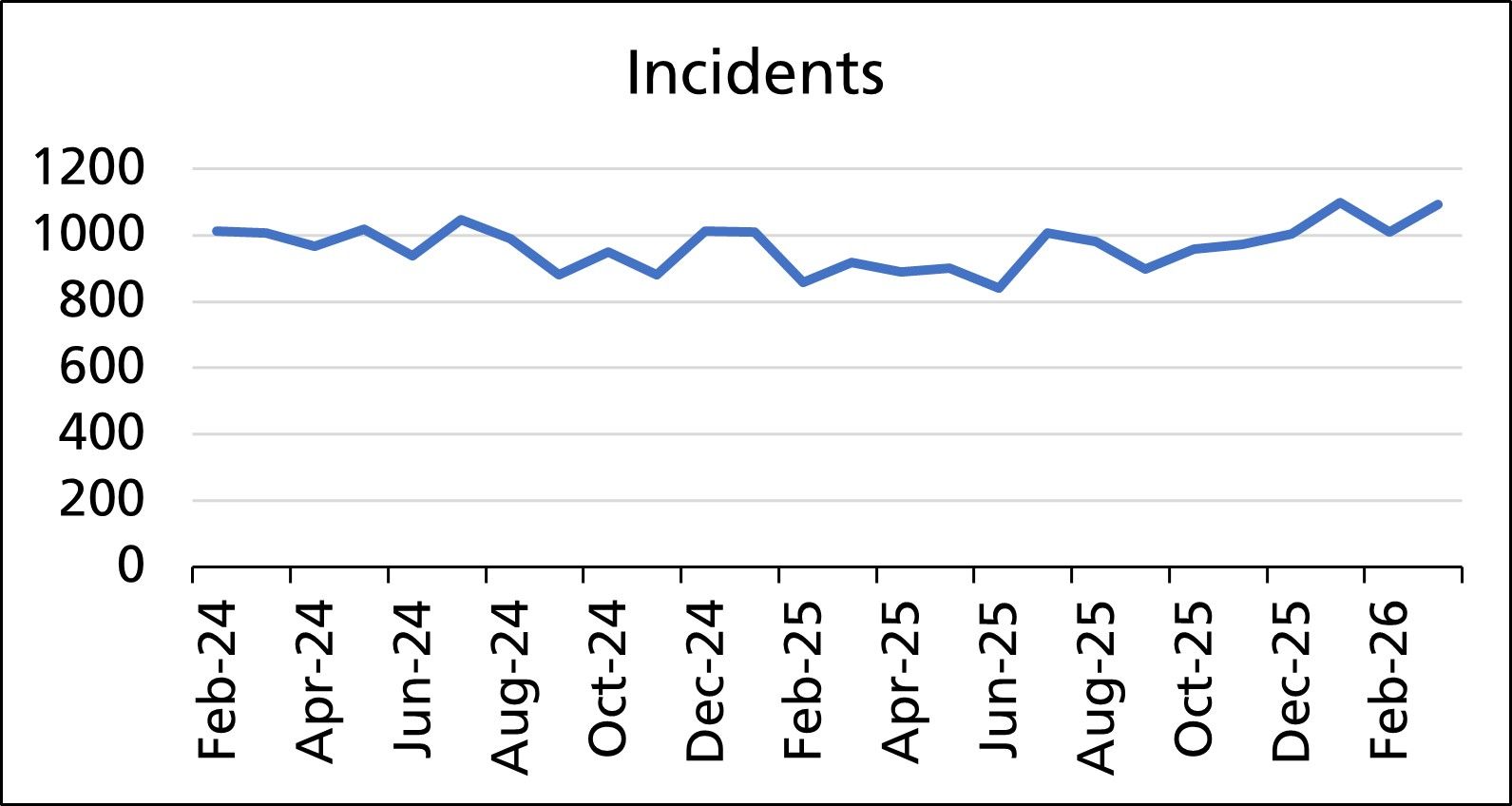
Graph summary: Values fluctuate between approximately 850 and 1,100 incidents, with several peaks around mid 2024, late 2025, and early 2026, and dips in early and mid 2025. Overall, the trend remains relatively stable with minor variation over time.
Patient Safety Incidents and UEC Delays from April 2024 to March 2026
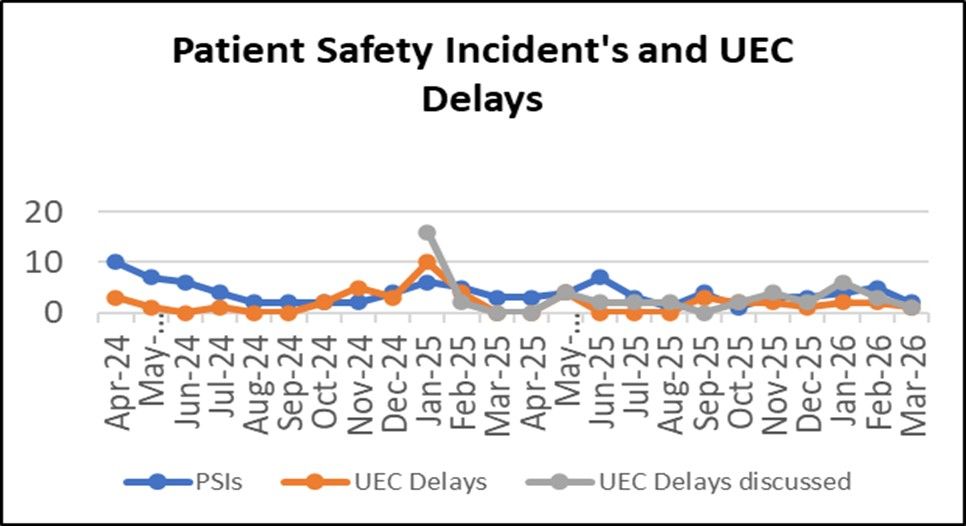
Graph summary: Three series are displayed: PSIs (blue), UEC delays (orange), and UEC delays discussed (grey). PSIs fluctuate between around 2 and 10 incidents, with a peak in mid 2025. UEC delays remain low, mostly between 0 and 5, with a brief rise in late 2024. UEC delays discussed show a notable spike above 15 in early 2025 before returning to lower levels. Overall, values across all three measures vary but remain relatively low.
Prior to the implementation of the Patient Safety Incident Response Framework (PSIRF) EEAST reported on the level of harm they directly caused in relation to individual incidents. Since the implementation of PSIRF in October 2024, the parameters to which levels of harm are reported have been updated in line with Learning from Patient Safety Events (LFPSE) guidance to reflect how EEAST may have contributed towards harm. A condition within the Quality Account requirements is for each trust to provide a comparison of their patient safety incidents reported to NRLS against the national average for similar services, however, this process is no longer available.
Patient safety events
In 2023, the system used to report and monitor the progress of Serious Incident investigations across the NHS, transferred from the Strategic Executive Information System (StEIS) to a new reporting system, Learning from Patient Safety Events (LFPSE). Learning from Patient Safety Events is captured in the trusts incident reporting system, Datix, at the time the incident is reported by staff. LFPSE has the ability to provide data on patient safety events, due to the way in which the system is set up, reporting specific ambulance data can be a challenge as the system is tailored mainly to the acute hospital setting, this has been a topic of discussion at the national Ambulance Risk and Safety forum with escalations to national teams to drive improvement.
This is supported by the Patient Safety Incident Response Framework (PSIRF) which makes no distinction between ‘patient safety incidents’ and ‘Serious Incidents’. As such this has removed the ‘Serious Incidents’ classification and the threshold for it. Instead, the PSIRF promotes a proportionate approach to responding to patient safety incidents by ensuring resources allocated to learning are balanced with those needed to deliver improvement.
Within this framework, organisations are required to implement a plan that takes account of several categories including;
- the involvement of patient safety partners,
- engaging and involving patients, families and staff following a patient safety incident
- responding proportionately to patient safety incidents,
- oversight roles and responsibilities,
- patient safety incident response standards.
Recording patient safety events, whether they result in harm or not, provides vital insight into what can go wrong in healthcare and the reasons why. At a national level, this allows for new or under-recognised safety issues to be quickly identified and acted upon on an NHS-wide scale, ensuring providers across the country take action to reduce the risk.
| Category | 2024/25 (PSIRF data) | 2025/26 (PSIRF data) |
|---|---|---|
| Delay | 29 | 13 |
| CAS / AOC | 11 | 3 |
| Patient injury | 5 | 3 |
| Clinical treatment | 12 | 12 |
| Non-conveyance | 7 | 8 |
| Equipment failure | 0 | 0 |
| Other | 15 | 1 |
| Total | 79 | 40 |
When things go wrong
It remains important to us to act in a timely manner when something goes wrong. This part of the report shows the response we made in acting on some of these things and what we did about them following the reporting of an incident.
| WHAT WENT WRONG | WHAT WE DID | WHAT THIS MEANS |
|---|---|---|
| There were discrepancies in the levels of reviews taking place dependent on whether the review was led by the patient safety team or local managers. | We have taken a proactive approach to train as many managers as possible in the After-Action review process to standardise incident review processes and learning outcomes. | We have a unified approach when reviewing incidents. We have a standardised way of documenting incident reviews across the organisation. We ensure that appropriate feedback is given to incident reporters via the Trust Datix system. |
| The number of shared judgement reviews being completed under the Learning from Deaths framework was lower than anticipated. As an ambulance service we are mandated to complete 40 SJR’s per quarter to ensure we learn from excellence as well as identifying learning themes. | We identified that we required more clinicians trained to complete the Structure Judgement Review (SJR) process. An increase in SJR’s provides a platform to learn from incidents. As a result of this we invested time to increase the number of trained clinicians from 21 to 34 clinicians that are now trained in facilitating SJRs | During 202/26 compliance has been exceeded each quarter. In total the number of SJR’s completed for 2025/26 is 1075 as of the 31 March 2026. |
| We identified a small number of patients were being injured whilst in our care across the non-emergency Patient Transport Service and Accident and Emergency operations. | We included this theme in our PSIRF plan for 2025/26. We completed and published our PSII report which has been shared with commissioners, staff and patients that were affected by such incidents. | Robust improvement actions have been set for the organisation to reduce the risk of patients being injured whilst in our care which is enhancing patient experience and safety. Patient injuries whilst in our care have reduced in terms of frequency due to the implementation of the actions created in the report. |
Duty of Candour
NHS providers have a statutory duty to inform and involve patients and their families in investigations where there has been severe harm under Regulation 20 of the Health and Social Care Act. In line with our policy, Duty of Candour (DoC) is overseen by the Patient Safety team and is attempted to be discharged for every serious incident, regardless of the level of harm caused. Further relevant cases are identified through a daily review of incidents reported. Contact is made with the patient, or a nominated representative, via telephone in the first instance. Following the primary telephone call, the conversation is summarised in a letter.
The content of our primary Duty of Candour conversations include:
- An introduction.
- An explanation of the incident identified.
- A sincere apology from us and condolences if the patient has sadly died.
- An explanation of the investigation process.
- An opportunity for the patient or nominated representative to ask any questions which they would like to be answered in the investigation.
- Establishment of preferred methods and frequency of involvement and communication throughout and after the investigation period.
Although Regulation 20 of the Health and Social Care acts requires the Duty of Candour to be discharged as soon as is reasonably practicable but always within 10 working days, there are often instances when it takes us longer to identify the individual most appropriate to discharge the Duty of Candour to. This is due to us not always having full patient or next of kin information.
Our approaches to finding out this information include:
- communication with GPs,
- liaising with the patient safety specialists at the admitting hospital and
- close working relationships with His Majesty’s Coroners.
Analysis of our data demonstrates the following compliance with Duty of Candour for 2025/26 for serious incidents and Patient Safety Incident reviews compared to the previous year.
| 2024/25 | 2025/26 | |
|---|---|---|
| Number of cases initially requiring Duty of Candour | 78 | 60 |
| Duty of Candour discharged | 53* | 27* |
| Average timeframe for DoC to occur (working days) | 7 | 8 |
| Average timeframe for letter follow-up (working days) | 1 | 1 |
- For cases where Duty of Candour was not discharged, this is due to not being able to identify or make contact with next of kin despite best efforts to do so. When this occurs a get in touch letter is sent to the patient or patient relatives encouraging them to make contact with us to facilitate a Duty of Candour conversation.
National Patient Safety Alerts
Patient safety issues that require national action are identified predominantly through incidents reported by providers to the National Reporting and Learning System. When these issues are identified, work is undertaken with frontline staff, patients, professional bodies, and partner organisations to decide if there is a large enough risk to issue a National Patient Safety Alert (NPSA) through the Central Alerting System, which in turn sets out actions that healthcare organisations must take to reduce the risk.
These alerts must be acknowledged and, where appropriate, actions taken.
The Trust has a robust way of monitoring compliance with national alerts and this year following review, none were deemed to be relevant to EEAST or the ambulance sector.
Patient experience and feedback
As a Trust, we are committed to demonstrating how we continually develop and improve our services based on the experiences and feedback of the people who use them. Patients, families and our wider communities are central to everything we do and their voices play a vital role in shaping and driving service improvement.
The following pages outline what patients and families have told us through public engagement, complaints, compliments and surveys, the actions we have taken in response and how we plan to improve further. This reflects our commitment to learning, transparency and working in partnership with people and communities.
The Patient Experience Department leads and co-ordinates complaints, compliments and patient and public engagement activity. Our approach aligns with the NHS Complaints Regulations 2009, the Parliamentary and Health Service Ombudsman (PHSO) Framework, NHS England’s Experience of Care Framework (2025) and the statutory guidance on Working in Partnership with People and Communities (2022), as well as local policy.
All feedback, whether positive or negative, is recorded and managed by the department. We ensure ongoing communication with patients and families throughout the process, and provide clear, timely responses to their feedback. Our focus is to resolve concerns wherever possible, ensuring complaints are handled compassionately and fairly, whilst identifying opportunities for learning and improvement.
Compliments
Compliments continue to significantly exceed the number of complaints received. In 2025/26, the Trust recorded 3,722 compliments, an average of 310 per month. This equates to a compliment to complaints ratio of 6:1, evidencing continued positive patient experience.
Compliments are reported to the Trust Board, communicated directly to colleagues involved, and added to the staff member’s personnel file. Over the past year, the main themes arising from compliments have related to the professionalism, kindness and care demonstrated by Trust staff. By adopting an Appreciative Inquiry approach, the Trust uses learning from excellence to reinforce positive behaviours and support the delivery of effective, compassionate care across the organisation.
| Apr-25 | May-25 | Jun-25 | Jul-25 | Aug-25 | Sep-25 | Oct-25 | Nov-25 | Dec-25 | Jan-26 | Feb-26 | Mar-26 | |
|---|---|---|---|---|---|---|---|---|---|---|---|---|
| Compliment | 314 | 279 | 249 | 293 | 322 | 304 | 384 | 254 | 318 | 372 | 337 | 296 |
| Complaint | 65 | 70 | 59 | 42 | 46 | 62 | 46 | 54 | 53 | 48 | 47 | 57 |
Complaints
In 2024/25, the Trust changed its approach to categorising expressions of dissatisfaction, with concerns and complaints no longer recorded separately. All expressions of dissatisfaction are now reported as complaints. This approach has continued in 2025/26 and supports greater consistency, transparency and alignment with the Parliamentary and Health Service Ombudsman (PHSO) Complaints Standards Framework.
During 2025/26, 649 complaints were received, representing a reduction from 868 complaints in 2024/25. Complaint volumes have remained low and stable, reflecting sustained improvement following earlier periods of higher activity.
Complaints accounted for 0.04% (649/1,490,823) of all patient contacts in 2025/26, compared with 0.05% in 2024/25. Where complaints cannot be resolved through early resolution, they progress to a local investigation and may also be reviewed by the Patient Safety Team where appropriate. Unfortunately, no benchmarking data for complaints by patient contact relating to ambulance services is currently available.
An anonymised sample of complaint responses was reviewed earlier in the year by Community Engagement Group (CEG) volunteers, who acted as ‘critical friends’ and provided feedback to support improvements in response quality. This activity has been temporarily paused due to departmental capacity, with plans to resume in 2026/27.
In total, 28 complaints (4.3%) were re-opened during the year. While overall complaint numbers remain low, this represents an increase compared with 2024/25. Re-opened cases will be reviewed to identify learning and inform further improvements to complaint handling and response quality.
Re-opened complaints 2025/26 (April 2025 to March 2026)
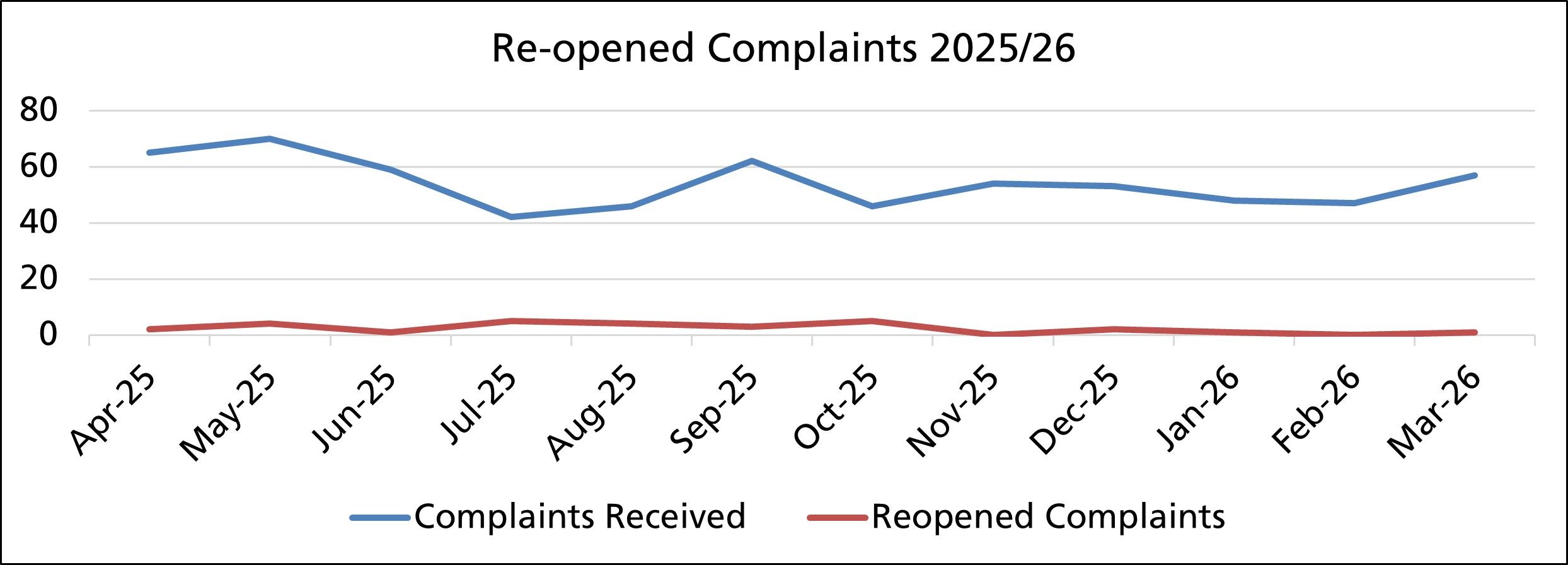
Graph showing the number of compliments and complaints received each month during the year.
Graph summary: Complaints received (blue line) fluctuate between around 40 and 70, peaking in May and September and dipping in July. Reopened complaints (red line) remain consistently low, ranging from 0 to about 5, with small increases in July and October. Overall, complaint volumes vary moderately while reopened cases stay minimal.
Complaint Themes
Emergency and Urgent Care (EUC)
Complaint themes within Emergency and Urgent Care (EUC) have remained broadly consistent with 2024/25. Complaints continue to relate primarily to clinical assessment and treatment, and staff attitude. Within the Emergency Operations Centre, complaints mainly focus on delays, communication and call handling.
Despite sustained winter pressures under REAP 4, complaints relating to delays have remained relatively low during the winter period.
Misunderstanding about triage processes and emergency call prioritisation remains a recurring theme. This reinforces the continued importance of clear and effective communication with patients and callers, particularly as the Trust implements its Patient Plan to support delivery of the right care, at the right time, by the right person.
Patient Transport Service (PTS)
As in 2024/25, dissatisfaction within Patient Transport Services (PTS) continued to relate primarily to delays and transport or driving related issues. Communication remained a significant contributing factor, particularly where transport was delayed or did not attend, with some complaints also reflecting uncertainty or misunderstanding regarding vehicle suitability or equipment requirements.
While complaint themes remained broadly consistent across service lines, there was clear evidence of improvement, reflected in a sustained reduction in overall complaint volumes during 2025/26. Significant reductions were observed across several key themes, including delays (34% reduction), staff attitude (30% reduction), clinical treatment and assessment (14% reduction), transport and driving (43% reduction), and communication and call handling (29% reduction).
These reductions reflect the positive impact of targeted improvement activity across the Trust. Within Emergency and Urgent Care (EUC), the reduction in delay related complaints aligns with the Trust’s delay action plan and the implementation of the 45 minute handover process in partnership with acute hospital providers. The reduction in complaints relating to clinical treatment and assessment may also reflect the continued embedding of the Trust’s clinical model, supporting improved clinical decision making and more appropriate patient pathways.
Within PTS, improvements to booking processes, clearer journey prioritisation and a reduction in the number of contracted providers have contributed to fewer delay and transport related complaints. Further developments in planning and scheduling arrangements have also reduced concerns related to transport and driving reliability. Overall, the sustained reduction in complaints relating to staff attitude and communication provides assurance of the positive impact of the Trust’s continued focus on culture, behaviours and compassionate communication. This work is delivering measurable improvements in patient experience and remains a key area of ongoing focus within the Trust’s quality improvement programme.
Parliamentary and Health Service Ombudsman (PHSO)
Although the majority of complaints are resolved through the Trust’s local complaints process, complainants may refer their concerns to the Parliamentary and Health Service Ombudsman (PHSO) for an independent review where they remain dissatisfied and all stages of the Trust’s process have been exhausted. The PHSO provides an impartial assessment of complaints and offers independent recommendations to support learning and improvement in complaint handling, investigation quality and organisational practice.
During 2025/26, the Trust was notified of one complaint referred to the PHSO. There are no historic complaints outstanding and no cases currently under review by the PHSO.
You said, we did
As a Trust we recognise the importance of learning when things have not gone as well as we would have liked or from our patient survey feedback. The following case studies are just three examples of some of the learning from last year.
| You said | What we did | What this means |
|---|---|---|
| Patient feedback from the Stroke Video Triage survey often highlighted difficulties with poor mobile signal, which affected video quality and connection stability. Feedback also related to the limited availability of the Stroke Video Triage Service across the region, meaning some patients were unable to access the pathway depending on where they lived or when triage was needed. | We initiated a trial with Excelerate, fitting ambulances with on board WiFi to improve connection stability during video assessments and in known poor signal areas. We have expanded Stroke Video Triage availability across the region. The pathway is now active at 12 of the 15 Stroke Centres in the East of England, including: 24/7 access at six centres. Extended hours, 7 day a week service at four centres. Expansion planned for the remaining two centres from April 2026, supporting full regional coverage. | The on board Wi Fi trial has significantly reduced connection issues, allowing for a more reliable and consistent video link, even in areas with poor network coverage or while the vehicle is moving. Increased availability means more patients can now benefit from rapid specialist triage, reducing unnecessary hospital conveyance and supporting faster onward referral to TIA and stroke services. The expansion positions the region to achieve full 24/7 stroke triage access across all 15 centres, improving equity of access and ensuring patients receive timely specialist assessment regardless of location or time of day. |
| Younger patients (16 to 24) have historically reported lower satisfaction with the service compared with other age groups. Young people aged 16 to 17 were previously unable to join the Community Engagement Group (CEG), limiting representation of their views. Feedback also highlighted the need for better engagement with children and young people, including more accessible ways to share their experiences. | We have introduced new policies and processes enabling 16 to 17 year olds to volunteer safely as CEG members, improving representation of younger voices. Additionally, we have recruited the first young member aged 16 to 24, with two additional young people currently onboarding. This is supported by strengthened induction processes for those under 18. Engagement with young people is now one of the CEG’s three key priorities, with an established dedicated working group involving members under 25 years old. The working group is actively exploring why younger patients report lower satisfaction. We have expanded engagement activity, including work experience, school and college visits and careers fairs. | EEAST now has structures in place to embed young people’s voices in service improvement, helping ensure their experiences directly influence decision making. Early signs show improvement: in 2025/26, 87.1% of 16 to 24 year olds rated their overall satisfaction as good or very good, which compares with 75.0% in 2024/25. Though numbers remain small and should be interpreted with caution. Continued work through the CEG and the new youth engagement working group will help build a better understanding of this age group’s needs, ensuring services and communication are more accessible and relevant to them. |
| Maternity patients have told us that they can feel vulnerable and exposed when multiple crew members remain in the room during intimate assessments. | This feedback has been incorporated into frontline maternity teaching. Crews are reminded that, once the initial assessment is completed, only essential crew members should remain, with non-essential crew waiting elsewhere to maintain privacy, dignity and comfort. | Maternity patients will now experience greater dignity and privacy during intimate assessments. This approach will create a calmer and more respectful environment, reduce feelings of vulnerability, and reinforce our commitment to delivering care that is sensitive, person centred and aligned with best practice. |
Patient surveys
The Trust undertakes a comprehensive annual patient survey programme, which includes continuous surveys for the urgent and emergency care service (UEC) and the patient transport service (PTS).
Patient surveys are promoted using a variety of methods, including the Trust’s social media channels, invitation to feedback letters and patient information cards. During 2025/26, 63.0% of PTS survey submissions were generated directly through SMS signposting.
Listening to the patient voice enables the Trust to understand what is working well and to identify areas requiring improvement. Feedback from surveys is routinely monitored and triangulated with themes from complaints, patient engagement activity and patient safety data to ensure robust governance, shared learning and continuous improvement in patient experience and outcomes. This approach enables the Trust to recognise areas of excellence and embed positive practice across services provided by EEAST.
All patient surveys include the Friends and Family Test (FFT) question, ‘Overall, how was your experience of our service?’ The FFT provides a benchmark of overall satisfaction across the Trust. The score is calculated by dividing the proportion of ‘very good’ and ‘good’ responses by the total number of responses.
The FFT is a national directive, and the Trust is required to provide all PTS patients with the opportunity to respond to the FFT question, with results reported monthly to NHS England.
FFT results from 2024/25 and 2025/26 can be found below. The 2025/26 survey results show higher overall patient satisfaction and increased response numbers across the Trust, with notable improvement in UEC and consistently high, stable satisfaction in the PTS.
Overall Satisfaction (Friends and Family Test)
| Continuous Patient Survey Results: | Number of patients: 2024/25 | Overall Satisfaction: 2024/25 | Number of patients: 2025/26 | Overall satisfaction: 2025/26 |
|---|---|---|---|---|
| Urgent and Emergency Care | 702 / 815 | 86.1% | 898 / 991 | 90.6% |
| Patient Transport Service | 1612 / 1865 | 86.4% | 2401 / 2087 | 86.9% |
| All Services | 2314 / 2680 | 86.3% | 3078/3299 | 93.3% |
Survey projects
This section provides further information on each of the surveys undertaken throughout the year.
Easy Read
The easy read survey, co-produced with the D.R.A.G.O.N.S at the Norfolk and Norwich SEND Association (NANSA), continues to be available as an accessible feedback option for UEC and PTS patients. This survey option enables people to share their experiences in a meaningful way and ensures feedback contributes directly to learning, improvement and informed decision making.
Feedback received during 2025/26 has been largely positive about the service and staff (FFT score: 93.7%). Patients reported feeling listened to and noted that staff communicated clearly and supported any individual sensory needs. The main area of dissatisfaction has related to ambulance and PTS delays; with this feedback shared as part of the wider system review.
This survey continues to highlight the value of co-production and working in equal partnership with experts by experience. The co-production work undertaken with the NANSA D.R.A.G.O.N.S group in 2024/25 resulted in the development of an accessible explanatory video to support patients in completing the easy read survey and understanding how their feedback is used. While the development work was concluded last year, this resource remains available and continues to play an important role in supporting patients to engage with the survey and understand how their feedback will inform service improvement.
Maternity
The maternity survey has continued as an online feedback option during 2025/26, enabling patients to share their experiences following a maternity related 999 emergency call.
Patients have continued to report a positive experience of staff and the service provided (95.8%), with areas of dissatisfaction generally relating to communication/attitude and ambulance delays. Feedback received has also highlighted that patients can feel vulnerable when multiple people are present in a room during intimate assessments. This feedback has been shared with the Clinical Lead and Clinical Specialist Midwife, and the learning has been incorporated into teaching for frontline crews. Crews are now advised that, following the initial assessment, non essential crew members should wait elsewhere in the property to support patient dignity, privacy and comfort.
Stroke video triage
Over the past year, the stroke video triage survey continued to proactively gather feedback from patients receiving a pre hospital video assessment, supporting timely and appropriate care. The pathway has improved arrival to imaging times and reduced treatment delays across all live centres.
Patient satisfaction remains high (80%), but qualitative feedback has indicated that many patients or relatives were unaware that a stroke video assessment had taken place. In response, communication has been strengthened so that crews clearly explain when and how a video assessment is being conducted. Surveys are also now sent out closer to the time of the incident, helping to increase response rates and gather clearer, more detailed feedback from patients and relatives
Patient feedback has directly shaped service improvements over the past year. Reports of poor mobile signal has led to fitting ambulances with on board Wi Fi, which has significantly reduced connection issues. Feedback relating to the limited operating hours has informed the expansion of Stroke Video Triage across the region – which is now available at 12 of 15 Stroke Centres, with increasing 24/7 and extended hours coverage and plans for full 24/7 access across all centres.
Survey findings have been shared widely with NHS England, the Integrated Stroke Delivery Network, national and international conferences and ongoing research projects, helping to raise the profile of EEAST and demonstrate the pathway’s impact on patient experience, outcomes, and optimisation of the pre hospital stroke pathway.
Mental health
During 2025/26, a new Mental Health Response Vehicle (MHRV) survey was co produced with the Clinical Lead for Mental Health, mental health practitioners, commissioners and Experts by Experience to support system wide learning and improvement for patients in mental health crisis.
The survey gathers feedback from patients attended by the MHRV and helps evaluate how effectively the service supports people in mental health crisis, including whether specialist assessment is provided in a timely and appropriate way.
Following contact with the MHRV, patients are given a leaflet that explains the MHRV model, provides signposting, offers a practical action plan for patients, supporters and carers and includes an opportunity to give valuable feedback via an online survey. Insights from the survey are used to evidence satisfaction, outcomes and impact, and to inform service refinement and the case for longer term funding and wider implementation.
Although feedback gathered so far is limited due to the early stage of the initiative, responses received to date remain highly positive, with 100.0% satisfaction reported from eight MHRV survey respondents. A separate online mental health survey received two responses, both raising concerns about communication and perceived lack of mental health support; these have been shared with the Clinical Lead for Mental Health and the Mental Health Advanced Practitioner to support wider learning.
Although MHRV feedback is very positive, broader feedback from the online survey and other sources continues to indicate a need for stronger mental health support and clearer signposting.
Admission avoidance
Several admission avoidance surveys have continued during 2025/26 in support of the clinical model. These surveys capture feedback from patients treated safely at home, many of whom avoided need for hospital conveyance. Feedback across the Physician Response Unit, Advanced Practice Team and Community Wellbeing teams has been overwhelmingly positive, with high satisfaction reported (100.0% for the Physician Response Unit and Community Wellbeing Officer, and 96.0% for the Advanced Practice Team).
Where concerns were raised, these have largely related to delays or communication. Survey feedback also indicates that patients are not always aware of the full range of services or the potential outcomes following 999 emergency call triage. This reinforces the need for clearer communication about the clinical model (Patient Plan) and alternative pathways in place.
Patient feedback continues to provide essential evidence of satisfaction and outcomes, helping to refine services and support the case for sustained funding and region wide implementation. Engagement activity during 2026/27 will focus on improving public understanding of the Patient Plan and increasing awareness of pathways available.
A Patient Voice Task and Finish Group has co produced a Patient Voice Framework, providing a consistent approach to embedding lived experiences and ensuring the patient voice is at the heart of service design and evaluation. The framework will be introduced using a phased approach and initially tested via the Patient Plan and health inequalities work. As it embeds, reporting is expected to show greater awareness of the Patient Plan and stronger, more meaningful patient feedback.
Next steps
In 2026/27, we will continue to strengthen how patient and community feedback shapes improvement across the Trust. Key priorities include:
- Implementing the co-produced Patient Voice Framework, which will initially be trialled via the Patient Plan and health inequalities work.
- Ongoing engagement activities will focus on supporting the Patient Plan and helping patients and the public understand the different pathways available.
- Strengthening complaints learning, including resuming CEG complaint reviews, improving first time resolution and ensuring clearer, more compassionate responses.
- Continuing targeted recruitment to the CEG to improve diversity and regional representation across the region.
- Supporting CEG working groups to progress their priority areas, including youth engagement, walkabout audits and bystander support initiatives.
- Expanding accessible feedback routes, including further digital options and co produced formats to widen participation.
- Continuing a prioritised patient survey programme focused on learning and improvement, aligned with Trust priorities.
- Ongoing admission avoidance feedback projects, alongside development of a new unscheduled care hub survey with system partners.
- Supporting pathway improvements, including full 24/7 Stroke Video Triage coverage, further development of the MHRV model, and the out of hospital video guided CPR initiative.
These actions will ensure the patient voice continues to drive meaningful improvement in the safety, quality and responsiveness of care across EEAST.

Patient and Public Involvement
As a Trust, we feel that it is important to hold ourselves to account for how we engage with our patients and the public, and for how we ensure the patient voice is reflected across the organisation.
Community Engagement Group (CEG)
The EEAST Community Engagement Group (CEG) has continued to strengthen the patient voice during 2025-26, providing quarterly updates to the Trust Board on its engagement activity, including public events, collaboration with partner organisations and networks, complaints reviews, and station walkabouts. The group has also progressed its three priority workstreams relating to youth engagement and recruitment, CQC aligned walkabout audits, and the ‘Bystander Engagement’ initiative.
CEG members have continued to interface and participate in internal governance meetings, including Trust committees, the Patient Experience and Safety Group, the Voluntary Advisory Forum, and the Research Involvement Group. Attendance at public Board meetings and regular quarterly reporting is now approaching its second year, marking a significant cultural shift toward embedding patient representation throughout the organisation. The CEG has played a prominent role in recent Board development sessions which have focused on embedding the patient voice, developing a health inequalities plan and addressing cultural change. Members are key contributors to the Patient Voice Task and Finish Group and have been actively involved in the recent coproduction of the new Patient Voice Framework and review of the Patient Plan communication document.
Over the past year, members have also contributed to stakeholder interview panels and supported the recruitment process for new CEG members, ensuring patient and public perspectives shape both organisational appointments and the development of the group itself. Membership diversity and reach have continued to grow, supported by revised structures that offer more flexible and accessible volunteering opportunities. Work to extend membership to 16 to 17 year olds is now complete. Robust safeguarding and volunteer processes are now fully in place, with the first young member onboarded and two further members currently progressing through the onboarding process.
The next step for the group is to develop a stronger induction to EEAST volunteering for new members. Overall, the CEG’s collective activity demonstrates its growing impact in strengthening public involvement and ensuring patient perspectives remain central to decision making across EEAST.
Engagement Activities
Face to face engagement events continue to be an important way of reaching members of the public who may not usually interact with EEAST. These activities provide opportunities to gather feedback, offer education on first aid and Cardio Pulmonary Resuscitation (CPR), promote health and wellbeing, and explain what to expect when calling an ambulance. This year’s engagement has included attendance at community events, school visits, and partnership work with local groups. Delivery has been supported by the Patient and Public Involvement (PPI) team, frontline staff, and volunteers from the CEG and community first responders.
During 2026-27, the focus of engagement activity will include:
- ‘How to be a good bystander’ - practical steps the public can take to support someone in an emergency.
- Education on the 999 process - including how calls are triaged, the clinical pathways available, and how decisions are made to ensure patients receive the most appropriate care.
- Raising awareness of the clinical model (Patient Plan).
- Strengthening involvement through CEG working groups - supporting members to contribute meaningfully to workstreams, using their insights to shape patient experience activity, and ensuring young members can participate safely and effectively.
- The overall aim is to improve public understanding of the ambulance service, promote informed use of 999, and empower communities to contribute to positive patient outcomes.
Patient and family stories
Our discovery interviews with patients and their families complement our other forms of feedback by giving people the space to share their experiences in their own words. These interviews are filmed and presented at public Board meetings, where they are discussed to support learning and improvement.
Over the past year, they have been used to enhance understanding arising from complaints and serious incidents, with patient voice proving to be a particularly powerful tool for reflection and change. This year, discovery interviews have centred on key themes including maternity, adrenal insufficiency, use of the Clinical Assessment Service and the Unscheduled Community Care Hub to escalate a call, and positive feedback for staff. Further interviews are planned in relation to video guided CPR and stroke video triage.
Links with HealthWatch and patient representative groups
Our PPI team and our CEG volunteers regularly attend a variety of meetings of patient representative groups, including voluntary, community and social enterprise groups, mental health groups, diabetes support groups, young carers forums and Healthwatch.
We continue to broaden our involvement with partner organisations and specialist groups across the region to ensure diverse voices are represented. As part of the Patient Voice Task and Finish Group, the stakeholder database has also been expanded, supporting more targeted and inclusive engagement.
Statement from our Community Engagement Group
The EEAST Community Engagement Group (CEG) has made notable progress in representing the patient voice during 2025/2026. The CEG now have a regular place at Trust board meetings, presenting reports on their activities and have the opportunity to ask the Board questions frequently embedding the link from Board level to the patients and the public EEAST serves.
During the past year, we have seen an increase to our membership through volunteer recruitment. This includes a number of young members who are 16 to 18 year olds as this has been one of our key focus areas over the past couple of years. The members have assisted with numerous public engagement events and activities, complaints reviews, station IPC audits, undertaken patient discovery interview training, attended internal and external meetings to represent EEAST community engagement, contributed to the development of the 2025-2030 patient plan and EEAST values, supported members of staff, and flown the flag for the patient and public voice at EEAST brilliantly. We are now also included as the patient and public voice at many of the internal committee meetings.
Following a coproduced review of the structure of the group in 2023, the group continues to embed this revised approach which provides greater accessibility and opportunity for people to participate in community engagement volunteering at EEAST in ways that meet their capacity to volunteer. Core members of the group working in collaboration with the Patient and Public Involvement Team, have focused on ways to increase engagement from members and help drive the group forward.
Engagement activities
Face to face engagement events provide an opportunity to meet with the public and gain feedback from people who may not usually have contacted EEAST. It also provides an opportunity to provide education around first aid and Cardio Pulmonary Resuscitation (CPR) training, health promotion and what to expect when you call an ambulance. This work has included attendance at events, school visits and work with community groups and has been undertaken by the PPI team, frontline staff, and volunteers from both the CEG and community first responders. Over the next 6-12-months, the three focus areas for engagement activities will be:
- ‘how to be a good bystander’, things you can do as a member of the public to assist in an emergency, and engagement and education on what happens when you call 999 and how your call may be managed. The aim of this is to increase public awareness of the service and how we can all contribute to positive patient outcomes.
- How we can increase feedback from Young People in the community and how we can engage with Young People in our communities. Currently statistics show us that the 16 to 30 year old population are a significant user of our services but the feedback we get from this age group is disproportionately low, so we will be working to increase opportunities for engagement within this age group.
- Looking at ways to support the Trust meet its standards with the Care Quality Commission by inspecting stations and processes to ensure they fulfil the criteria and standards expected of the Trust. There are many audits carried out by staff across the Trust, but as volunteers we can conduct an audit from a slightly different angle and therefore ensure these audits are robust and all needs are met.
Patient and family stories
Our discovery interviews with patients or their families supplement our other feedback received by giving people the opportunity to share their story in their own words. These are filmed and are shown at public board meetings and discussed by the board. We have used them this year to support learning from complaints and serious incidents and find that hearing directly from the patient is a powerful learning tool. This year we have completed discovery interviews on areas such as end of life, staff attitude and behaviours, non-conveyance to hospital through working with the patient safety team, and delayed responses.
Links with HealthWatch and patient representative groups
Our PPI team and our community engagement group volunteers regularly attend a variety of meetings of patient representative groups including mental health groups, diabetes groups, young carers meetings and Healthwatch.
We continue to expand our representation with other organisations and specialist groups across the region. As the new Integrated Care Boards take shape across the region of the UK we cover, we will look for opportunities to engage with these stakeholders and represent the patient voice.
Raising concerns and Freedom to Speak Up
Since August 2024 EEAST has used the Guardian Service to provide a fully independent, 24 hour, 7 day a week, fully resilient Freedom to Speak up Service. The service utilises a robust and confidential system to store and report on data which allows the Trust to make changes in the areas which are frequently reported.
The Guardians engage with staff across the region visiting stations, attending team meetings, taking phone calls and joining Teams calls. They regularly promote their function on our Executive Question and Answer session and on EEAST24.
Bi monthly the Guardians meet with the Chief of Staff to review recommendations and take and progress actions to improve staff experience. These are reported to and monitored through the Executive Leadership Board and Public Board.
The table below shows the areas for concern raised over the last two years.
| Subject | Total number of concerns 2024/25 | Percentage (of total concerns) | Total number of concerns 2025/26 | Percentage (of total concerns) |
|---|---|---|---|---|
| Patient safety/quality | 4 | 2.44% | 7 | 3.02% |
| Worker safety or wellbeing | 11 | 6.71% | 4 | 1.72% |
| Bullying or harassment | 13 | 7.93% | 14 | 6.03% |
| Behaviour/relationships | 32 | 19.51% | 48 | 20.69% |
| Discrimination and inequality | 6 | 3.66% | 12 | 5.17% |
| Management issue | 29 | 17.68% | 39 | 16.81% |
| System and process | 68 | 41.46% | 98 | 42.24% |
| Other | 1 | 0.61% | 4 | 1.72% |
| Sexual Misconduct | 6 | 2.59% | ||
| Total | 164 | 232 |
During 2025 the Trust received a total of 232 concerns via the Guardian service, on average 19 each month. Although there was an increase of 34.3% in the number of concerns reported, this was partly due to the change mid-way through the previous year in how cases are raised. FTSU concerns are now raised through an independent provider and the Trust sees the increase as a positive outcome in that staff have trust in and are accessing this service to raise their concerns. The largest theme related to system and processes (42.24%), with behaviour and relationships accounting for 20.69% and management issues for 16.81%. This follows the same pattern as last year in relation to most common themes.
Work is under way to explore in more detail the system and processes theme and triangulate with other listening events such as the live Executive Question and Answer and listening events such as Time to Listen and the Big Conversation.
Prior to 2025/26, sexual misconduct cases were reported within the behaviour/relationships category. This year, in line with the sexual safety campaign the Trust is running, sexual safety has been added to the FTSU reporting as a theme. This is to ensure that the data is recorded and can be triangulated with other data sources to highlight areas where further action is required and areas of focus and concern can be identified.
At the end of March 2026, 60 cases were actively being managed and were rolled over to April 2026. To date, 98/232 (42%) cases have been resolved either verbally or in writing and a further 25 (10%) staff have chosen not to pursue their concern. In 44 cases 19%, there has been no further contact from the member of staff following the concern being raised and the Service following this up.
In addition to the Freedom to Speak Up service, staff are also able to raise concerns to our People Services directorate in line with our policies and procedures, the outcomes of which are monitored and reported to our Trust Board through our Raising Concerns Forum.
Working with our local communities
We are supported by around 1,200 active and valued volunteers and other partners in a number of roles.
Community first responders.
Our community first responders (CFRs) are volunteers who are trained by us to attend certain types of emergency calls in the area where they live or work. Their aim is to reach a potential life-threatening emergency in the first vital minutes before the ambulance crew arrives. They also attend lower acuity calls and can, where training has been completed, assist with lifting and signposting calls with needs where there is no obvious immediate risk to life
Their role is to help stabilise the patient and provide the appropriate care until the more highly skilled ambulance crew arrives on scene to take over the treatment.
They also promote community partnerships and integrated working.
Volunteer car drivers
Working with our Non-Emergency Patient Transport Service, our volunteer car drivers are essential to help us provide an additional ambulance car service to our patients helping to take them to hospitals and other services.
Co responders / collaborative response
Military Co responders Primarily composed of active military personnel and civil servants based at military bases, their role is to provide additional response capacity to EEAST by providing rapid response capabilities, thereby enhancing overall performance and patient care.
Fire and Rescue Service (FRS) partnership sees us working with six fire services under memorandums of understanding enabling them to respond for the Trust to a selection of calls. These include cardiac arrest response, immediately life-threatening calls, and bariatric assistance. They have also been instrumental in responding to our non-injury patients who have fallen.
Emergency responder (ER) scheme The ER scheme was launched in 2024 and the aim of the scheme, comprised of volunteers from multi-disciplinary backgrounds including fire-fighters, police officers, and civil servants, is to provide an additional response resource within a sector that has previously seen prolonged C1 responses whilst developing and enhancing volunteer opportunities within EEAST. This scheme has now expanded in collaboration with Beds and Herts Emergency Critical Care Scheme (BHECCS). and Norfolk Accident Rescue Service (NARS) to provide responses from four vehicles across Bedfordshire, Hertfordshire and Norfolk.
Achievements in 2025/26
-
Safer recruitment processes for all volunteering roles.
-
Provided specific additional training and continuous professional development (CPD) events.
-
Expansion of FRS collaboration along with creation on dedicated team to support collaborative working.
-
Secured funding for a 12-month secondment to improve out of hospital cardiac arrest survival, focussing on the maintenance and administration of the British Heart Foundation Circuit database
-
Further site launches of emergency responder schemes
Looking forward
We have a number of activities and measures planned for 2026/27 including:
- Review of our volunteer governance structure which will include oversight of mandatory and statutory training compliance.
- Expansion of collaborative activity with FRS partners across the region to enhance co- responding model.
- Additional recruitment to be undertaken to support Military co- responder schemes in new locations.
- Volunteers’ week – to be held at the beginning of June 2026.
- Expansion of lower acuity responses undertaken by both volunteers and FRS partners.
- Digital technology upgrades and EPCR trials.
For more information about how to become a volunteer, please email Volunteer@eastamb.nhs.uk or visit our volunteer with us pages.
Commissioning for Quality and Innovation (CQuIN)
The CQuIN scheme is intended to deliver clinical quality improvements and drive transformational change and will impact on reducing inequalities in access to services, the experiences of using them and the outcomes achieved. Our CQuINs are agreed with our commissioners as part of our contract negotiations and have traditionally been a mix of nationally mandated and locally determined Quality and Service Delivery Improvement Programmes.
Since the Covid19 pandemic CQUIN deliverables were largely suspended by NHS England which have not yet been re-instated
As such, there were no locally determined CQUINs in 2025/26 and the only national CQUIN for Ambulance Services related to the uptake of the influenza vaccine, as there is each year in support of the protection against infectious illness.
The 2025/26 Seasonal Influenza Vaccination Programme commenced on 1 October 2025 and was delivered as a flu only campaign in line with NHS England guidance. Building on lessons learned from the 2024/25 programme, targeted quality improvement actions were implemented, including the introduction of staff vaccination incentives, establishment of a dedicated Vaccinator Lead role, deployment of bespoke vaccination software, and increased use of welfare wagons to improve accessibility for frontline staff.
These improvements resulted in a marked increase in workforce protection, with vaccination uptake increasing by approximately 30 percentage points compared to the previous year. By 31 December 2025, 52% of all staff and 50% of frontline staff had been vaccinated.
The programme was supported by 122 trained vaccinators and delivered through a range of flexible models, including walk around clinics, welfare wagons, and community providers.
The implementation of the Vaccination Track system enhanced communication, reporting and oversight, with 76% staff engagement, improving visibility of uptake, recorded declines and vaccinations received externally.
This programme demonstrates continued commitment to staff safety, winter resilience and high quality patient care through improved workforce health and vaccination uptake.
Quality success throughout the year
Maternity Care
Keeping newborns warm during pre hospital care can be difficult. Although infant warming mattresses are now used during transport, some newborns still become cold before they reach hospital. This shows how hard it can be to maintain a baby’s temperature outside a hospital, even when ambulance crews do everything they can.
To improve this, and working with the EEAST Innovation Working Group, a Trust wide pilot has been introduced. This includes the use of newborn thermometers and insulating wraps during pre hospital maternity care. In partnership with several maternity units, newborn temperatures will be checked before transport and again when the baby arrives at hospital. The insulating wraps are used alongside the infant warming mattress to help reduce heat loss and keep babies warm during transfer.
EEAST has also supported staff development by delivering one of the first Royal College UK Out of Hospital Newborn Life Support (OH NLS) courses in the UK.
This training is designed for pre hospital clinicians who attend planned home births or respond to unplanned births in the community.
The course provides clear, evidence based guidance on how to support newborns after birth and how to carry out early resuscitation if needed. A total of 36 midwives and paramedics completed the course, and feedback shows increased confidence and skills in managing newborn emergencies. Several clinicians have already used what they learned in real clinical situations.
In addition, EEAST has helped develop national guidance for women and birthing persons who may need ambulance services when planning a home birth or a birth in a midwifery led birth centre. This guidance is available on the MAMA Academy website and has been translated into 104 languages, supporting clear and accessible information for a wide range of communities.
Trauma training for 999 call handlers
EEAST has become the first UK ambulance service to introduce specialist trauma training designed specifically for its Emergency Operations Centre (EOC) teams.
Every day, our call handlers support people during the most frightening and vulnerable moments of their lives. They guide callers through emergencies, reassure distressed families all while making split-second decisions. This constant exposure to high pressure, emotionally challenging situations can take a significant personal toll.
To better support these vital teams, the EOC retention, health and wellbeing team has partnered with a trauma specialist to bring Neuroscience Informed Trauma Exposure Training (TITEN) into the control room environment.
Already used by thousands of police officers and by the RNLI to support lifesaving crews, TITEN has been adapted with direct input from EEAST call handlers to make sure it reflects the realities of their work.
The training helps staff understand how the brain naturally processes stressful or traumatic experiences and provides simple, practical techniques to regulate stress and build resilience over time.
The introduction of TITEN forms part of the Trust's wider commitment to supporting the emotional wellbeing of staff, reducing stigma around the psychological impact of emergency work and creating a genuinely safe and supportive working environment.
The programme enhances our existing support such as Trauma Risk Management (TRiM) and Occupational Health services.
Cardiac Arrest Care
Improving survival from out of hospital cardiac arrest (OHCA) is a key quality priority for the Trust. To support this, and aligned with the national Restart a Heart campaign, the Trust launched a new Out of Hospital Cardiac Arrest Desk (OHCAD) on 29 September 2025. This initiative is funded through a successful bid to NHS Charities Together and forms part of a wider OHCA improvement programme across the east of England.
The programme aims to optimise the chain of survival, reduce unwarranted variation and inequality in resuscitation, and improve outcomes, experience and safety for patients, bystanders and clinicians.
Earlier and Higher Quality Intervention: The programme focuses on interventions before ambulance arrival, where evidence shows the greatest impact on survival. The OHCAD will deliver video assisted CPR, enabling real time expert guidance to improve CPR quality, defibrillator use and overall resuscitation effectiveness, while maintaining call handler oversight.
Specialist Clinical Oversight: Staffed by Advanced Paramedics in Critical Care, the OHCAD will act as a single point of contact for senior clinical advice for all OHCA cases.
This includes support with resuscitation decisions, resource deployment and escalation for patients with a realistic prospect of return of spontaneous circulation (ROSC). Earlier identification of cases where resuscitation is not clinically appropriate will support patient dignity, safety and effective use of ambulance resources.
Optimised Response and Community Mobilisation: The programme strengthens use of community first responders, GoodSAM responders, co responders and community defibrillators. A new community response defibrillator administrator role will improve availability, oversight and “rescue ready” status of public access defibrillators.
Data, Intelligence and Reducing Inequality: Working with our clinical audit department, an OHCA Registry has been established to improve data collection, analysis and understanding of cardiac arrest across the region. This will enable more intelligence led deployment, targeted community interventions and action to reduce inequalities in resuscitation and outcomes.
Experience, Aftercare and Welfare: Structured follow up and support for bystanders, witnesses and responders will be introduced, addressing an identified gap in aftercare following these traumatic events and improving overall experience and staff welfare.
Next steps
This programme is expected to improve survival from OHCA, enhance consistency and quality of care, reduce inequality, improve patient and bystander experience, and support system sustainability while maintaining high standards of safety.
This important piece of work has been cited as one of our local priorities for the coming year.
Quality Governance Committee Assurance
Strategic Goals
- Goal 2: Provide Outstanding Quality of Care and Performance
Strategy Overview Areas
- Clinical Strategy
- Research and Innovation Strategy
- Quality Improvement Strategy
- Quality Account Priorities
Strategic Risks and Risk Overview Areas
- SR2: Failure to achieve continuous quality improvements and high quality care
- Clinical and Patient Safety
- Safeguarding
- Infection, Prevention and Control
- Estates
- Medical Devices
- Medicines Management
Key Change Initiatives
- CQC Improvement Plan
- Medicines Management Programme
- QI Faculty Development
- PAS Oversight Framework
Key Performance Indicators
- SI number, harm and actions
- IPC audit compliance
- Safeguarding compliance
- PAS metrics
- Drug audits and incidents
- Complaint metrics
- Fire and first aid compliance
- Clinical Quality Indicators
Key Independent Assurance Mechanisms
- Regulatory inspection reports
- Internal audit reports
- HealthWatch opinion
- Independent reviews
- Benchmarking
Sub-Group Structure
Compliance and Risk Group
- Patient Safety Group
- Clinical Best Practice Group
- Medicines Management Group
- Safeguarding Group
- Infection Prevention and Control Group
- Patient Experience and Engagement Group
- Medical Devices Group
- External Provider Assurance Group
Statements from the Commissioners, HealthWatch and Overview and Scrutiny Committees
The 30 day consultation period coincided with the pre election period, during which council activity is restricted, meaning some councils were unable to consider the publication.
Statement by Cambridgeshire County Council Health Scrutiny Committee
EEAST Quality Account 2025/26
The Health Scrutiny Committee received the draft Quality Account for the East of England Ambulance Service (EEAST) on 23rd April 2026. A Task and Finish Group was established to consider the draft in the context of the committee’s statutory health scrutiny function.
EEAST provides accident and emergency services for people in need of urgent medical treatment and transport in Bedfordshire, Cambridgeshire, Essex, Hertfordshire, Norfolk and Suffolk. It also provides non-emergency patient transport in some areas, although not in Cambridgeshire. We have tried to confine our comments to the services delivered in Cambridgeshire where possible.
We found the Quality Account 2025/26 well-structured and comprehensive with a good narrative flow. There is a clear articulation of the Trust’s achievements during the past year with good use of trend data and analysis. The Account reports some significant improvements during the past 18 months and we welcome and encourage that journey of continuous improvement.
The committee acknowledges management’s evident pride in the progress which the Trust is making and in its achievements. However, we felt there is an occasional drift into more promotional language than we would expect to see in a statutory report, and that this does not reflect the levels of challenge which EEAST still faces. We are also surprised that no reference is made to EEAST having been ranked 10th out of 10 ambulance service trusts in England the NHS Oversight Framework - NHS Trust Performance League Tables published on 9 September 2025.
EEAST response This will be included within our annual report.
It is positive to see that there has been an improvement across all categories of ambulance response times, but the report does not overtly acknowledge that these still remain below the national standard. This continues to pose a potential risk of harm to patients.
EEAST response Narrative amended however it should be noted that more information will be available within our annual report which is referenced within the Quality Account.
The narrative around the Section 29A notice served on the Trust by the Care Quality Commission on 10 February 2025 for failing to meet requirements relating to staff training, staffing levels, investigation and mitigation of controlled drug incidents, call wait times, the culture of the service and acting on information from staff to develop and improve the service is well written and appropriately detailed. We welcome the positive engagement which continues to take place between EEAST and the CQC. We also welcome the measures put in place to strengthen oversight and assurance in relation to the CQC’s concerns about the management of medicines investigations and the assurance that no incidents were identified that resulted in patient harm. We would like to have seen more evidence of improvement, but acknowledge that this data may not yet be available.
EEAST response – The Trust continues to monitor all metrics resulting from the S.29A Warning Notice, however this will be further tested in any new inspection undertaken by the CQC.
The committee appreciates the benefits to improving people’s understanding of the right time to call for an ambulance and the other options available to them and we agree this needs to be communicated in a way which is meaningful and will be internalised. However, we felt that the language around patients’ lack of understanding of the modern ambulance service and its clinical model could seem to imply this is patients’ fault. It was also unclear from the narrative how improving people’s understanding of EEAST’s clinical model would temper demand for services.
EEAST response – EEAST continues to promote how and when to access services and how their 999 call will be managed appropriate to their needs through multiple platforms including social media. It will continue to work with its system partners to promote this work.
Taking meaningful learning from customer and staff feedback and complaints is important in all organisations. We felt it would be helpful to include a bit more quantitative data on patient complaints in addition to the qualitative information provided, for example the number of complaints per 1000 contacts.
EEAST response – complaints vs patient contacts is included as a percentage. Figures have been added to supplement this.
It would also be useful to include some benchmarking data with other ambulance service trusts for comparison.
EEAST response - Unfortunately, benchmarking data for complaints by patient contact relating to ambulance services is not currently available.
There are three references to the NHS Staff Survey, but very little information about what this revealed.
EEAST response – narrative amended.
We would like to have seen more on this. There has also been a significant increase in the number of staff concerns registered through the Freedom to Speak Up (FTSU) process. This may be indicative of increased staff confidence in raising concerns, but we would like to have seen some assurance on this. We would also like to have seen more detail about how these concerns are being prioritised and addressed.
**EEAST response **– We believe this is covered within the narrative.
The committee commends the progress which EEAST has made during the past year and its commitment to continuous improvement. We remain committed to working constructively with the trust during the coming year both as a system partner and through our scrutiny role as a critical friend.
Statement by HealthWatch Essex
Response to East of England Ambulance Service NHS Trust Quality Account 2025-26
Healthwatch Essex is an independent organisation that works to provide a voice for the people of Essex in helping to shape and improve local health and social care. We believe that health and social care organisations should use people’s lived experience to improve services. Understanding what it is like for the patient, the service user and the carer to access services should be at the heart of transforming the NHS and social care as it meets the challenges ahead of it.
We recognise that Quality Accounts are an important way for local NHS services to report on their performance by measuring patient safety, the effectiveness of treatments that patients receive and patient experience of care. They present a useful opportunity for Healthwatch to provide a critical, but constructive, perspective on the quality of services, and we will comment where we believe we have evidence – grounded in people’s voice and lived experience – that is relevant to the quality of services delivered by East of England Ambulance Service NHS Trust.
We offer the following comments on this Quality Account.
- It is positive to see that despite sustained demand, EEAST reports improvements in emergency response times across all call categories compared with the previous year. We recognise how important timely responses are to people using urgent and emergency services, and welcome the progress made, whilst acknowledging that further improvement remains necessary, particularly for Category 2 calls.
- We are pleased to see that the Trust continues to perform above the national average in several important clinical outcomes, including cardiac arrest survival, heart attack care and stroke care. This provides reassurance that patients with the most serious time-critical conditions are receiving high-quality care.
- It is encouraging to see the continued development of alternative care pathways, including Hear and Treat services and Unscheduled Care Coordination Hubs, helping more patients receive the right care in the right place without unnecessary hospital conveyance. We know many people value care closer to home where it is safe and appropriate.
- We welcome the Trust’s acknowledgement that patient understanding of the modern ambulance service model remains variable, particularly where expectations about ambulance attendance and alternative pathways are concerned. Clear public communication about what happens when people call 999 is essential and we are pleased this has been identified as a priority for the coming year.
- It is positive to see a co-produced Patient Voice Framework being introduced across the organisation. Embedding lived experience and patient feedback into governance, decision-making and service design is an important step and aligns strongly with the values Healthwatch Essex promotes.
- We note the Trust’s openness in recognising that organisational culture, staff engagement and ensuring staff feel listened to and supported remain areas requiring further improvement. There is a clear link between staff experience and patient experience, and we welcome the commitment to continue this work over the next 12 months.
- Whilst it is reassuring to see improvements since regulatory intervention, we note the concerns previously raised by the Care Quality Commission regarding staffing, culture, training and call waiting times. Continued transparency and sustained progress in these areas will be important for public confidence.
- We welcome the Trust’s focus on reducing inequalities through improved demographic analysis of patient feedback and targeted engagement with seldom-heard communities. Understanding how different communities experience ambulance services is vital to delivering equitable care across such a large and diverse region.
Listening to the voice and lived experience of patients, service users, carers, and the wider community, is a vital component of providing good quality care and, by working hard to evidence that lived experience, we hope we can continue to support the work of EEAST.
Samantha Glover Chief Executive Officer, Healthwatch Essex April 2026
Statement by HealthWatch Hertfordshire
Response to East of England Ambulance Service NHS Trust Quality Account 2025-26
Thank you for sharing your Quality Account with us. Healthwatch Hertfordshire values its positive relationship with East of England Ambulance Service NHS Trust and looks forward to continuing to work together to ensure patient voices help shape improvements, including those reflected in the Trust’s quality priorities for the coming year.
Neil Tester, Chair Healthwatch Hertfordshire May 2026
Statement by HealthWatch Norfolk
Review of East of England Ambulance Service NHS Trust Quality Account 2025/26
Thank you for giving Healthwatch Norfolk (HWN) the opportunity to provide comments on the draft East of England Ambulance Service NHS Trust (EEAST) Quality Account for 2025-2026.
We know that this has been a challenging year for EEAST with increasing pressures on the health and care system and the Trust experiencing increasing demand for services including considerable, sustained peaks in emergency contacts in the winter months.
We are pleased to see the results of the ongoing work by the Trust to improve performance, with all four categories of response times, from those involving immediately life-threatening injuries and illnesses through to those less urgent, showing an improvement on last year. In particular, it is positive to see improvement in the average response time of Category 2 (C2) emergency ambulance response times, where in March this year the Trust achieved its fastest average response times for five years.
We note that this has been achieved, in part, through investment in new ambulances which has helped reduce the amount of time vehicles are off the road being maintained or repaired. The Trust has also expanded its clinical assessment service (Hear and Treat) in emergency operations centres where the focus is on providing expert advice and determining the most appropriate care pathway or confirming that an ambulance response is required, which has improved ambulance availability for patients who need urgent or life-saving care.
We also note that the Care Quality Commission (CQC) carried out a Focused Inspection of Urgent and Emergency Care services and Emergency Operations Centres in November 2024 and, following receipt of a Warning Notice and a warning Letter early in 2025, the Trust entered the formal Rapid Quality Review process involving monthly monitoring of key quality metrics. We recognise the efforts made by the Trust to address areas requiring improvement, including compliance with mandatory/statutory training, medicines management oversight and assurance, and Emergency Operations Centre staffing and supervision, leading to EEAST being moved to routine surveillance in March 2026.
We note that, although improvements have been seen across the areas requiring improvement, some remain as ongoing priorities for the coming year, including Category 2 response times, reducing system delays, and embedding a consistently positive organisational culture. A focus also remains on improving the effectiveness of how the Trust listens to staff, responds to feedback, and translates learning into actions for improvement.
EEAST’s Quality Priorities for coming year In terms of patient safety, we are pleased to see the continuing focus on improving the quality of the learning and sharing learning across the organisation, with priorities around strengthening the quality of learning from incidents (targeted After Action Review training) and reviewing and updating the Trust’s Patient Safety incident Response plan.
Under clinical effectiveness, we note the priority involving licensing EEAST to deliver diagnostic and screening interventions (ultrasound) to help improve the timeliness and accuracy of pre-hospital assessment and treatment and will be interested to see how this progresses with approval requested from CQC.
We note that a key priority under patient experience is to implement and embed the Patient Voice Framework, which has been developed to strengthen how patient experience is heard, considered and acted upon across the organisation. We note that the aim is for it to be consistently incorporated into decision-making, quality processes and governance structures and we will be interested to see how this priority progresses.
Performance against quality priorities for previous year The Trust has achieved improvement to ambulance response times in all 4 categories but we also note that response times (except category 4 responses) continue to fall short of national standards. We are pleased to note that the Trust is continuing to work with system partners to help address delays associated with hospital handover in addition to focusing on operational improvement.
We note that patient safety governance continues to be strengthened with the national Patient Safety Incident Response Framework process being embedded across the Trust, and further development of the Learning from Deaths programme with improved data collection and improved consistency in the use of Structured Judgement Reviews, helping ensure that themes can be clearly identified, shared and acted upon.
In terms of patient experience and feedback, we note that complaints arose from 0.04% of the Trust’s contacts with patients, an improvement of 0.1% on 2024/25. The number of re-opened complaints has, however, increased (4.3%) compared with last year (1.3%) and although the overall numbers remain very low (28 complaints were re-opened) they will be reviewed to identify learning for both complaint handling and response quality. We are pleased to note that the Trust received 3,722 compliments in 2025/26, significantly outnumbering complaints (649) which leads to a compliment to complaints ratio of 6:1.
It is good to see that the overall results of the Trust’s patient survey programme (Friends and Family Test) for 2025/26 show higher overall patient satisfaction (93.3% compared to 86.3 % in 2024/25) along with an increase in the number of responses, with the main areas of dissatisfaction being ambulance and patient transport service delays. We are pleased that the easy read survey (co-produced last year with the Disability Real Action Group of Norfolk) continues as an accessible feedback option for urgent and emergency care service and patient transport service patients.
We note that a new Mental Health Response Vehicle (MHRV) survey has been developed to obtain feedback on how well the MHRV service supports people in mental health crisis. We understand that it is in its initial stages of use and will be interested to see how this work progresses in capturing valuable feedback about mental health support.
We are pleased to see that the Trust’s Community Engagement Group (CEG) is making good progress in representing the patient voice, with an active role in the Trust’s quarterly board meetings, including discussion of films of the Group’s patient and family interviews to support learning from complaints and serious incidents, as well as having a prominent role in a recent Board development session on embedding the patient voice. We note that the Group represents the patient voice at a wide range of governance meetings within the organisation as well as with partner organisations and specialist groups across the system. We also note that Group were involved in the recent co-production of the new Patient Voice Framework and review of the Patient Plan communication document.
It is good to see that the Group has been successful in recruiting some younger members (16-18 years), helping to ensure that a more diverse range of experiences and views are heard. We note that quality priorities for 2026-27 include further targeted recruitment to improve diversity and representation across the region.
Accessibility EEAST’s Quality Account is clearly presented and is available in other formats and languages. It is a valuable source of information to the public and we hope to see it promoted to patients, staff, and wider system stakeholders.
Conclusion HWN welcomes the improvements being made to the quality of services by EEAST and recognises the efforts being made individuals and teams across the organisation. We are always keen to help in any way – so please get in touch if you would like to talk to us about how we might assist in you in making sure the views of patients, their families and their carers, are helping drive improvement.
Alex Stewart Chief Executive, Healthwatch Norfolk
Glossary
| Term | Acronym | Definition |
|---|---|---|
| 90th centile | The value of a variable such that 90% of the relevant data is below that value. | |
| Accident and emergency | A&E | A medical treatment facility specialising in acute care of patients who present without prior appointment, either by their own means or by ambulance. The emergency department is usually found in a hospital or other primary care centre. |
| Advanced Practitioner | AP | A healthcare profession with extended qualifications and scopes of practice. |
| After Action Review | AAR | A method of evaluation that is used when outcomes of an activity or event, have been particularly successful or unsuccessful to capture learning. |
| Ambulance (clinical) quality indicators | ACQIs | A set of national measures to benchmark clinical quality against eleven indicators to improve quality and safety of patient care. |
| Artificial Intelligence | AI | The theory and development of computer systems able to perform tasks normally requiring human intelligence. |
| Association of Ambulance Chief Executives | AACE | A central organisation that supports, coordinates and implements nationally agreed policy. |
| Blood pressure | BP | The pressure exerted by circulating blood upon the walls of blood vessels. One of the principal vital signs. |
| British Association for Immediate Care | BASICS | A charitable organisation who works in partnership with EEAST |
| Cardiopulmonary resuscitation | CPR | An emergency procedure, performed in an effort to manually preserve intact brain function until further measures are taken to restore spontaneous blood circulation and breathing in a person in cardiac arrest. |
| Care Quality Commission | CQC | The independent watchdog for healthcare in England. It assesses and reports on the quality and safety of services provided by the NHS and the independent healthcare sector, and works to improve services for patients and the public. |
| Category 1 | Cat 1 | National response time standard for 999 immediately life-threatening injuries and illnesses. |
| Category 1T | Cat 1T | National response time standard for 999 immediately life-threatening injuries and illnesses where the patient is transported. |
| Category 2 | Cat 2 | National response time standard for 999 emergency calls. |
| Category 3 | Cat 3 | National response time standard for urgent calls and in some instances where patients may be treated in-situ (e.g., their own home) or referred to a different pathway of care. |
| Category 4 | Cat 4 | National response time standard for less urgent calls. In some instances, patients may be given advice over the phone or referred to another service such as a GP or pharmacist. |
| Chief Executive Officer | CEO | The position of the most senior officer, executive, or administrator in charge of managing an organisation. |
| Clever Together | A company that helps organisations and progressive leaders improve performance and outcomes by incorporating evidence, expertise, and lived experiences into decision-making. | |
| Clinical Assessment Service | CAS | An EEAST service to provide triage to patients who have accessed the 999 service. |
| Clinical Audit | - | A process for measuring the level of care given against a set of standards to drive improvement. |
| Commissioning | - | The processes which local authorities and clinical commissioning groups undertake to make sure that services funded by them meet the needs of the patient. |
| Commissioning for Quality and Innovation programme | CQuIN | The incorporation of quality metrics within quality and innovation three-year contracts. Full reimbursement of activity is made upon delivery of quality initiatives. |
| Community Engagement Group | CEG | A group within EEAST in place to ensure that views of patients and their representatives can be used to improve our services. |
| Community first responders | CFR | Teams of volunteers who are trained by the ambulance service to a nationally recognised level and provide lifesaving treatment to people in their communities. |
| Cyber Assessment Framework | CAF | A systematic and comprehensive approach to assessing the management of cyber risks to essential functions of organisations. |
| Data Protection Act | DPA | United Kingdom Act of Parliament which updates data protection laws in the UK. |
| Data Security Protection Toolkit | DSPT | An online system which allows NHS organisations and partners to assess themselves against NHS Digital information standards. |
| Department of Health and Social Care | DHSC | A department of the Government with responsibility for government policy for health and social care matters and for the NHS in England along with a few elements of the same matters which are not otherwise devolved to the Scottish, Welsh or Northern Irish governments. |
| Disability Real Action Group of Norfolk | D.R.A.G.O.NS | A group of young people with disabilities that are looking to make sure that SEND opportunities, in Norfolk, are accessible and that young people are enjoying their services. |
| Duty of Candour | DoC | Regulation 20 of the Health and Social Care Act 2012 (Regulated Activities) Regulations 2014 to ensure that providers are open and transparent with people who use services or their representatives. |
| East of England Ambulance Service NHS Trust | EEAST | Ambulance service which operates in the East of England. |
| EasyRead | - | An accessible format which can be used by people with learning difficulties. |
| Electrocardiography | ECG | An ECG is a test used to measure the electrical activity of the heart. |
| Electronic patient care record | ePCR | A patient care record which is in electronic format. |
| Emergency operations centre | EOC | Control centre for managing call receipt, triage and dispatch functions. |
| Face arm speech time | FAST | A simple test to help people recognise the signs of stroke and understand the importance of emergency treatment |
| Freedom to Speak Up | FTSU | A national initiative to apply measures to enable staff to speak out about patient safety and other concerns confidentially or anonymously. |
| Friends and Family Test | FFT | A feedback tool that anyone can use to give quick, anonymous feedback to providers of NHS services. |
| General Practitioner | GP | A medical practitioner who treats acute and chronic illnesses and provides preventive care and health education to patients. |
| Glasgow Coma Scale | GCS | A clinical scale used to reliably measure a person's level of consciousness. |
| Glyceryl trinitrate | GTN | Drug for heart disease patients to dilate the blood vessels. Delivered as a spray or in tablet form. |
| Hazardous Area Response Team | HART | Specialist ambulance unit that provides medical care to patients in hazardous or ‘hot’ environments. They utilise special vehicles and equipment. |
| Health and Social Care Act | HSCA | An Act of the Parliament of the United Kingdom. It provides for the most extensive reorganisation of the structure of the National Health Service in England to date. It removed responsibility for the health of citizens from the Secretary of State for Health, which the post had carried since the inception of the NHS in 1948. |
| Health overview and scrutiny committee | HOSC | Provides external assessment of any NHS consultation process giving local assurance that the business cases for any future NHS developments are robust. |
| Healthcare Quality Improvement Partnership | HQIP | An independent organisation to promote quality in healthcare, and in particular to increase the impact that clinical audit has on healthcare quality improvement. |
| Healthwatch | An independent national body with the power to monitor the NHS and to refer patients’ concerns to a wide range of authorities. It represents the interests of patients as consumers, strategic commissioning, pursues and refers patient complaints and contributes to national public debate on the NHS. | |
| Hear and treat | - | Over-the-telephone advice that callers who do not have serious or life-threatening conditions receive from an ambulance service after calling 999. |
| Information Governance Group | IGG | A group within EEAST in place to ensure that all information systems and processes comply with the Data Protection Act. |
| Integrated Care Board | ICB | NHS organisations set up with responsibility to organise and oversee the delivery of NHS and social care services in England. |
| Integrated Care System | ICS | Partnerships between the organisations that meet health and care needs across an area, to coordinate services and to plan in a way that improves population health and reduces inequalities between different groups. |
| Integrated Performance Report | IPR | Dashboard used within EEAST that provides information against set key metrics. |
| Joint Royal College Ambulance Liaison Committee | JRCALC | Expert committee responsible for the production of clinical guidelines for ambulance services in the UK |
| Key Performance Indicator | KPI | Clear, comparative gauge for ICBs, boards, local authorities, patients and the public to monitor about the quality of health services commissioned by ICBs and the associated health outcomes. |
| Learning from Deaths | LfD | National guidance for NHS trusts on working with bereaved families and carers. It advises trusts on how they should support, communicate and engage with families following a death of someone in their care. |
| Learning From Patient Safety Events | LFPSE | A national NHS service for the recording and analysis of patient safety events that occur in healthcare. |
| Local authority | - | An organisation that is officially responsible for all the public services and facilities in a particular area. |
| Mean | - | A number that is the average of a set of numbers |
| Median | - | The middle value when a range of values is arranged in order. |
| Mental Capacity Assessment | MCA | An assessment undertaken by healthcare professionals to determine if the individual is able to make a decision for themselves. |
| Metrics | - | Set of ways of quantitatively and periodically measuring performance. |
| Myocardial infarction | MI | Clinical term for a heart attack. |
| National Guardian’s Office | NGO | The organisation who works to make speaking up become business as usual to effect cultural change in the NHS. |
| National Health Service | NHS | The publicly funded healthcare system of England. It is the largest and the oldest single-payer healthcare system in the world. |
| National Institute for Health Research | NIHR | Organisation that funds health and care research in the United Kingdom. |
| National Patient Safety Alert | NPSA | Issued by NHS Improvement to rapidly warn the healthcare system of risks |
| National Performance Advisory Group | NPAG | Self funding NHS organisation that provides a number of services to support NHS organisations |
| National Quality Board | NQB | Provides advice, recommendations and endorsement on matters relating to quality, and acts as a collective to influence, drive and ensure system alignment of quality programmes and initiatives. |
| National Reporting and Learning Service | NRLS | A central database of patient safety incident reports. |
| National staff survey | - | A way of ensuring that the views of staff working in the NHS inform local improvements and input in to local and national assessments of quality, safety, and delivery of the NHS Constitution. |
| Never Events | - | Incidents that required investigation under the previous Serious Incident framework |
| NHS Digital | NHSD | The national information and technology partner to the health and care system. |
| NHS England (NHSE) | NHSE | The lead body for the National Health Service in England. |
| Non-Emergency Patient Transport Service | NEPTS | Provides transport to and from premises providing NHS healthcare and between NHS healthcare providers. This is also known as scheduled transport or non-emergency service. |
| Norfolk and Norwich SEND Association | NANSA | A registered charity dedicated to improving the lives of people in Norfolk with disabilities and special educational needs. |
| Outcome from out-of-Hospital-Cardiac Arrest | OHCA | A prospective study, collecting information on all out-of-hospital cardiac arrests in the UK. |
| Oxygen saturation | SpO2 | Term referring to the fraction of oxygen within the haemoglobin levels. A normal level would range between 95-97%. |
| Pandemic | - | A disease that exists in almost all of an area or in almost all of a group of people. |
| Paramedic | - | A registered healthcare professional, working predominantly in the pre-hospital and out-of-hospital environment. |
| Parliamentary and Health Service Ombudsman | PHSO | A legal organisation who make final decisions on complaints that have not been resolved by the NHS in England and UK government departments and other UK public organisations. |
| Patient Advice and Liaisons Service | PALS | PALS queries are processed by the Patient Services team who are the first point of contact for enquiries from the public or other healthcare organisations. |
| Patient and Public Involvement | PPI | The practice where people with health conditions (patients), carers and members of the public work together with organisations. |
| Patient care record | PCR | All NHS providers are required to record the care given to a patient on a patient care record. |
| Patient Facing Staff Hours | PFSH | A term used to describe resources available for patient care. |
| Patient Safety and Experience Group | PSEG | A group within EEAST in place to ensure that incidents and patient feedback are used to reduce risks and improve our services and patients’ experiences. |
| Patient safety incident | PSI | Any unintended or unexpected incident which could have (or did) lead to harm for one or more patients receiving NHS care. |
| Patient Safety Incident Response Framework | PSIRF | An NHS process to further improve patient safety. |
| Payment by results | - | The payment system in England under which commissioners pay healthcare providers for each patient seen or treated, taking into account the complexity of the patient’s healthcare needs. |
| Primary care | - | Out-of-hospital health services that play a central role in the local community. |
| Primary percutaneous coronary intervention | PPCI | Commonly known as coronary angioplasty or simply angioplasty, is a therapeutic procedure to treat the narrowed coronary arteries of the heart found in coronary heart disease. |
| Public Health England (former) | PHE | Former executive agency of the Department of Health and Social Care that exists to protect and improve the nation’s health and wellbeing. |
| Quality Governance Committee | QGC | An EEAST committee which has authority from the Trust Board to be assured that progress is being made on the assurance processes for clinical effectiveness, patient safety and patient experience. |
| Quarter 1 (2,3,4) | Q1 (2,3,4) | Financial year (1st April – 31st March) quarter indicator. |
| Research Ethics Committee | REC | Responsible for the ethical conduct of research studies designed to increase understanding of workplace factors that contribute to ill-health and workplace accidents. |
| Return of spontaneous circulation | ROSC | The resumption of sustained perfusing cardiac activity associated with significant respiratory effort after cardiac arrest. |
| Scheduled transport service | STS | A non-emergency service provided to patients who are unable to convey themselves for outpatients’ appointments. This is also sometimes known as Patient Transport Service or non-emergency service. |
| See and treat | - | Patients who are treated at home by ambulance staff and do not require taking to a hospital or other care centre |
| Serious Incident | SI | An event or circumstance that could have resulted, or did result, in unnecessary damage, loss or harm such as physical or mental injury to a patient, staff, visitors or members of the public. |
| Service user | Anyone who uses, requests, applies for or benefits from health or local authority services. | |
| Short Message/Messaging Service | SMS | A text messaging service within most telephone, Internet and mobile device systems. |
| Special Educational Need and/or Disability | SEND | A term used if a child or young person has a significantly greater difficulty in learning that the majority of others of the same age or has a disability which prevents or hinders them from making use of educational facilities of a kind generally provided for others of the same age in mainstream schools or mainstream post-16 institutions |
| Stakeholders | - | Anyone with an interest in the way services are delivered including service users, carers, patients, service providers, staff, health professionals and partner organisations, councils and other community or voluntary groups. |
| ST-elevation myocardial infarction | STEMI | A heart attack recognised by characteristics on an ECG. |
| STEMI care bundle | - | A set of interventions that when used together significantly improve patient outcomes for a heart attack. |
| Strategy | - | A plan of action designed to achieve a long-term or overall aim. |
| Stroke | A stroke happens when the blood supply to the brain is disturbed. | |
| Stroke diagnostic bundle | SCB | A set of assessments that when applied provide information indicating as to whether a stroke has occurred. |
| Structured Judgement Reviews | SJR | Method for undertaking a clinical review of care for adults as part of the NHS learning from deaths programme |
| Summary Care Record | SCR | An electronic record of important patient information, created from GP medical records which can be seen and used by authorised staff in other areas of the health and care system involved in the patient's direct care. |
| TIA | Transient Ischaemic Attack | Mini- stroke |
| Time for Me App | A personal wellbeing tool to help our staff and volunteers focus on their own personal happiness and life progress. | |
| UKHSA | UK Health Security Agency | UKHSA is an executive agency of the Department of Health and Social Care. |
| United Kingdom | UK | The United Kingdom is the official name for the country consisting of Great Britain and Northern Ireland. |
| Unscheduled Care Coordination Hub | UCCH | A scheme that is designed to provide timely access to urgent care in the community for patients with immediate care needs. |
| Utstein | - | The Utstein Style is a set of guidelines for uniform reporting of cardiac arrest. The Utstein Style was first proposed for emergency medical services in 1991. |
