EEAST Infection Prevention & Control 2025-26 Annual Report
Date published: 20 October 2026
Summary
This Annual Infection Prevention and Control (IPC) report fulfils our statutory duty under the Health and Social Care Act 2008 (IPC Code of Practice). It covers the Trust’s IPC performance between April 2025 and March 2026. Date of Report: July 2026 Author: Shaun Watkins – Head of Infection Prevention and Control
In this report
- Executive Summary
- Introduction
- About This Report
- IPC Code of Practice – 10 Compliance Criteria (Summary)
- Celebrating Our Achievements in Infection Prevention and Control (2025–2026)
- Trust IPC Infrastructure
- IPC Governance structure
- Audit Programme and Compliance Monitoring
- Audit outcomes for 2025-2026
- Compliance audit summary
- Infectious Disease Preparedness and Response
- Occupational Exposure Incidents 2025-2026
- Antimicrobial Stewardship
- Occupational health
- Training
- 2026-2027 Objectives
- Head of IPC Summary
Executive Summary
This report outlines Infection Prevention and Control (IPC) performance for April 2025 to March 2026. The Trust continues to demonstrate strong IPC governance, with stable audit compliance across vehicles, stations, and staff practice, and close alignment between IPC and Quality Assurance processes.
The Trust has maintained effective preparedness for infectious diseases, supported by proactive communication, staff education, and the continued integration of the in-house Occupational Health service.
Some challenges remain. On average, operational team audits continue to meet required targets, however variability persists at site level, with a small number of individual stations falling below standard at any given time. This is most evident in station environmental cleanliness and clinical waste management practices. Vehicle environments consistently meet or exceed national cleanliness standards.
Staff practice is generally good, with strong uniform compliance and sustained improvement in bare below the elbows; however, further consistency is required in areas such as hand hygiene accessibility and correct waste disposal practices.
Overall occupational exposures have reduced during the reporting period, with a notable reduction in bodily fluid splash incidents. In contrast, contaminated sharps injuries have increased and now represent the largest proportion of reported exposure incidents. This increase is considered indicative of a sustained and open reporting culture, providing greater confidence that reductions seen in other incident types reflect genuine improvement rather than under reporting. Sharps injuries therefore remain a key focus for targeted prevention activity and behavioural improvement.
Priorities for 2026 will focus on strengthening assurance through efficacy auditing, enhancing IPC training, maintaining improvements in cleaning and waste compliance, and addressing sharps safety to further reduce risk and improve staff safety.
Introduction
Our Trust places infection prevention and control at the core of both clinical excellence and operational management. We are fully committed to allocating the necessary resources to protect our patients, their families, staff, and the wider community effectively. This commitment is reflected in our ongoing focus on preventing healthcare-associated infections and continuously enhancing the hygiene standards of our vehicles, stations, and staff practices.
Key areas the Trust prioritizes include:
- Monitoring the number and types of clinical procedures performed across the Trust, alongside robust systems that support infection control and thorough decontamination.
- Supporting all staff activities that contribute to the prevention and control of infection within our service.
- Maintaining and regularly updating comprehensive policies on infection prevention, control, and decontamination.
- Delivering ongoing education and training programs to ensure our teams are equipped with the latest knowledge and best practices.
- Establishing clear accountability frameworks to reinforce responsibility for infection prevention and control at all levels.
- Utilising expert infection prevention advice to guide our strategies.
- Embedding infection prevention and control principles seamlessly into all aspects of service delivery, development, and innovation.
This report outlines our progress, challenges, and ongoing initiatives to uphold the highest standards of infection prevention and control across our ambulance service.
About This Report
This Annual Infection Prevention and Control report fulfils our statutory duty under the Health and Social Care Act 2008 (IPC Code of Practice). It covers the Trust’s IPC performance between April 2025 and March 2026.
The report assures the Trust Board, regulators, and the public that we have effective systems in place to prevent and manage infection risks. It also demonstrates compliance with the IPC Code’s 10 criteria, including governance, cleanliness, antimicrobial stewardship, staff training, risk management, and occupational health.
Key sections include:
- IPC team structure and leadership.
- Progress against 2025–26 IPC objectives.
- Monitoring methods such as audits and inspections.
- Goals for 2026–2027 based on national guidance and service needs.
IPC Code of Practice – 10 Compliance Criteria (Summary)
- IPC systems and oversight: Defined responsibilities and management structures.
- Clean environments: High cleaning standards for stations, vehicles, and equipment.
- Antimicrobial stewardship: Promoting responsible use of antibiotics.
- Information sharing: Timely and clear communication to staff and patients.
- Identification and response: Early detection and management of infections.
- Staff training: Up-to-date IPC education for all employees.
- Isolation procedures: Effective PPE use and patient handover alerts.
- Lab support: Access to microbiological advice via NHS partners.
- Policies and protocols: Reviewed and implemented IPC policies.
- Occupational health: Support for staff health and safety, including vaccinations and post-exposure care.
Celebrating Our Achievements in Infection Prevention and Control (2025–2026)
The 2025–2026 reporting year has been a period of continued progress for the East of England Ambulance Service NHS Trust’s Infection Prevention and Control (IPC) team. Throughout the year, infrastructure was strengthened, collaboration enhanced, and targeted improvements delivered to support safer environments for patients, staff, and the wider community.
Key milestones include:
- Vehicle cleaning schedule compliance improved across all sectors, with sustained upward trends, reduced variation, and strengthened assurance achieved through targeted support, workforce realignment, and enhanced supervisory and Make Ready capacity.
- Station cleaning standards largely sustained the improvement achieved at the end of the previous reporting period, remaining within acceptable tolerance and broadly aligned with Quality Assurance audit outcomes; vehicle and station audit targets were more closely aligned to NHS Cleaning Standards 2025, strengthening consistency and assurance, while some sites continue to require targeted action.
- Foundations for improved clinical waste management were strengthened, including regular Trustwide communications, improved waste infrastructure and receptacle accessibility within vehicles, and enhanced monitoring and training compliance; EEAST remains at the forefront of aligning ambulance services with best practice waste standards, although minor disposal issues persist and require ongoing behavioural embedding.
- Staff observation auditing increased in quantity, consistency, and assurance Trust-wide, supported by IPC engagement across operational settings, including A&E departments, mentorship activity, and hospital handovers; targeted engagement with HALOs and manager drop-in workshops improved audit alignment, feedback loops, and opportunities to reinforce good practice, although further improvement is required in some areas.
- IPC education was strengthened and standardised across the Trust, with updated induction and mandatory training aligned to the NIPCM and national Skills for Health frameworks; enhanced focus on transmission, PPE selection, and practical competency improved consistency across training centres, with mandatory training compliance maintained above target.
- IPC team capability and resilience were strengthened, supported by centralised appraisal monitoring and continued professional development, including completion of advanced IPC qualifications, improving audit quality, professional assurance, and future readiness.
Despite periods where IPC team capacity was impacted, core IPC functions and Trust-wide audit activity were maintained throughout the year, providing consistent assurance and supporting targeted improvement. Overall, the Trust continues to meet the majority of expected IPC standards, with vehicle environments - recognised as the Trust's highest risk setting - consistently achieving cleaniness and equipment standards above threshold, representing a strong and positive outcome.
Trust IPC Infrastructure
At EEAST, infection prevention and control (IPC) is a shared responsibility across all levels of the organisation, from frontline staff to the Trust Board. The dedicated IPC Team leads on specialist advice, guidance, and monitoring to support safe, effective care.
EEAST’s IPC Structure:
All staff: Shared responsibility for reducing infection risks. Dedicated IPC Team: Provides specialist advice, oversight, and monitoring.
IPC Team Composition:
Director of IPC: Chief Paramedic/AHP & Director of Quality — Executive lead for clinical quality and safety Head of Quality and Regulatory Assurance: Oversees IPC, Health and Safety, Safeguarding, Legal and CQC compliance Head of IPC (Deputy DIPC): Master’s degree, 15+ years IPC experience, 5 years in post. IPC Practitioner: Experienced EMT with postgraduate IPC qualification 3 IPC Auditors: Former clinicians — 1 undertaking IPC Diploma Level 3, 1 completed and 1 remaining to commence. IPC Facilitator: Extensive experience as a department administrator.
Collaborative Partnerships:
Facilities Manager: Leads on waste management and cleaning contractor implementation.
Liaison with:
- Clinicians
- Directorate and operational managers
- Estates and Facilities
- Clinical Governance
- Risk and Health & Safety
- Occupational Health
- Procurement and Medical Devices
- Make Ready Services
IPC Governance structure
1. Top-Level Governance:
- Quality Governance Committee
- Compliance and Risk Group
- IPC Group (Principal forum for senior-level IPC discussion and decisions)
2. IPC Group Details:
- Chaired by Deputy Director of Infection Prevention and Control (Deputy DIPC)
- Meets bi-monthly.
- Multi-disciplinary (includes representatives from interested directorates and senior management)
- Responsibilities: -- Agree and review IPC policies. -- Assess risk profiles. -- Oversee mitigation actions.
3. Subsidiary Groups Feeding into IPC Group:
- Several subsidiary groups to IPC Group
- Supported by IPC members for alignment and shared accountability.
4. Operational Engagement: IPC Practitioner and IPC Auditors regularly attend:
- Operational Delivery Group (ODG) meetings (within each sector)
- Purpose: -- Share best practices. --Highlight improvement areas. -- Communicate IPC policy updates. -- Strengthen connection between IPC leadership and frontline services.
Audit Programme and Compliance Monitoring
The Trust operates a comprehensive audit programme that is reviewed annually to maintain relevance and effectiveness. It covers emergency and non-emergency vehicles, operational stations, call centres, staff uniform, and overall compliance with infection prevention and control (IPC) procedures.
A tiered audit structure supports robust monitoring:
Local Managerial Audits – Conducted by frontline managers for day-to-day compliance.
Quality Assurance Audits – Carried out by the IPC team to validate standards and provide oversight.
External Audits – Undertaken by the Community Engagement Group to offer independent assurance.
Audits are recorded through a live online platform, enabling real-time monitoring, trend analysis, photographic evidence capture, and action tracking to close audit loops efficiently.
Operational patient facing vehicles.
Vehicles undergo:
- 12-week service cleans (full vehicle)
- 48-hour interim cleans (Patient treatment area, cab and exterior)
Audits assess:
- Cleanliness of the cab, saloon, and exterior
- Clinical waste and sharps management
- PPE availability
- Equipment cleanliness and readiness
Station and Call Centre Audits
Stations are audited monthly with a compliance target of 85%
Audits focus on:
- Medical equipment storage
- Cleanliness standards
- IPC signage
- Waste, sharps, and linen management.
- Kitchens, toilets, and dirty utility areas
Staff IPC Compliance Audits
Three audit types assess staff compliance:
- Uniform Audits – Monitoring adherence to ‘bare below the elbows and uniform standards to support hand hygiene.
- QA10 Audits – Observations during clinical ride-outs, focusing on PPE use, hand hygiene, waste disposal, and equipment decontamination.
- HALO Audits – Conducted during hospital handovers, reviewing IPC practice at the interface of care. These audits underpin the Trust’s IPC assurance framework, support improvement actions, and help drive a culture of accountability and high standards in infection prevention.
Audit outcomes for 2025-2026
Chart 1: Operational stations compliance
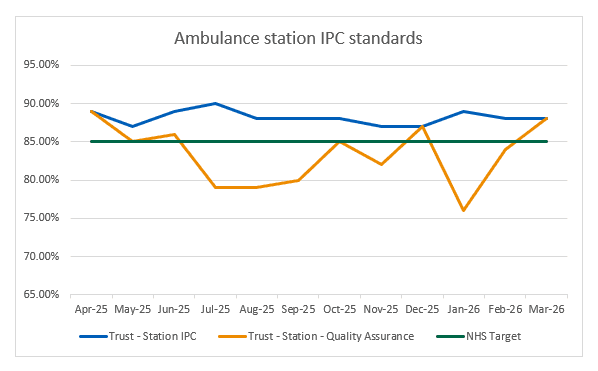
Text summary: Trust station IPC performance remained relatively stable between 87% and 90%, consistently above the 85% NHS target. Quality assurance scores were more variable, ranging from 76% to 89%, falling below target for much of the period before returning to 88% by March 2026.
Chart 2: Patient facing vehicles
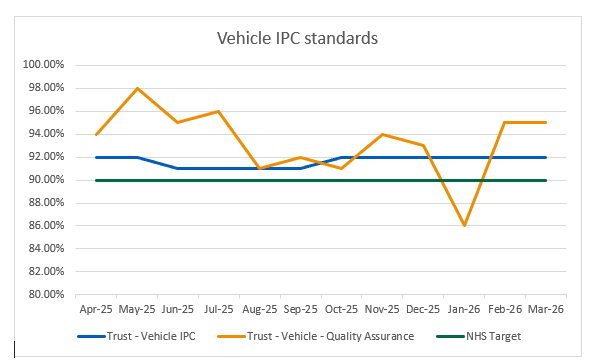
Text Summary: Trust vehicle IPC performance remained stable at approximately 91-92%, consistently above the 90% NHS target. Quality assurance scores fluctuated between 86% and 98%, exceeding the target for most months but dropping to 86% in January 2026 before recovering to 95% by March 2026.
Chart 3: Vehicle cleaning schedule compliance
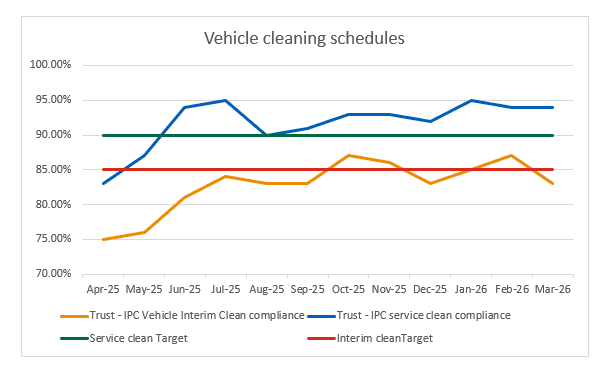
Text Summary: Trust vehicle clean compliance increased from 83% to around 94-95%, remaining above the 90% service target for most of the period. Interim clean compliance rose from 75% to a peak of 87%, fluctuating around the 85% interim target and ending at 83% in March 2026.
Chart 4: Clinical staff uniform
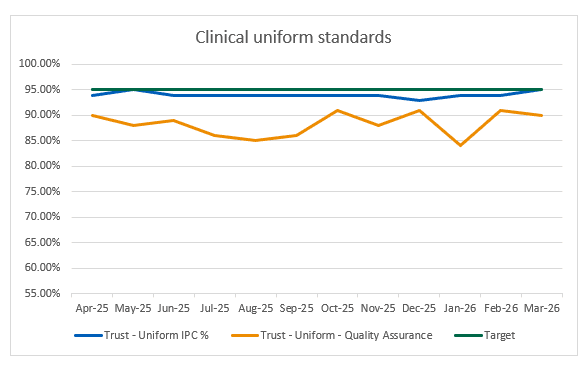
Text summary: Trust uniform IPC compliance remained consistently high at approximately 93–95%, meeting or closely matching the 94% target throughout the year. Quality assurance scores were lower and more variable, ranging from 84% to 91%, with the lowest result recorded in January 2026. Quality assurance performance improved towards the end of the period, finishing at 90% in March 2026.
Chart 5: Clinical IPC practice audits
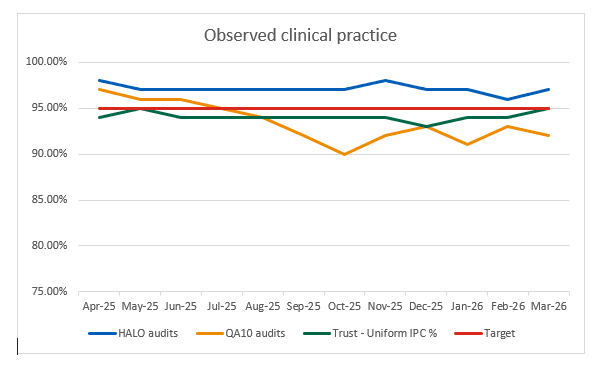
Text Summary: HALO audit results remained consistently above the 95% target, ranging from approximately 96% to 98% throughout the year. Trust observed clinical practice scores stayed close to the target, varying between 93% and 95%. QA10 audit results were more variable, declining from around 97% in April 2025 to 90% in October 2025 before partially recovering to 92% by March 2026. HALO audits demonstrated the strongest and most consistent performance against the target.
Compliance audit summary
Between April 2025 and March 2026, the Trust demonstrated sustained progress across Infection Prevention and Control (IPC) audit domains, with improved consistency and reasonable alignment between local IPC audits and Quality Assurance outcomes. Across the year, IPC audit compliance for vehicles was consistently maintained at or above national targets for healthcare cleanliness, supporting strengthened assurance.
Station environments
Building on the improvement achieved at the end of the 2024/25 reporting period, station IPC compliance was largely sustained throughout 2025/26. Operational IPC station audit scores consistently averaged at or above the NHS Cleaning Standards 2025 threshold (>85%), with Trust-level IPC compliance typically ranging between 87-90% across the year. Quality Assurance outcomes showed reasonable alignment with IPC audit results, despite some months falling below the 85% target. Overall performance represented an improvement compared with the previous year and reflected a smaller volume of Quality Assurance audits, which were frequently targeted at sites requiring additional support or follow-up. While some month-to-month variation persisted, this was less pronounced than in 2024/25 and consistent with the risk-based and targeted nature of the assurance approach. A small number of sites continued to fall below target at any given time, requiring focused intervention and repeat auditing to support improvement.
Recurring audit themes included clinical waste management (labelling, segregation, and swan-necking of bags) and sporadic cleaning lapses in non-clinical areas such as microwaves, fridges, and horizontal surface dusting. These issues were consistently identified through both IPC and Quality Assurance audits and informed targeted feedback and manager engagement.
Vehicle environments
Vehicle audit data continued to demonstrate consistently high standards of cleanliness, equipment readiness, and IPC compliance across the Trust. Quality Assurance audit outcomes were consistently achieved above the 90% national cleanliness requirement, and were generally a few percentage points higher than local IPC audit results, providing strong confidence in audit accuracy and alignment between assurance processes. This sustained performance provides robust assurance within the Trust’s highest-risk clinical environment.
Vehicle audits assess a broad range of standards beyond visual cleanliness alone, including equipment servicing compliance, waste management arrangements, availability of PPE and decontamination equipment, and overall clinical readiness. Audits are undertaken at any point during operational activity and therefore reflect the condition experienced by patients and staff, rather than a snapshot immediately following a scheduled clean.
The identification of occasional minor cleanliness or wear-and-tear issues (for example, a dirty floor identified during operational use or a small tear in vehicle upholstery) is recognised as part of a real-world environment and is addressed through local follow-up and reporting. In contrast, failure to remove waste following vehicle use represents a genuine non-compliance and is treated as an actionable issue requiring corrective action. Such findings were infrequent and promptly addressed when identified.
Service and interim vehicle cleaning schedule compliance showed sustained improvement across the year following prolonged periods below target in the previous reporting period. While isolated months showed marginal variation, overall trends remained positive, with reduced variation between areas and closer alignment between IPC and Quality Assurance audit outcomes. The single month where Quality Assurance performance fell below target coincided with reduced audit capacity and a very small number of audits being completed, which identified a limited number of vehicles falling below standard. This was considered an exception rather than reflective of Trust-wide performance.
Overall, vehicle standards were consistently high month-on-month, with issues identified through audit small in number and addressed promptly. Trust-wide vehicle IPC performance remained above the 90% requirement throughout the year, providing strong and sustained assurance that IPC controls within vehicle environments are effective, proportionate, and responsive.
Uniform and staff practice
Uniform compliance remained broadly consistent between IPC and Quality Assurance audits. During the year, a small reduction in average scores of a few percentage points was observed as the volume and coverage of audits increased, providing a more representative assessment of practice across the Trust. This increased audit activity strengthened assurance by improving visibility and reducing reliance on smaller samples, rather than indicating a systemic decline in standards.
Encouragingly, specific elements such as wristwatch compliance have shown sustained compliance across most areas of the Trust, averaging 93% compliance in operational teams audits and strongly supported with only marginally lower quality audit outcomes. However, some locations continue to require further improvement in overall uniform compliance. A key Trust-wide opportunity for improvement remains the consistent carrying of hand sanitiser, although it is recognised that staff do have access to vehicle-based dispensers.
Staff observation auditing increased significantly during 2025-2026, with marked growth in QA10 submissions and continued HALO activity. This strengthened Trust-wide assurance of staff practice, particularly in PPE use, hand hygiene, and uniform standards. Engagement in A&E departments and during hospital handovers increased opportunities to identify good practice and provide timely feedback, although some areas continue to require further improvement in submission consistency.
QA10 audit activity demonstrated a significant year-on-year improvement, with total monthly audits increasing from an average of approximately 60 in 2024-2025 to over 140 in 2025-2026. This represents a 133% increase in audit volume.
The improvement followed a phased trajectory, with modest early gains followed by a sharp increase from October 2025 onwards, coinciding with strengthened governance, increased visibility of audit expectations, and targeted engagement with underperforming areas.
Notably, areas with historically low audit activity - such as Cambridgeshire and Peterborough and Hertfordshire and West Essex—showed the most significant improvements, suggesting that targeted interventions were effective. High-performing areas such as South and Mid Essex maintained strong output throughout, indicating sustained engagement.
This pattern reflects successful system-wide adoption, although variation between areas suggests ongoing differences in local engagement and capacity.
HALO audit activity remained consistently high across both reporting years, reflecting an already well-established and embedded approach to hospital-based IPC assurance.
During 2024-2025, audit volumes were delivered at a steady and reliable level across most management areas. While some variation was present, the overall picture demonstrates that HALO audits were firmly integrated into routine practice, with multiple areas consistently contributing regular and sustained activity.
In 2025-2026, this strong foundation was maintained and modestly improved, with total audit activity increasing by approximately 8% year-on-year. The pattern of delivery remained stable, indicating that performance was not driven by short-term effort, but instead supported consistent and repeatable processes.
Overall assurance Across all audit domains, 2025-2026 demonstrated a more stable and mature assurance position. Improved alignment between audit systems, clearer visibility of recurring themes, and stronger links between audit findings and targeted improvement actions contributed to sustained IPC assurance across the Trust.
Make Ready Service and Vehicle IPC Compliance - 2025-2026 The Make Ready Service continues to play a critical role in supporting Infection Prevention and Control by ensuring frontline vehicles are clean, appropriately equipped, and operationally ready for patient care. As vehicle environments represent the Trust’s highest-risk clinical setting, sustained compliance with vehicle cleaning schedules remains a key priority.
During 2025-2026, compliance with vehicle cleaning schedules demonstrated clear improvement across the Trust, with both service and interim cleans showing a sustained upward trend over the reporting period. While short periods of marginal performance below target were observed, particularly earlier in the year, the overall direction of travel was positive, with reduced variation between areas and improved Trust-level compliance by year end.
At the start of the reporting period, notable variation existed between sectors, with some areas performing below target and demonstrating lower outcomes in wider vehicle IPC audits. This highlighted a clear relationship between cleaning schedule adherence and overall vehicle cleanliness assurance, prompting targeted intervention in underperforming areas.
Targeted support was delivered through continued focus group meetings and regular performance review meetings, enabling local challenges to be identified and addressed collaboratively. These forums supported shared learning, improved understanding of expectations, and more consistent application of cleaning standards across sectors.
In parallel, staffing establishments within Make Ready were reviewed and adjusted to better reflect proportional workforce demand across the Trust. This included recruitment to Make Ready, supervisory, and managerial roles to strengthen leadership oversight and operational capacity. While the reallocation of resources from previously over-established areas created short-term pressures, these changes contributed to improved resilience and consistency of delivery.
As a result of these combined actions, all sectors demonstrated improvement during the year, with reduced unwarranted variation and strengthened compliance with vehicle cleaning schedules. Importantly, vehicle IPC audit outcomes were consistently maintained above the required cleanliness and equipment thresholds, providing strong assurance within the Trust’s highest-risk environment.
Despite a marginal drop below target in the final month of the reporting period, at the time of publishing this report the Trust average had subsequently been maintained above target, providing continued assurance of sustained improvement.
By the end of the reporting period, all areas had shown recovery, with further improvement observed following year end. This continued progress will be fully reflected within the 2026-2027 reporting period.
Infectious Disease Preparedness and Response
During 2025–2026, the IPC team maintained preparedness and response arrangements for a range of communicable diseases, supporting operational staff through communications, advice, education, and incident management.
The national communicable disease picture continued to present challenges throughout the year. Measles outbreaks were reported across England, tuberculosis (TB) remained a persistent public health concern, and a regional outbreak of invasive meningococcal disease in the South East, including Kent, highlighted the need for continued vigilance. Seasonal influenza also remained a significant operational pressure during the winter period.
The IPC team issued regular communications to raise awareness of emerging risks, reinforce infection prevention and control measures, and support the early identification of suspected infectious diseases. Where known or suspected cases were identified, relevant information was shared with operational teams to support appropriate precautions and safe patient care.
Where staff were potentially exposed to infectious diseases, the IPC team coordinated follow-up activity with Occupational Health and healthcare partners. This included risk assessment, screening, vaccination, and prophylactic treatment where required, ensuring staff received appropriate support in line with national guidance.
Seasonal influenza remained a key focus throughout the winter months. A Trust-wide vaccination programme was delivered through local vaccination clinics, targeted communications, and engagement with managers and staff. During the year, a new digital vaccination management system was introduced, improving oversight of vaccination uptake and clinic management. By the end of the campaign, 52% of Trust staff had received an influenza vaccination, representing an improvement on the previous year.
Through a combination of preparedness planning, staff education, incident management, and partnership working, the IPC team helped ensure the Trust remained responsive to communicable disease risks while supporting staff safety and maintaining service delivery throughout the year.
Occupational Exposure Incidents 2025-2026
The Trust records incidents through the online reporting system, Datix to ensure ease of access staff can submit incident reports either online or via a single point of contact phone number. Where an incident occurs, the protocol is to follow immediate safety actions and then refer to A&E/OH for risk assessment to determine any necessary treatment or prophylaxis. The IPC related incidents are split into 3 main categories and are reported on through the monthly IPC report, they are classed as:
- Occupational exposure incidents
- Contaminated needle stick injuries
- Splashes of blood or bodily fluids to mucous membranes.
Table 1: Quantity of incidents by type
| Total incidents reported | Contaminated sharps | Splash incidents | Potential exposure | |
|---|---|---|---|---|
| Apr | 7 | 6 | 0 | 1 |
| May | 9 | 4 | 3 | 2 |
| Jun | 10 | 9 | 1 | 0 |
| Ju | 6 | 4 | 2 | 0 |
| Aug | 4 | 3 | 1 | 0 |
| Sep | 7 | 4 | 1 | 2 |
| Oct | 3 | 1 | 1 | 1 |
| Nov | 6 | 3 | 0 | 3 |
| Dec | 2 | 1 | 0 | 1 |
| Jan | 14 | 10 | 1 | 3 |
| Feb | 14 | 9 | 0 | 5 |
| Mar | 13 | 10 | 0 | 3 |
| Total incidents: | 95 | 64 | 10 | 21 |
This year has seen an overall reduction in reported incidents, decreasing from 109 in 2024–2025 to 95 in 2025–2026. This reflects continued improvement in exposure prevention and safer working practices across the Trust.
There has been a notable reduction in splash incidents and potential exposure events. This improvement is likely attributed to sustained communication and operational focus on the correct use of personal protective equipment (PPE), alongside increased emphasis on identifying potentially infectious patients at an early stage. Targeted PPE guidance and consistent messaging have supported staff in making appropriate risk-based decisions, contributing to reduced exposure risk.
Learning from incidents has continued throughout the year, with key themes identified and shared to reinforce good practice and promote a culture of safety. This ongoing feedback loop has supported improvements in staff awareness and behaviour, particularly in relation to exposure prevention and PPE use.
However, despite an overall reduction in total reported incidents, an increase in contaminated sharps injuries was observed during the reporting period, with sharps now representing the largest proportion of reported incidents. A number of these incidents were associated with cannulation procedures, frequently involving unanticipated patient movement at the point of insertion. Additional contributing factors included handling practices and the safe disposal of sharps.
Importantly, the increase in reported sharps injuries is considered to reflect a sustained and improving reporting culture, rather than a reduction in safety standards. This strengthened reporting provides greater confidence that reductions observed in other incident categories represent genuine improvement, rather than under-reporting. Sharps incidents therefore remain a key focus for targeted behavioural and practice-based improvement, supported by continued monitoring, staff education, and reinforcement of safe systems of work.
Reducing sharps injuries will therefore be a key focus for the coming year. A targeted sharps safety initiative will be implemented to raise awareness, reinforce safe handling and disposal practices, and support staff in managing risks in dynamic clinical environments.
Continued emphasis on PPE compliance, early identification of infectious risk, and strengthening sharps safety practices will be essential to further reduce overall incident rates and sustain improvements in staff safety.
Antimicrobial Stewardship
The Trust maintains a proportionate and robust antimicrobial stewardship (AMS) framework designed to optimise patient outcomes, reduce the risk of antimicrobial resistance (AMR), and support safe clinical decision-making within the ambulance service setting. AMS activity is closely aligned with Infection Prevention and Control (IPC) arrangements and is governed through established clinical and medicines governance structures.
Governance and oversight of AMS are clearly defined. Antimicrobial stewardship is overseen through the Medicines Management Group, with routine reporting into the Quality Governance Committee, providing assurance and escalation where required. Executive accountability for AMS is in place, ensuring antimicrobial use is monitored and aligned with national expectations, including JRCALC guidance and CQC Regulation 12.
Antimicrobial use within the Trust is limited and tightly controlled, reflecting the pre-hospital care model. Antibiotics are supplied under Patient Group Directions by Advanced Paramedics in Urgent Care, supported by formulary control, audit, and mandatory national training to ensure safe and appropriate use. Prescribing data is captured through the electronic patient care record (EPCR), enabling improved visibility, increasing audit frequency, and supporting learning and quality improvement. Electronic prescribing has also been introduced for independent prescribers within the Trust, strengthening oversight and supporting antimicrobial stewardship principles such as delayed prescribing where clinically appropriate.
During the reporting period, AMS assurance was further strengthened through closer integration with IPC improvement priorities. This included a focus on strengthening IPC leadership and capability, with enhanced oversight of staff practice, audit quality, and governance, supporting consistent application of infection prevention measures that reduce avoidable antimicrobial demand.
In addition, the Trust committed to strengthening cleaning assurance through efficacy-based auditing, aligned to NHS Cleaning Standards. This approach moves beyond visual inspection to assess cleaning methods, processes, and effectiveness across vehicle, premises, and Make Ready environments. Strengthening assurance in these high-risk areas directly supports AMR prevention by reducing environmental contamination and the risk of onward infection.
Resources such as JRCALC guidance, alongside IPC and medicines governance oversight, continue to support staff in applying best practice. Collectively, these arrangements provide assurance that antimicrobial stewardship within the Trust is governed, proportionate, and improving, and that AMS activity is fully aligned with IPC objectives and national AMR requirements.
Occupational health
During the reporting period, the Trust transitioned from an outsourced to an in-house Occupational Health (OH) service, improving integration, responsiveness, and collaboration with Infection Prevention and Control (IPC). This change has strengthened the Trust’s ability to manage staff health risks proactively and deliver coordinated infection prevention measures.
Occupational Health plays a critical role in protecting staff health and reducing infection risk, ensuring vaccination, screening, and health surveillance arrangements are delivered in line with national guidance, including the Green Book. This includes oversight of routine and targeted vaccination programmes such as hepatitis B, MMR, varicella, and seasonal influenza, supporting both patient and staff safety.
OH works closely with the IPC team in the management of exposure incidents, including needlestick injuries and potential infectious disease exposures. This joint approach ensures timely risk assessment, post-exposure prophylaxis where indicated, and appropriate follow-up, supporting staff wellbeing and maintaining operational continuity. These arrangements provide assurance that infection risks are managed consistently and proportionately.
During the year, Occupational Health oversaw delivery of the Trust’s influenza vaccination programme, supported by joint planning with IPC and local engagement. While uptake outcomes are reported elsewhere in this report, OH’s role in coordinating clinics, supporting peer vaccinators, and maintaining oversight of vaccination status contributed to improved accessibility and programme resilience.
In addition to reactive support, Occupational Health continues to provide proactive infection risk reduction through vaccination and screening at recruitment, alongside ongoing access for existing staff. Bringing the OH service in-house has enhanced the Trust’s ability to respond to staff health needs, support timely intervention, and reinforce a culture of safety, prevention, and wellbeing.
Training
Infection Prevention and Control (IPC) training remains fundamental to safe practice within EEAST. All staff are required to complete Statutory and Mandatory (StatMand) IPC training aligned to the Core Skills Training Framework (CSTF), and during 2025–2026 compliance again achieved above 90%, providing assurance of consistent baseline knowledge across the Trust.
During the year, IPC education was strengthened and standardised across the organisation. Induction and mandatory training content was reviewed and updated to align with the National Infection Prevention and Control Manual (NIPCM) and national Skills for Health frameworks. Enhancements included a clearer focus on routes of transmission, appropriate PPE selection, and practical application of IPC principles, including donning and doffing of PPE. IPC content was also embedded more consistently within scenario-based training and assessments, improving relevance to the ambulance service operational context and consistency of delivery across all training centres.
Alongside these improvements, work commenced to develop a longer-term approach to strengthening IPC leadership and applied knowledge. This includes early development of enhanced IPC training for managers and competency-based assessment models, aligned to the NHS England IPC Education Framework. This work has been undertaken collaboratively with operational teams, training and education colleagues, and relevant partners. While still in development, it establishes a clear direction of travel towards greater emphasis on observed practice, coaching, and leadership capability, which will be progressed over future reporting periods.
Overall, the improvements delivered during 2025–2026 have enhanced the quality, consistency, and practical relevance of IPC training, supporting safe staff practice and reinforcing a strong infection prevention culture across the Trust.
2026-2027 Objectives
As the Trust looks forward to 2026, the Infection Prevention and Control (IPC) team will continue to build on the progress achieved over the past year. The focus will be on strengthening compliance, embedding best practice, and responding to emerging risks, with priorities informed by audit findings, incident learning, and national guidance.
1. Efficacy Auditing
A key priority will be the development and implementation of efficacy audits to provide greater assurance that cleaning processes are not only completed but are effective. This will support a more outcome-focused approach to IPC assurance. **Measured by: **Efficacy audit results, trend analysis, and improvements in environmental cleanliness scores.
2. High Consequence Infectious Disease (HCID) Preparedness
To maintain and strengthen HCID preparedness by aligning HART and frontline staff awareness, escalation pathways, and response processes, ensuring robust and proportionate arrangements are in place for the ongoing risk of imported HCIDs. Measured by: Training compliance, exercise outcomes, and adherence to HCID protocols.
3. Level 3 IPC Training Development
To develop and embed Level 3 IPC training over a two-year period, strengthening IPC leadership, behaviours, and assurance by equipping staff in key roles to lead by example, embed best practice, and support sustained improvement. Measured by: Training uptake, competency assessments, and improvements in audit outcomes.
4. Sustain and Enhance Make Ready Improvements
Building on the improvements achieved in vehicle cleanliness, the IPC team will continue to work closely with Make Ready teams to maintain and further enhance standards. Measured by: Vehicle audit scores, cleaning compliance data, and performance monitoring.
5. Clinical Waste Compliance
To reduce clinical waste disposal errors and improve compliance through targeted communication, training, and audit activity, embedding safe waste handling practices and supporting a reduction in waste-related and sharps incidents. Measured by: Reduction in waste-related incidents, audit findings, and staff compliance rates.
6. Staff Observation Audits
To further develop staff observational audits to improve consistency, quality, and engagement, strengthening assurance around PPE use, hand hygiene, and uniform compliance, and providing a foundation for Level 3 IPC staff assessment and coaching as part of routine training requirements. Measured by: Audit completion rates, quality assurance feedback, and improvement in compliance scores.
7. Cleaning Contract Management
Effective management and oversight of cleaning contracts will be a priority to ensure consistent standards across all sites. This will include performance monitoring, audit validation, and close collaboration with providers. Measured by: Contractor performance metrics, audit scores, and compliance with national cleaning standards.
Head of IPC Summary
The 2025–2026 reporting year reflects a period of consolidation and maturation for Infection Prevention and Control (IPC) within the Trust. The strategic focus has shifted from establishing systems to strengthening assurance, embedding consistent behaviours, and aligning IPC activity more closely with operational delivery and emerging risks.
Key priorities for the year ahead centre on improving the quality and depth of assurance through efficacy-based auditing, strengthening IPC leadership and capability, and sustaining improvements in high-risk environments such as vehicle and Make Ready operations. Continued emphasis will be placed on behavioural improvement, particularly in relation to waste management, sharps safety, and consistent staff practice, supported by enhanced observational auditing and training development.
Alongside this, the IPC team will continue to invest in its own development, building resilience, capability, and expertise. This includes supporting ongoing professional development and aspiring to further academic qualifications for team members, ensuring the Trust benefits from a skilled, knowledgeable, and forward-thinking IPC workforce.
Overall, the Trust is well positioned to build on the progress made, with a clear strategic direction focused on assurance, leadership, and continuous improvement to protect both patients and staff.