From 500 calls to 4,000 a day: Norfolk Ambulance veteran reflects on 40 years of change
Date: 28 October 2026An ambulance veteran who has spent 40 years serving communities across the East of England has reflected on the extraordinary changes he has witnessed during a career spanning frontline care and ambulance control rooms.

When Calvin Scott joined what was then the Norfolk Ambulance Service in 1986 as a trainee ambulance technician, receiving 500 emergency calls in a 24-hour period was considered exceptionally busy.
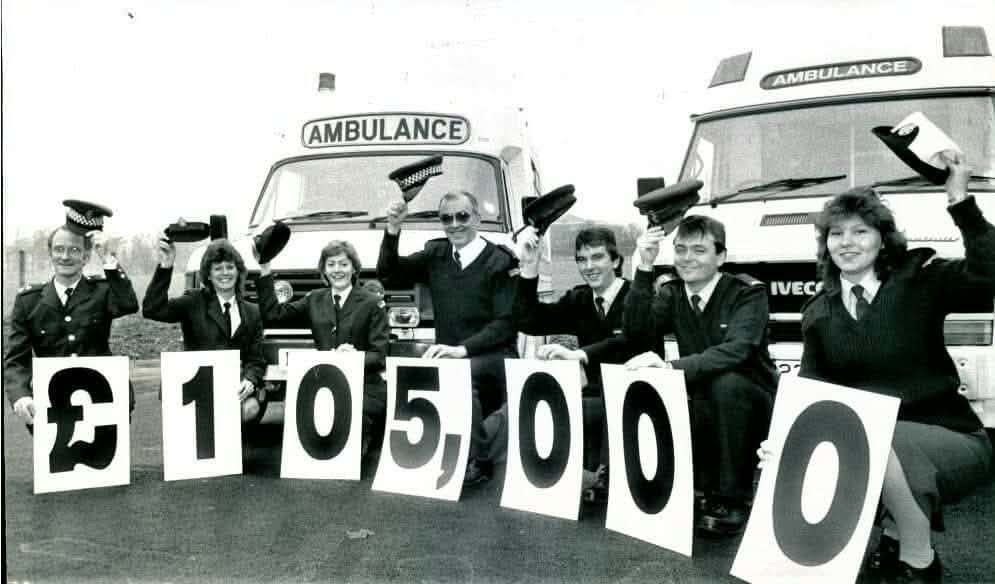
Today, receiving more than 4,000 calls in a day is not uncommon. As the East of England Ambulance Service NHS Trust (EEAST) marks International Control Room Week, Calvin is helping shine a light on the work of Emergency Operations Centre (EOC) staff who answer 999 calls, support patients and dispatch ambulance resources.
After training as a paramedic and caring for patients on the frontline, Calvin moved into the ambulance control room in 1999 on what was intended to be a six-month secondment. More than 27 years later, he remains part of the service's control room operation.
Reflecting on the move that shaped the latter half of his career, Calvin said:
"I arrived in Control and immediately hated it. There were clocks everywhere, the days seemed to drag, and I thought I'd only be there for six months.
"Twenty-seven years later, I'm still here."
Over the years, Calvin has seen ambulance services evolve significantly, with changes in technology, workforce numbers and the way care is delivered. But it is the growth in demand that stands out most.
"Friday and Saturday nights were considered incredibly busy. If we received 500 calls in a 24-hour period, we genuinely wondered how we were going to cope.
"Today, receiving more than 4,000 calls in a day is not uncommon."
When Calvin first joined the control room, Norfolk, Suffolk and Cambridgeshire were covered by just three dispatchers. Today, teams of call handlers, dispatchers, team leaders and clinicians work within EEAST's Emergency Operations Centres, helping coordinate the ambulance response across the region. One lesson from his early days in control has stayed with him throughout his career.
"One comment has stuck with me ever since: 'If it goes wrong in Control, it goes wrong everywhere.'"
As demand has increased, so too has the role of clinicians within ambulance control rooms.
"More paramedics joined control. Stand-by points were established in areas of high demand. Response times began to improve, and the pieces slowly started coming together."
While almost every aspect of ambulance services has changed during his four decades of service, Calvin believes the purpose has remained the same.
"It was a privilege to be invited into people's lives, often during their most difficult moments, and to be able to help." Looking back on his career, Calvin says the people he has met remain among his most enduring memories.
"During forty years in the Ambulance Service, I have attended incidents that I will never forget, met patients whose courage was inspirational and worked alongside some truly remarkable people.
"Whilst many memories have faded with time, the friendships formed through shared experiences remain some of the strongest of my life." International Control Room Week recognises the contribution of ambulance control room staff, including call handlers, dispatchers and clinicians working within Emergency Operations Centres.
EEAST regularly recruits for emergency call handler, dispatcher and clinical roles within its Emergency Operations Centres. **Current vacancies can be viewed at: **www.eastamb.nhs.uk/join-the-team